
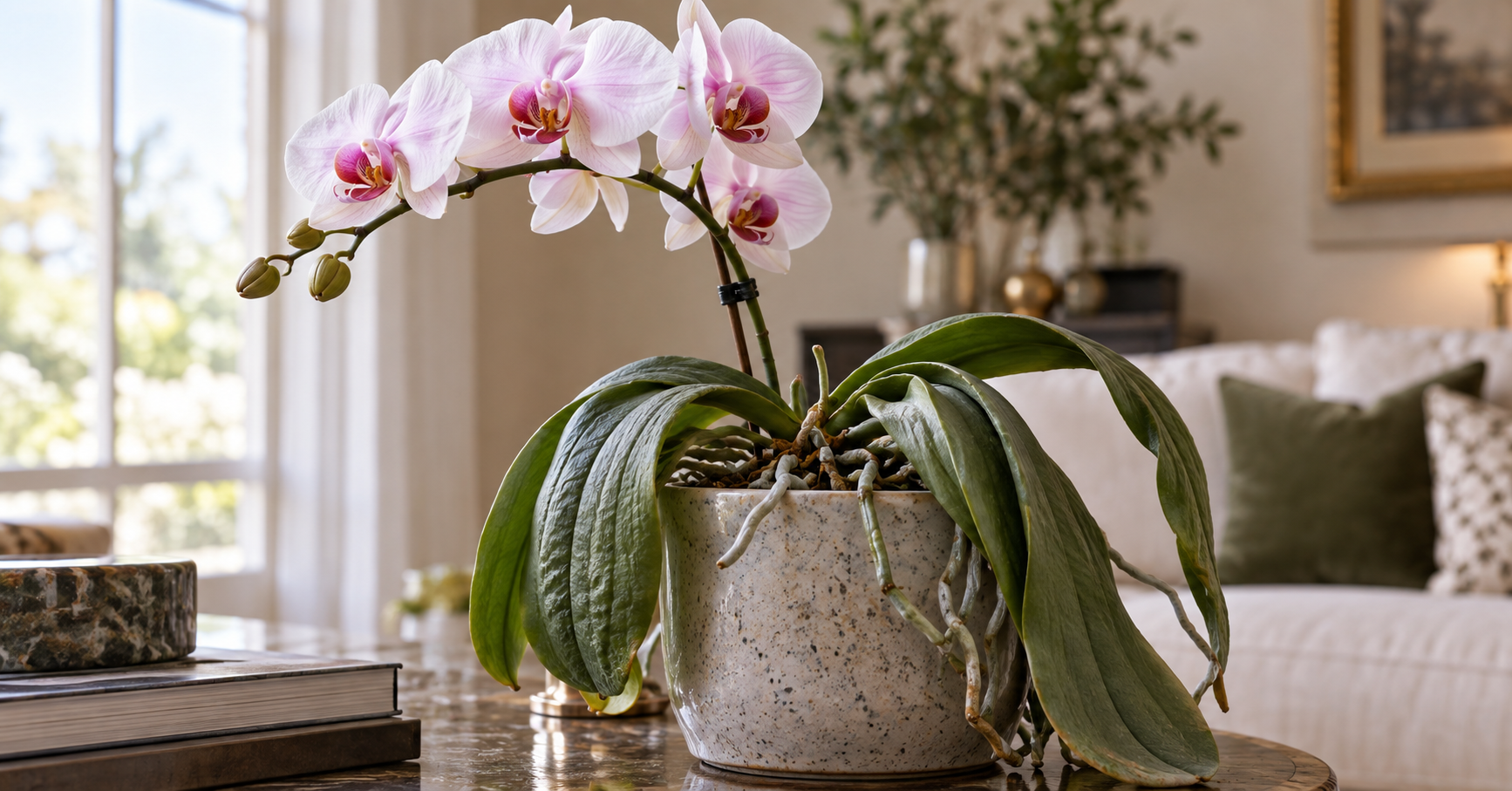
Seeing orchid leaves drooping can be unsettling, especially when the flowers still look fine. A plant that seemed firm and glossy can suddenly look limp, leathery, or tired, and the first instinct is usually to reach for the watering can.
That is where orchid care gets tricky. Drooping leaves can happen because the plant is too dry, but they can also happen when damaged roots are sitting in too much moisture and can no longer take up water properly. In other words, the leaves may look dehydrated even while the pot is wet.
Before changing the plant’s routine, look at the roots, the potting mix, and the texture of the leaves together. Those clues are much more useful than droopiness alone.
Table of Contents
Why Are My Orchid Leaves Drooping? Quick Answer
Orchid leaves drooping usually means the leaves are not receiving enough water to stay firm. The important question is why.
The most common causes are:
- Underwatering
- Overwatering and root damage
- Old or broken-down potting mix
- Heat, cold, or very dry air
- Light conditions that increase stress
- Recent repotting or root disturbance
- Pests or disease when other symptoms are present
A limp orchid with dry, healthy roots needs a very different response from a limp orchid with brown, soft roots. That is why the roots should be checked before you simply water more.
Drooping or Limp Orchid Leaves? Check the Roots First
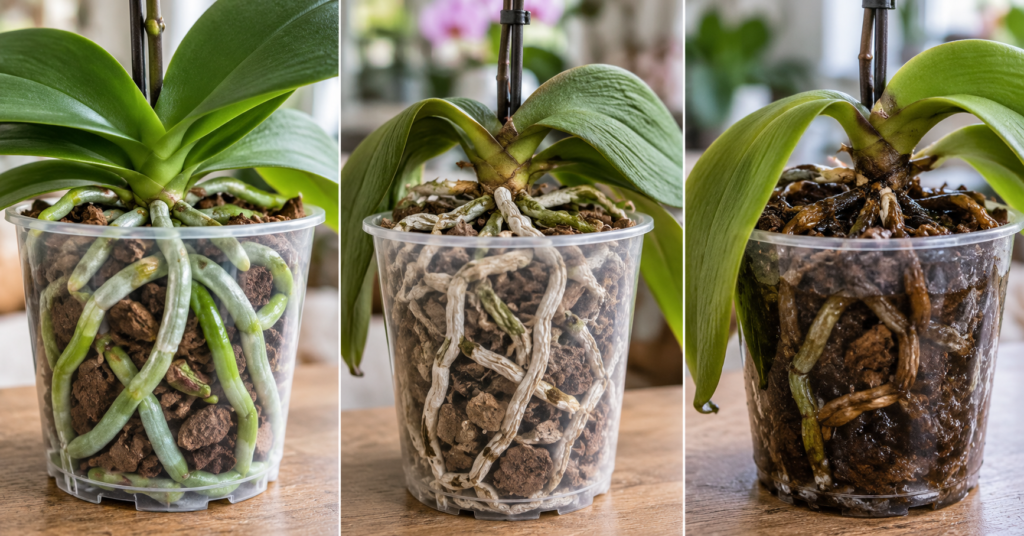
The quickest way to narrow down the problem is to inspect the root system and the growing medium.
For the common moth orchid, or Phalaenopsis, healthy roots are generally firm and plump. The American Orchid Society notes that wrinkled or flaccid leaves can appear with both overwatering and underwatering because either problem can leave the plant unable to supply enough water to its leaves.
| What you notice | What to check first |
|---|---|
| Limp leaves + dry mix + firm roots | Underwatering |
| Limp leaves + wet mix + brown or mushy roots | Overwatering/root damage |
| Limp, wrinkled or leathery leaves | Dehydration or poor water uptake |
| Drooping + one yellow lower leaf | Root stress or normal aging |
| Drooping after repotting | Root disturbance or damaged roots |
In practice, this root check is much more useful than trying to decide whether a leaf looks “droopy enough” to need water.
⚠️ The Easy Mistake to Make
A drooping orchid can look thirsty even when the pot is still wet. That is what makes this symptom so easy to misread.
If damaged roots can no longer absorb water properly, adding more water does not solve the dehydration you see in the leaves — it can make the root problem worse. Before watering again, check whether the roots are actually healthy enough to use the moisture already there.
The Most Common Causes of Drooping Orchid Leaves
Underwatering
An orchid that stays too dry can lose the water pressure that keeps its leaves firm. The leaves may become limp, wrinkled, leathery, or less able to hold themselves upright.
For Phalaenopsis, watering frequency depends partly on the growing medium. Bark dries faster than sphagnum moss, so a rigid schedule can be misleading. Missouri Botanical Garden recommends judging watering according to the medium and growing conditions rather than relying on the calendar.
If the roots are still firm and the mix is very dry, water thoroughly and let the excess drain away.
Overwatering and Root Damage
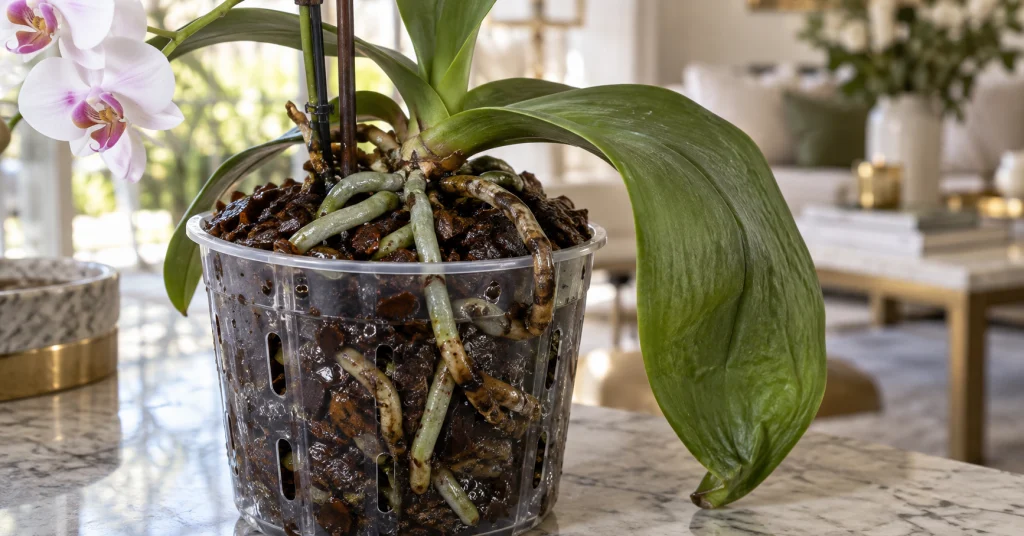
A wet orchid can still be dehydrated.
When roots rot or deteriorate, they lose their ability to absorb enough water. The leaves then become limp even though moisture is abundant around the roots. This is why adding more water to a drooping orchid in a wet pot can make the problem worse.
The American Orchid Society describes overwatered roots as brown and mushy, while badly dehydrated roots may be dry and deteriorated. Healthy roots should feel plump and firm.
If the medium stays soggy, inspect the drainage and roots before watering again.
Old or Broken-Down Potting Mix
Orchid roots need much more air than the roots of many ordinary houseplants.
Over time, bark and other organic orchid media break down and become finer and more compact. That can reduce airflow and hold too much moisture around the roots. The American Orchid Society identifies degraded potting mix as a cause of root loss, and Missouri Botanical Garden recommends repotting Phalaenopsis when the medium has decomposed.
If old bark has become soft, crumbly, or soil-like, replacing the medium may matter more than changing the watering schedule.
Heat, Cold, and Low Humidity
Environmental stress can also leave orchid leaves soft or wilted.
High heat increases water loss from the leaves, while very low humidity can contribute to dehydration. The American Orchid Society notes that heat stress can produce soft, wilted leaves when the plant loses moisture faster than its roots can replace it.
Cold exposure can cause limp foliage too, especially after a chilly trip home, a cold window, or a strong draft.
Because orchid species differ, avoid treating every orchid as though it needs exactly the same temperature and humidity.
Too Much or Too Little Light
Light often contributes to drooping indirectly.
Strong light combined with heat can increase water loss. Very low light, on the other hand, slows growth and may allow the potting medium to stay wet longer. Phalaenopsis generally does well in bright, indirect light under normal indoor temperatures.
If the problem began after moving the orchid, consider whether both its light and temperature changed.
Pests or Disease
Pests and disease are less likely when the only symptom is a limp leaf, but they are worth investigating if drooping appears with spots, sticky residue, visible insects, discoloration, or rotting tissue.
Check both sides of the leaves, the crown, and the roots. Root rot and several orchid diseases can eventually cause wilting or distorted foliage.
How to Fix Drooping Orchid Leaves
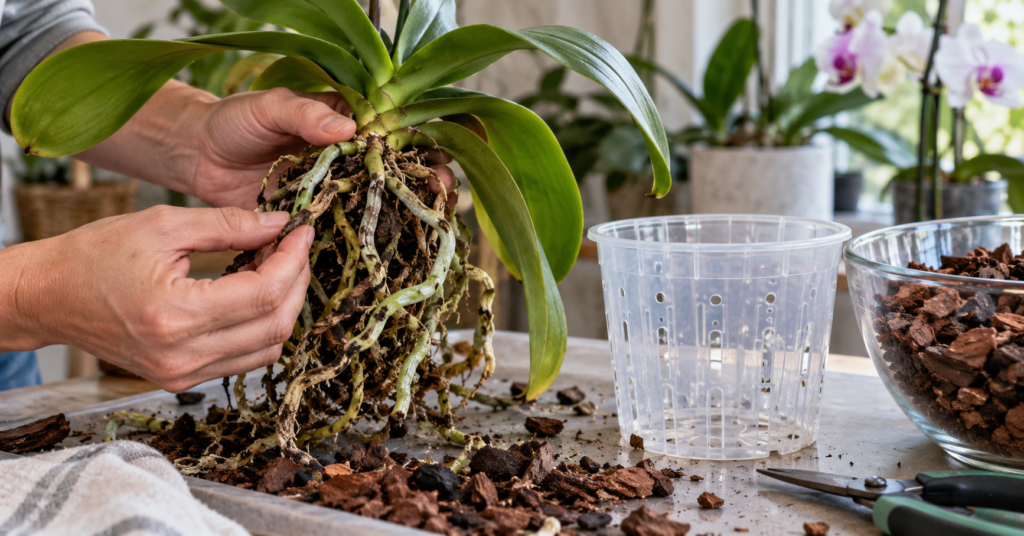
The right fix starts with diagnosis, not automatically with more water.
- Check the potting mix. Is it dry, slightly moist, or still wet long after watering?
- Inspect the roots. Look for firm living roots versus mushy, hollow, or badly deteriorated ones.
- If the plant is genuinely dry, water thoroughly. Use room-temperature water and let it drain completely.
- If roots are damaged, treat the root problem. Remove dead roots when repotting and use fresh orchid medium.
- Replace broken-down mix. Standard houseplant soil is usually too dense for epiphytic orchids such as Phalaenopsis.
- Review heat, cold, humidity, and light. Correct obvious extremes without moving the plant repeatedly.
- Give it time. Healthy new roots and leaves are better signs of recovery than one old damaged leaf becoming perfect again.
Do not leave the pot standing in water. Constantly soggy roots are vulnerable to rot.
The goal is not to make the orchid look perfect immediately. It is to give functioning roots the conditions they need to recover — and then let the plant do the rest.
Will Droopy Orchid Leaves Recover?
Droopy leaves can regain some firmness when dehydration is mild and the roots are still functioning, but badly wrinkled or damaged leaves may never look completely smooth again.
The American Orchid Society notes that older wrinkled leaves may remain wrinkled after the underlying water problem is corrected. Healthy new growth is a better indicator that the orchid is recovering.
So do not judge the plant by one old leaf. Watch what happens next.
Orchid Leaves Drooping: What to Do Next
When you notice orchid leaves drooping, resist the urge to water first and investigate later. Start by finding out whether the roots are healthy enough to absorb water.
Dry medium with firm roots points toward underwatering. Wet medium with soft or damaged roots points toward excess moisture, poor drainage, or deteriorated potting mix. If the roots look healthy, move on to temperature, humidity, light, and any recent changes.
If repotting is necessary, choose fresh orchid potting medium that provides plenty of air and drainage rather than dense regular potting soil. Then keep conditions stable and watch the new roots and leaves. A recovering orchid does not need to look perfect overnight; it needs to start growing normally again.
Orchid Leaves Drooping FAQ
Should I cut off droopy orchid leaves?
Not simply because they droop. A green leaf can still contribute to the plant even if it looks limp or wrinkled. Remove leaves that are dead, seriously diseased, or rotting rather than trimming healthy tissue for appearance alone.
Why are my orchid leaves drooping after repotting?
Repotting can disturb or damage roots and temporarily reduce water uptake. A new medium may also hold moisture differently from the old one. If the drooping continues, inspect the roots rather than assuming repotting stress is the only cause. The American Orchid Society includes recently repotted, poorly established orchids among the situations that can leave leaves dehydrated.
What does an overwatered orchid look like?
An overwatered orchid may have limp or wrinkled leaves even while the medium is wet. Brown, mushy roots are a much stronger clue than drooping leaves alone. Yellowing, deteriorating roots, or wet, broken-down potting medium can provide additional evidence.
How often should I water an orchid?
There is no universal once-a-week rule. Species, pot size, temperature, season, humidity, and growing medium all affect how quickly roots dry. A Phalaenopsis in bark generally dries faster than the same plant in sphagnum moss. Water according to the condition of the medium and roots rather than the calendar.

Carol researches common houseplant problems using guidance from university extension services, horticultural institutions, and other reputable sources. At The Evergreen Spot, she turns that research into practical troubleshooting guides designed to help readers understand what their plants may be telling them, narrow down the most likely causes, and know what to check next.
Leave a Reply