
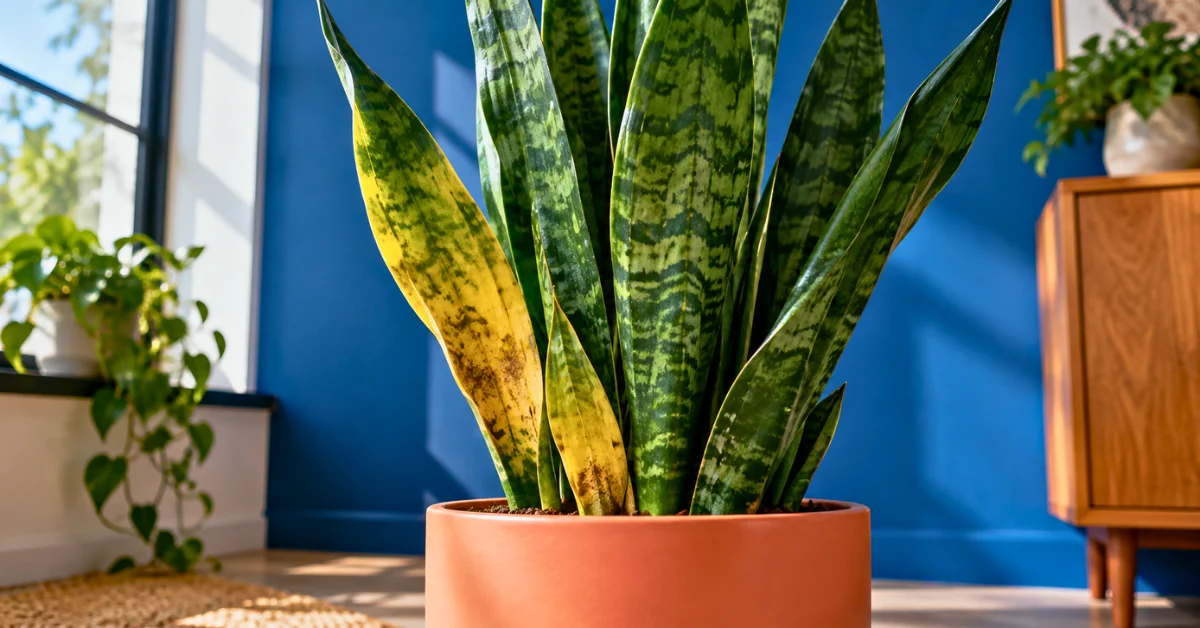
A snake plant turning yellow can be surprisingly alarming. One day those tall, sturdy leaves look almost indestructible; the next, one is fading, softening, or developing yellow patches that definitely weren’t there before.
The good news is that yellow leaves don’t automatically mean your snake plant is dying. They do mean something has changed. And instead of trying every possible fix at once, the fastest way to help your plant is to look closely at how the leaves are yellowing. Their texture, location, and what the soil feels like can tell you much more than color alone.
Table of Contents
Why Is My Snake Plant Turning Yellow? Quick Answer
A snake plant turning yellow is most often reacting to a watering or root problem, especially soil that stays wet for too long. But yellowing can also come from drought stress, unsuitable light, temperature changes, fertilizer issues, pests, or the natural aging of an older leaf.
Start by checking:
- Soft or mushy yellow leaves: overwatering or root problems are likely.
- Dry, crispy yellow leaves: check for prolonged dryness, heat, or excessive direct sun.
- Only an older bottom leaf yellowing: this can be normal aging.
- Several leaves yellowing at once: investigate moisture, drainage, light, and roots.
- Yellow edges that have always been there: your snake plant may simply be a naturally variegated variety.
Don’t reach for the watering can or fertilizer until you know which situation you’re dealing with.
First, Look at How Your Snake Plant Leaves Are Turning Yellow
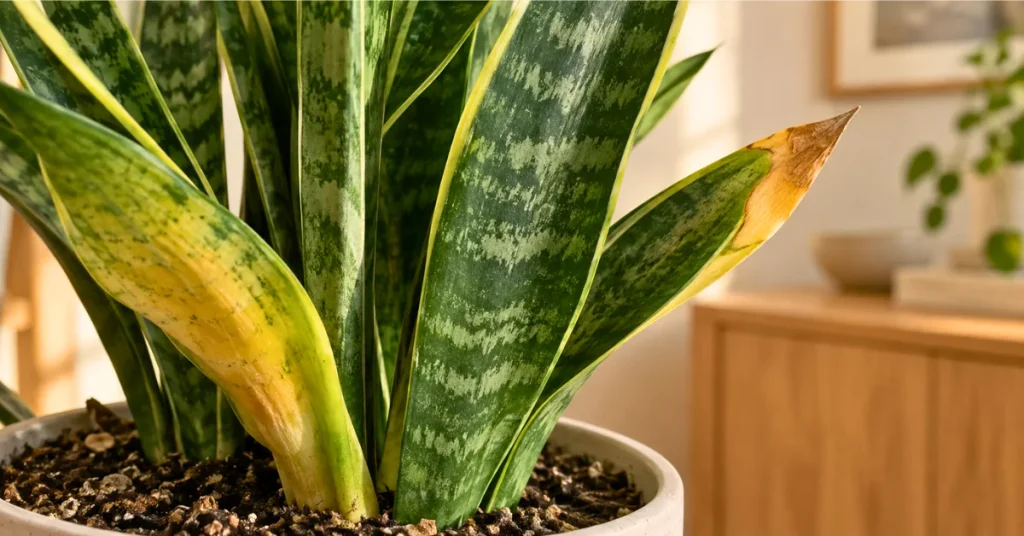
The pattern of yellowing is one of the easiest ways to narrow down the cause.
If the leaf is yellow and soft, especially near the base, check the soil first. Wet soil combined with soft foliage is much more concerning than a single dry yellow leaf.
If the leaf is yellow, thin, and crispy, the plant may have stayed dry for too long or been exposed to stressful heat or strong sun. The Missouri Botanical Garden notes that both overwatering and underwatering can produce yellow or wilted foliage, which is exactly why looking at soil moisture and leaf texture together matters.
Also, don’t mistake natural coloring for a problem. Some snake plant cultivars, including ‘Laurentii,’ naturally have yellow leaf margins. UF/IFAS Extension specifically describes this cultivar as having yellow-edged leaves. If those edges have always been present and the leaf is firm and healthy, there may be nothing to fix.
⚠️ Before You Treat the Yellow Edge
If the yellow color follows a clean, consistent stripe along the leaf margin, I would first make sure it is not simply part of the plant’s natural variegation.
Some snake plants are supposed to have yellow-edged leaves. A healthy variegated margin stays firm and follows the plant’s normal pattern; stress-related yellowing usually looks like a change from how that leaf used to appear.
Before changing the watering, fertilizer, or light, compare the questionable leaf with the rest of the plant.
Overwatering Is the First Thing to Check
Overwatering is one of the most common reasons snake plants develop yellow leaves.
Snake plants store water in their thick foliage and prefer to dry considerably between waterings. When the potting mix stays wet for too long, roots lose access to the oxygen they need. Damaged roots then struggle to take up water and nutrients even though the pot itself is wet.
That creates the confusing situation where an overwatered plant can look wilted or stressed almost as if it were thirsty.
Both University of Illinois Extension and UGA Extension warn that overwatering is a major problem for snake plants. Illinois recommends allowing the soil to dry completely between waterings, while UGA notes that roots can rot in soggy soil and recommends a quick-draining potting medium.
Before watering again, push a finger farther into the potting mix rather than judging only by the dry-looking surface. The top can feel dry while moisture is still lingering deeper around the roots.
Anyone who has dealt with an overwatered houseplant knows how tempting it is to “help” it with one more little drink. With snake plants, that extra drink is often exactly what they don’t need.
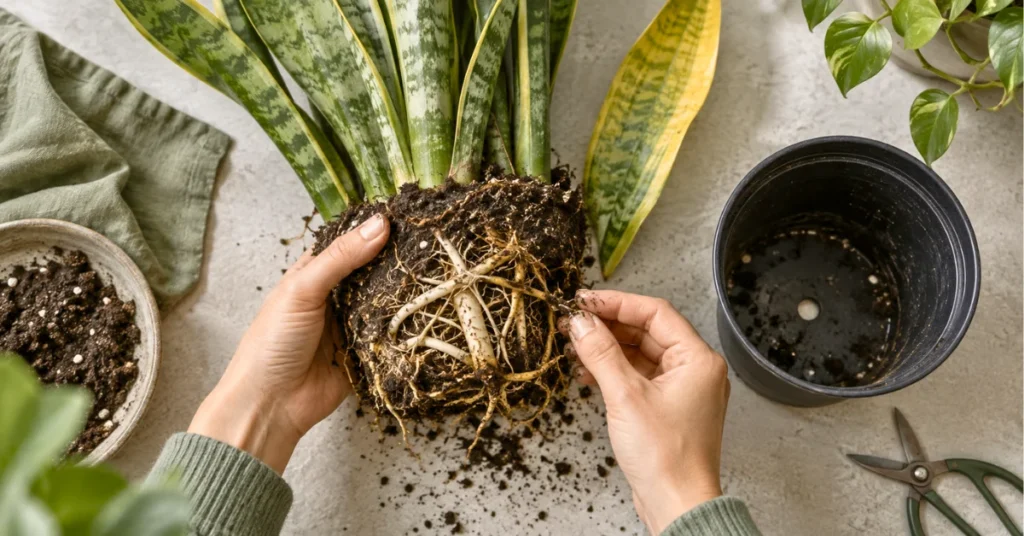
Could Your Snake Plant Have Root Rot?
If yellowing comes with mushy leaves, consistently wet soil, a soft base, or an unpleasant smell from the pot, it’s time to look below the surface.
Healthy roots should feel firm. Dark, soft, decaying roots are a much stronger warning sign.
The Missouri Botanical Garden explains that waterlogged soil deprives roots of oxygen and can lead to root death and rot. Its indoor-plant guidance also notes that turning a struggling plant out of its pot and examining the roots can help confirm what is happening.
If only part of the root system is affected, trim away badly rotted tissue with clean tools and repot the plant into fresh, fast-draining mix in a container with drainage holes.
Don’t compensate by watering on a rigid schedule afterward. Let the new mix dry appropriately and watch the healthy foliage for signs that the plant is stabilizing.
More water is not the rescue here. Better drainage and healthy roots are.
Can Underwatering Make a Snake Plant Turn Yellow?
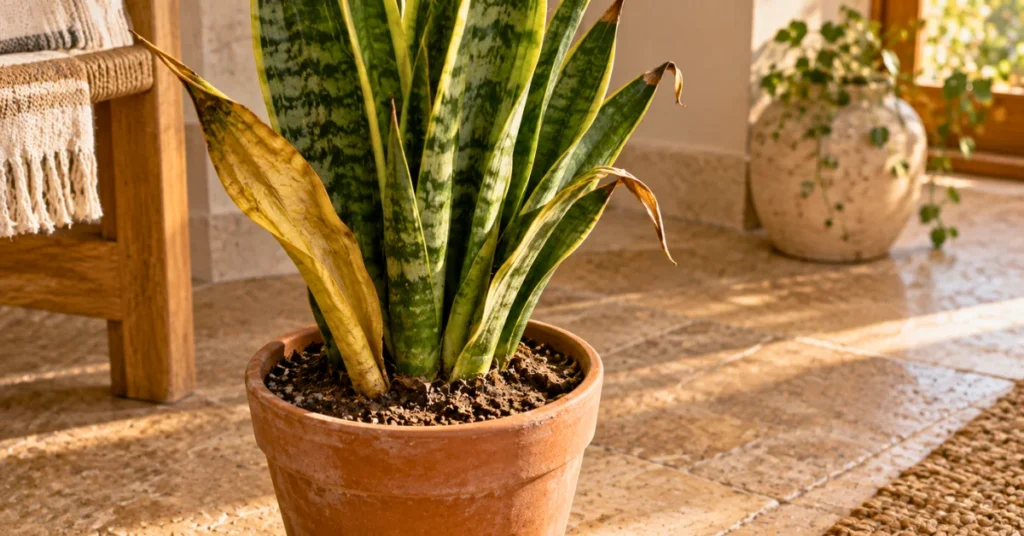
Yes. Although snake plants tolerate drought much better than soggy soil, prolonged dehydration can eventually cause yellowing.
An underwatered plant usually gives different clues:
- the soil is completely dry throughout the pot;
- leaves may wrinkle or lose some firmness;
- damaged areas tend to feel dry rather than mushy;
- leaf tips or edges may become brown and crispy;
- the pot may feel unusually light when lifted.
This distinction matters because overwatered and underwatered plants can both develop yellow foliage. The Missouri Botanical Garden specifically lists both dry soil and waterlogged soil among possible causes of yellowing indoor leaves.
Rather than watering on a fixed weekly schedule, let the plant and the potting mix tell you when moisture is needed. Temperature, season, pot size, soil composition, and light all change how quickly a container dries.
Is Your Snake Plant Getting the Wrong Light?
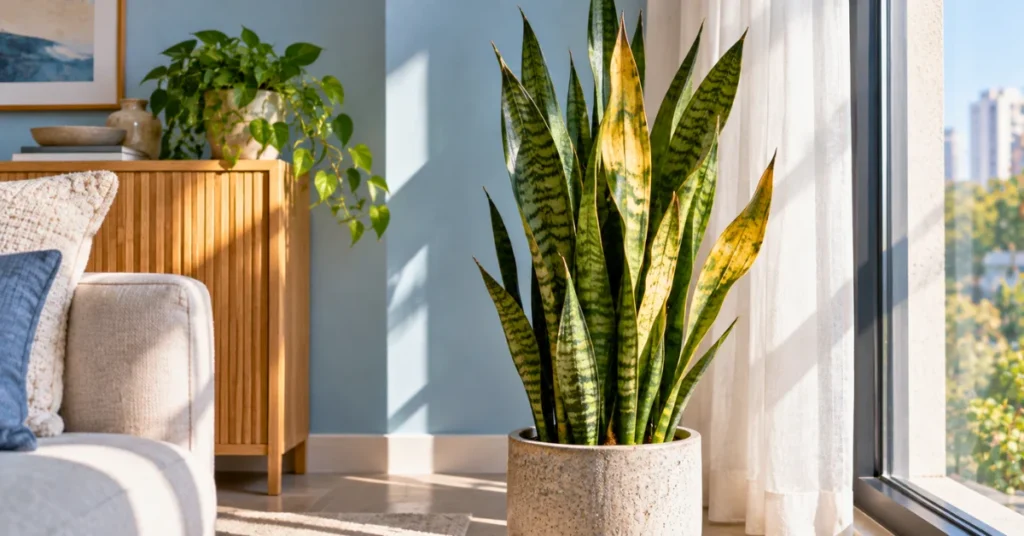
Snake plants are famous for tolerating low light, but “tolerating” and “thriving” are not quite the same thing.
University of Illinois Extension lists snake plant among houseplants capable of growing in low-light conditions. However, low light also means slower growth and usually slower water use, so a snake plant in a dim corner can stay wet much longer than the same plant near a brighter window.
That means light and watering problems can overlap. A watering routine that worked near a bright window may suddenly become too frequent after the plant is moved into a dim corner.
At the other extreme, suddenly moving a plant into intense direct sun can damage foliage. The Missouri Botanical Garden notes that excessive sun on indoor plants can cause yellowish coloring along with tan or pale patches on directly exposed leaves.
For most snake plants, bright indirect light is an easy middle ground. If yours has lived happily in lower light, increase exposure gradually rather than moving it overnight into strong afternoon sun.
Temperature, Fertilizer, and Pests Can Also Cause Yellow Leaves
If watering, roots, and light look normal, broaden the investigation.
Cold drafts and abrupt environmental changes can stress indoor plants. Keep your snake plant away from very cold window glass and direct blasts from heating or air-conditioning vents.
Fertilizer is another place where more is not necessarily better. Yellow foliage sometimes makes people immediately reach for plant food, but the Missouri Botanical Garden cautions that yellowing can also result from excessive fertilizer, cold temperatures, insufficient light, or other growing problems. It recommends examining the roots and conditions before assuming fertilizer is the answer.
Finally, inspect both sides of the leaves and the places where foliage emerges from the soil. Snake plants are fairly trouble-free, but they are not immune to pests. UF/IFAS Extension and Penn State Extension both identify mealybugs and spider mites as possible snake plant pests.
A few yellow leaves accompanied by webbing, sticky residue, cottony clusters, stippling, or visible insects deserve a closer look.
When One Yellow Leaf Is Actually Normal
One older leaf slowly yellowing is very different from several leaves changing color at once.
Plants eventually shed aging foliage. If the affected leaf is one of the oldest, the rest of the snake plant looks strong, the soil isn’t constantly wet, and new growth appears healthy, you may simply be seeing natural aging.
This is another reason not to panic at the first yellow streak.
Widespread or rapidly progressing yellowing deserves investigation. One aging bottom leaf on an otherwise healthy plant usually tells a very different story.
Can Yellow Snake Plant Leaves Turn Green Again?
Once a snake plant leaf has substantially yellowed because its tissue has been damaged or chlorophyll has been lost, don’t expect it to return to its original healthy appearance.
Correcting the underlying problem is still absolutely worthwhile. The goal is to protect the remaining foliage and allow future growth to emerge healthy.
Watch the new growth, not the damaged leaf, for signs that your changes are working. Stable upright foliage and healthy new shoots are much better indicators of recovery than waiting for an old yellow leaf to magically reverse itself.
Should You Cut Yellow Leaves Off a Snake Plant?
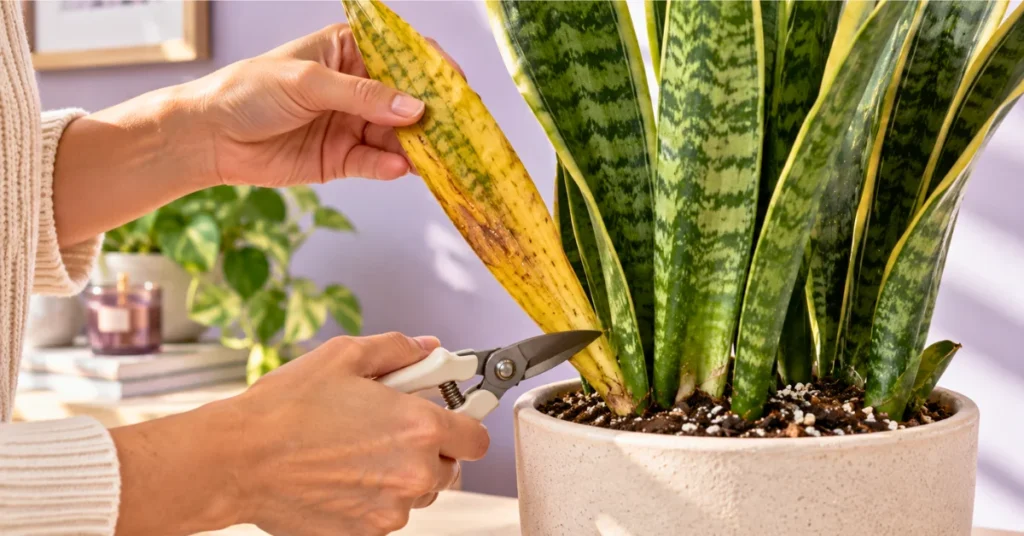
You can remove a fully yellow, badly damaged, or mushy leaf once you’re confident it will not recover.
Use clean, sharp pruning tools and cut the leaf near soil level without damaging neighboring growth. Penn State Extension recommends removing damaged snake plant leaves by cutting them off at the soil line.
There’s no need to rush to remove a leaf with one small cosmetic blemish if the tissue is otherwise firm and healthy. Pruning should solve a practical problem, not make the plant pass an appearance inspection.
And if a leaf turned yellow because of overwatering, remember that removing the leaf does not remove the cause. The roots and soil conditions still need your attention.
Snake Plant Turning Yellow? What to Do Next
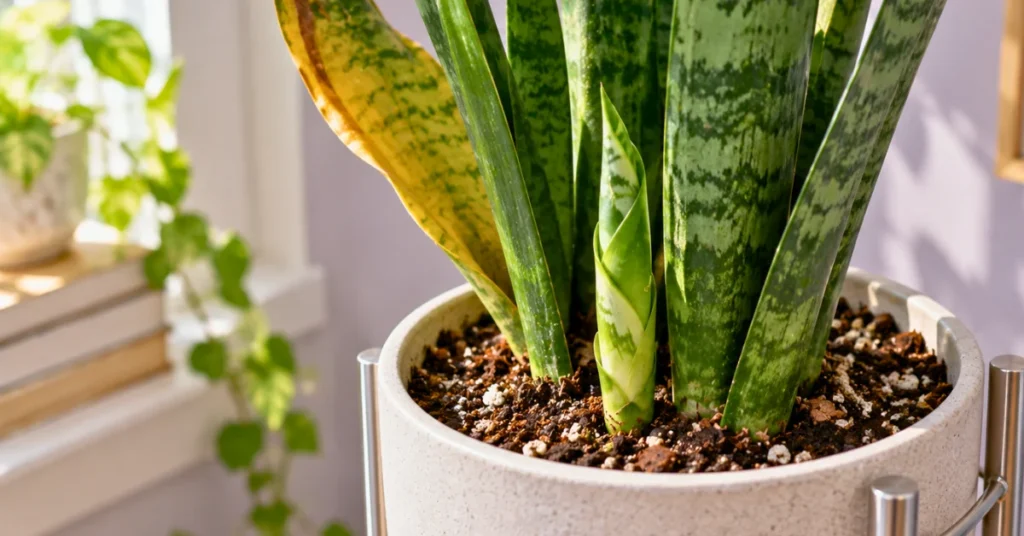
If you’ve found a snake plant turning yellow, resist the urge to change everything at once. Start with the clue most strongly supported by what you can actually see and feel.
First, check the soil below the surface. If it is wet and the yellow foliage feels soft, stop watering and investigate drainage and root health. If the entire pot is bone-dry and the leaves feel thin or crispy, a thorough watering may be appropriate.
Next, look at the container. A pot with drainage holes and a fast-draining mix makes it much easier to avoid the wet-root conditions snake plants dislike. Penn State Extension recommends well-drained soil, such as cactus mix or a mix amended with perlite, and containers with drainage holes.
Then review where the plant lives. Give it useful light, protect it from temperature extremes, and avoid automatically adding fertilizer while it is stressed.
Finally, give your correction time to work. A damaged yellow leaf is not the scorecard. What matters is whether new leaves stay healthy, existing green foliage remains firm, and the yellowing stops spreading.
Once you diagnose the cause instead of treating the color alone, snake plant care becomes much simpler. Often the right solution isn’t another product or another watering — it’s the right pot, drainage, potting mix, light, and enough patience to let the plant recover.
Snake Plant Turning Yellow FAQ
What does an overwatered snake plant look like?
An overwatered snake plant often develops yellowing foliage that feels soft or mushy rather than dry and crispy. The soil may stay damp for a long time, leaves can weaken near the base, and advanced cases may have brown or soft roots and an unpleasant smell. The combination of yellow leaves and persistently wet soil is a much stronger clue than yellow color alone.
How can I tell if my snake plant is overwatered or underwatered?
Check both the leaf texture and the soil. An overwatered snake plant is more likely to have wet soil, soft yellow leaves, and possible root damage, while an underwatered plant usually has very dry soil with wrinkled, thinner, dry, or crispy foliage. Because both problems can cause yellowing, soil moisture is one of the most useful clues.
Why are only the bottom leaves of my snake plant turning yellow?
An occasional older bottom leaf can yellow naturally as the plant ages, especially when the rest of the foliage remains firm and healthy. If several lower leaves are yellowing quickly, becoming soft, or appearing alongside consistently wet soil, however, watering and root health should be checked rather than assuming it is normal aging.
Should I cut off yellow snake plant leaves?
A completely yellow, mushy, or severely damaged leaf can be cut near the soil line with clean, sharp tools. A mostly healthy leaf with minor cosmetic damage can usually stay. Removing the leaf improves appearance and eliminates damaged tissue, but it will not solve the underlying cause of yellowing, so check watering, drainage, roots, light, and recent care changes as well.
Can a yellow snake plant leaf turn green again?
A substantially yellowed leaf usually will not regain its original healthy green appearance, so focus on stopping the problem from spreading rather than trying to reverse old damage. Once the cause has been corrected, healthy new growth and stable existing leaves are the signs that your snake plant is recovering.

Carol researches common houseplant problems using guidance from university extension services, horticultural institutions, and other reputable sources. At The Evergreen Spot, she turns that research into practical troubleshooting guides designed to help readers understand what their plants may be telling them, narrow down the most likely causes, and know what to check next.
Leave a Reply