
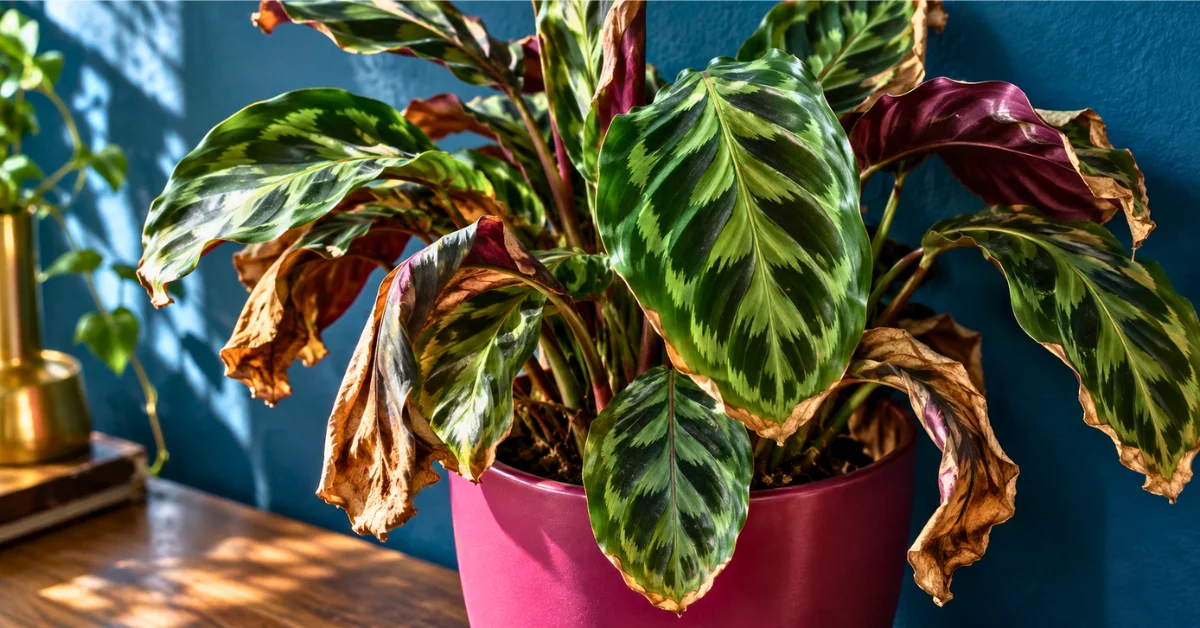
A Calathea dying can look far more hopeless than it actually is. Leaves curl into themselves, edges turn crispy, stems collapse, and within days a plant that once filled the room with patterned foliage can look like it has given up completely.
Calatheas are dramatic when their environment changes, but dramatic doesn’t always mean dead. Before you repot it, drown it, fertilize it, or start cutting everything off, look at what the leaves, soil, and roots are actually telling you. The right rescue depends on whether your plant is thirsty, staying too wet, struggling with its roots, or reacting to dry air, light, cold, or a recent move.
Table of Contents
How to Save a Dying Calathea Plant? Quick Answer
If you have a Calathea dying, start by checking the soil and roots before changing anything else. Calatheas prefer consistent moisture, but wet, airless soil can damage roots while soil allowed to dry too far can cause severe curling, drooping, and crispy foliage.
Use these clues:
- Drooping + very dry soil: the plant may simply be dehydrated.
- Drooping + wet soil: investigate the roots instead of adding more water.
- Curled leaves + crispy edges: dry soil, low humidity, or water-quality stress may be involved.
- Yellowing + wet soil: overwatering becomes a stronger suspect.
- Damage immediately after repotting: root disturbance may be causing temporary stress.
- Brown leaves but firm healthy roots: the plant may still have plenty of life left.
- Few or no leaves but healthy rhizomes/roots: recovery may still be possible.
Correct the most obvious problem first, then give the plant time to respond instead of changing its care every day.
First, Look at What Your Calathea Is Actually Doing
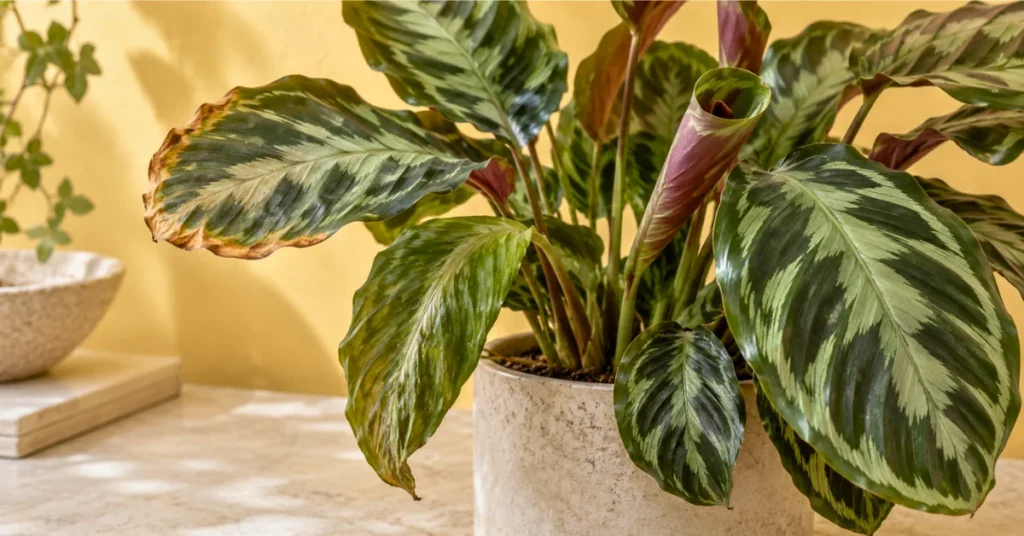
A Calathea that looks “dead” may actually be showing one very specific environmental problem.
Curling leaves with dry, crispy edges often point toward a plant losing moisture faster than it can replace it. A limp plant in bone-dry soil tells a different story from a limp plant sitting in a wet pot.
Brooklyn Botanic Garden notes that Calatheas prefer indirect light, consistent moisture, good drainage, and higher humidity, and that allowing them to dry excessively often leads to crispy foliage.
Yellowing can be trickier. UF/IFAS Extension lists overwatering, excessive light, and nutrient problems among possible causes of chlorosis in Calathea and notes that wilting can result from either drought stress or root pathogens.
That is why the leaves alone should not make the diagnosis. Always check what is happening below them.
Check the Soil Before You Change Anything
The soil gives you one of the fastest clues about how to save a struggling Calathea.
Calatheas generally prefer potting mix that remains lightly and consistently moist rather than alternating between soaked and bone dry. But “moist” does not mean permanently saturated.
Push a finger or wooden stick deeper into the pot instead of judging only by the surface.
If the soil is very dry and pulling away from the sides of the pot, water thoroughly and allow excess water to drain.
If the soil is still wet several days after watering and the plant is drooping anyway, don’t assume it needs another drink.
What Does an Overwatered Calathea Look Like?
An overwatered Calathea may have yellowing leaves, limp growth, persistently damp soil, and eventually declining roots. The confusing part is that it can also wilt.
University of California Integrated Pest Management explains that wilting in houseplants can result from underwatering but can also occur when roots decay in overly wet or poorly drained soil. Dark or discolored root tips are another warning sign.
Anyone who has dealt with a drooping houseplant knows the instinct: it’s wilted, give it water. With a Calathea, checking the soil first can save you from turning a watering problem into a root problem.
Root Rot Can Make a Calathea Look Thirsty
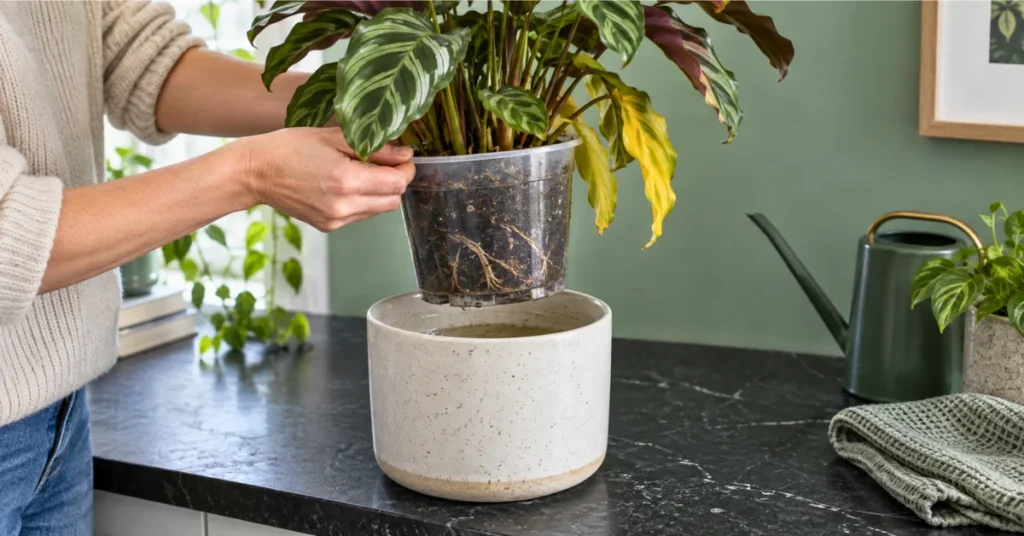
A plant with damaged roots may droop because the roots can no longer supply enough water to the foliage — even while they are surrounded by wet soil.
If your Calathea remains limp despite damp soil, develops widespread yellowing, or the pot smells unpleasant, gently inspect the root system.
Healthy roots should have structure and firmness. Roots that are dark, soft, slimy, or easily collapse deserve concern.
If only part of the system is damaged, remove clearly rotten roots with clean scissors and repot into fresh, well-draining potting mix. Use a container with drainage holes and avoid moving into a dramatically oversized pot, which can hold excess moisture around a small root system.
Don’t keep pulling the plant back out of the pot to check whether it is recovering. Once the damaged tissue is removed and conditions are corrected, stability is part of the treatment.
Low Humidity and Dry Air Can Push It Over the Edge
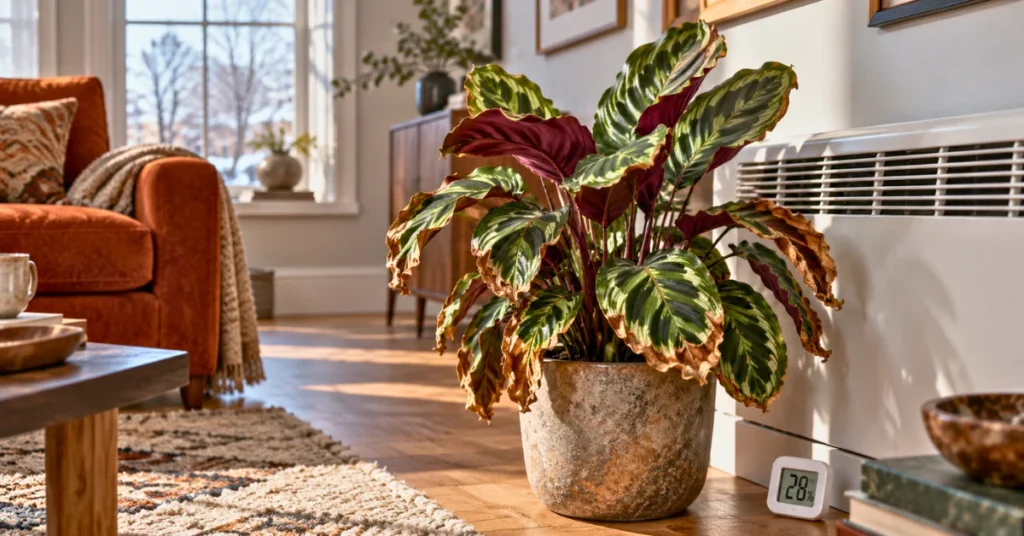
Calatheas evolved in humid tropical environments, and very dry indoor air can show up quickly on their thin foliage.
The Brooklyn Botanic Garden identifies crispy leaf edges as a common sign that humidity may be too low, while UF/IFAS Extension recommends roughly 40–60% relative humidity for maintaining Calatheas indoors.
A humidifier is usually much more useful than repeatedly misting individual leaves because it actually changes the surrounding air for longer. If only the leaf edges are crisping while the roots, soil, and new growth otherwise look healthy, that is very different from a plant collapsing in wet soil.
This becomes especially relevant during winter, when indoor heating can create a much drier environment even though you haven’t changed anything else about the plant.
Just remember: humidity cannot rescue rotten roots. If the soil is soggy, adding more moisture around the plant will not solve the main problem.
Light and Temperature Stress Matter More Than People Think
Calatheas prefer bright to moderate indirect light, not harsh direct sun.
Too much direct light can fade or scorch the foliage, while extremely dark conditions can weaken growth and slow the plant’s use of water. That second effect matters because soil that once dried at a reasonable pace may remain wet for much longer after a plant is moved into a darker location.
UF/IFAS recommends indoor temperatures around 65–80°F for Calathea and notes that exposure to colder conditions can cause chilling injury.
If your Calathea dying problem appeared during winter, consider the entire environment:
- Is the plant touching cold window glass?
- Is a heater blowing dry air toward it?
- Has daylight dropped sharply?
- Are you still watering as frequently as you did in summer?
Sometimes winter doesn’t create one problem. It creates three small ones at the same time.
Calathea Dying After Repotting? Give It Time Before Intervening Again
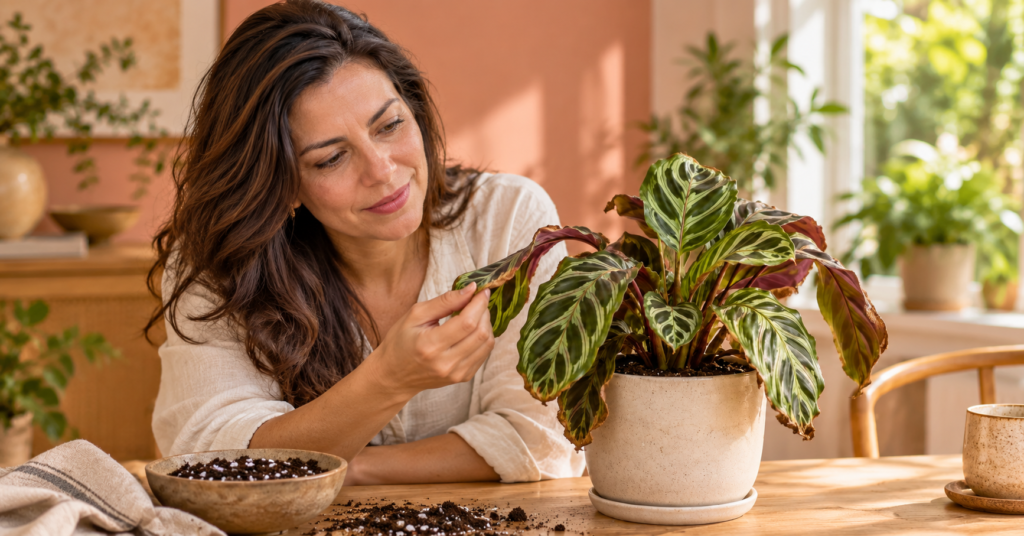
A Calathea that declines right after repotting may be reacting to disturbed roots and a sudden change in its growing environment.
Brooklyn Botanic Garden — Repotting Guide recommends handling roots gently and avoiding unnecessary simultaneous changes because changing soil and location together can contribute to plant shock.
If your plant was reasonably healthy before repotting and started drooping immediately afterward, resist the urge to repot it again two days later.
Keep conditions stable. Give it indirect light, appropriate moisture, warmth, and humidity while watching for signs that would suggest something more serious, such as increasingly soggy soil or rotting roots.
Repeatedly “rescuing” a plant can become another form of stress.
⚠️ The Rescue Mistake I’d Avoid
With a struggling Calathea, I would avoid changing three or four things at once just because the plant looks dramatic.
Repotting it again, moving it to a new room, increasing the water, adding fertilizer, and pruning leaves all in the same week can make it much harder to tell what was actually wrong — and can add more stress to an already sensitive plant.
Correct the strongest clue first, then give the plant enough stability to show you what happens next.
Should You Cut Off Crispy or Dying Calathea Leaves?
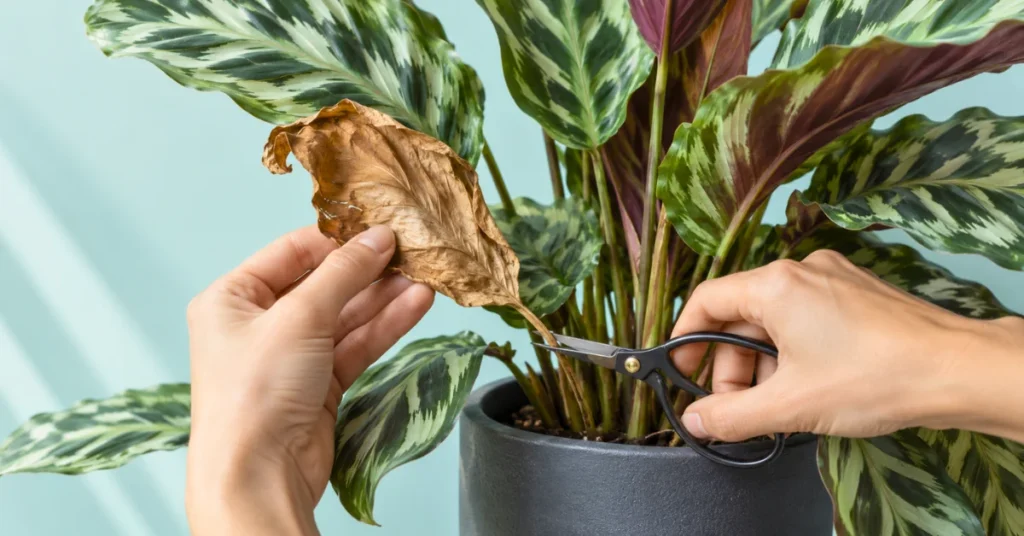
You can remove leaves that are completely brown, dried, or collapsed, but you don’t need to cut off every imperfect leaf.
A leaf with some brown edges can still contain plenty of functional green tissue. Trimming cosmetic damage will not solve low humidity, water-quality issues, inconsistent watering, or unhealthy roots.
If you do remove a dead leaf, use clean scissors and cut the leaf stem near the base without damaging surrounding growth.
For a badly stressed plant, think of pruning as cleanup — not the rescue itself.
Brown, crispy Calathea leaves can have several causes of their own, so they deserve a closer look than this general rescue guide can give them. Here, the important question is whether crispy foliage is appearing alongside healthy roots and reasonable soil moisture — or whether it is part of a broader decline.
Can a Calathea Grow Back Without Leaves?
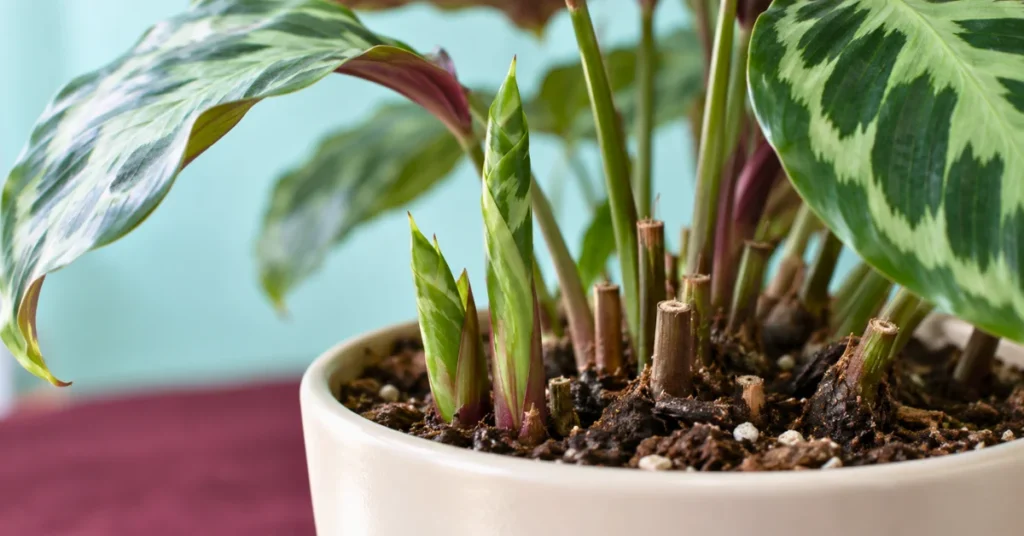
Yes, a Calathea can potentially regrow after losing most or even all of its foliage if healthy underground tissue remains.
Calatheas are rhizomatous perennials. The important question is not simply whether leaves remain above the soil, but whether viable roots and rhizomes remain below it.
If the roots are firm and healthy and the plant has not completely rotted, continue providing suitable moisture, warmth, indirect light, and humidity. New shoots may emerge from below the soil.
Recovery will not necessarily be immediate.
And an old damaged leaf is not your scorecard. New growth is.
The Brooklyn Botanic Garden notes that Calatheas can live for many years — even decades — when their needs are met, so one dramatic episode does not automatically mark the end of the plant.
Calathea Dying? What to Do Next
If you have a Calathea dying, simplify the rescue instead of throwing every possible treatment at it.
Start with this order:
- Check the soil. Is it genuinely dry, comfortably moist, or still saturated?
- Inspect the roots if the symptoms don’t match the moisture level. A wilted plant in wet soil deserves a root check.
- Correct drainage before watering again if the pot stays soggy.
- Move the plant away from direct sun, cold drafts, and heating vents.
- Increase humidity if foliage is curling and crisping while roots and watering look healthy.
- Avoid fertilizer during severe stress.
- Remove only completely dead foliage and leave useful green tissue alone.
- Stop changing things and watch the new growth.
You usually don’t need a miracle rescue product. A pot with proper drainage, suitable moisture-retentive but airy potting mix, clean pruning scissors, and — in a genuinely dry home — a humidifier can be far more useful than a shelf full of tonics.
If healthy roots or rhizomes remain, give the plant a stable environment and a chance to respond. The goal isn’t to make yesterday’s crispy leaf beautiful again. It’s to create the conditions for the next leaf to emerge healthy.
Calathea Dying FAQ
Are Calatheas hard to keep alive?
Calatheas are more sensitive to inconsistent moisture, very dry air, temperature swings, and harsh direct light than many common houseplants, but they are not impossible to maintain. Once you find a stable combination of indirect light, consistent moisture, warmth, good drainage, and sufficient humidity, their care becomes much more predictable.
What does an overwatered Calathea look like?
An overwatered Calathea may have yellowing foliage, drooping despite wet soil, slow decline, and eventually dark or softened roots. Because underwatering can also cause wilting, always check soil moisture and root condition before assuming that drooping means the plant needs more water.
How often should you water a Calathea?
There is no reliable universal schedule. Check the potting mix instead: Calatheas generally prefer consistent moisture without remaining soggy, and UF/IFAS recommends allowing the surface of the mix to dry slightly before watering again. Light, temperature, humidity, season, pot size, and soil composition all affect how quickly that happens.
What is the average lifespan of a Calathea plant?
There is no fixed household lifespan that applies to every Calathea because longevity depends heavily on species and growing conditions. Well-maintained Calatheas are perennial plants and can live for many years; Brooklyn Botanic Garden notes that healthy specimens can live for decades.
Why are my Calathea leaves turning brown and crispy?
Brown, crispy foliage is commonly associated with excessive dryness, low humidity, inconsistent watering, mineral or fluoride sensitivity, fertilizer salts, or environmental stress. If the roots and soil look healthy, moisture balance and humidity are useful places to investigate first.
Will a Calathea grow back without leaves?
It can. If healthy roots and rhizomes remain below the soil, a leafless Calathea may still produce new shoots after its growing conditions are corrected. If the root system and rhizomes have completely rotted, however, regrowth becomes much less likely.

Carol researches common houseplant problems using guidance from university extension services, horticultural institutions, and other reputable sources. At The Evergreen Spot, she turns that research into practical troubleshooting guides designed to help readers understand what their plants may be telling them, narrow down the most likely causes, and know what to check next.
Leave a Reply