
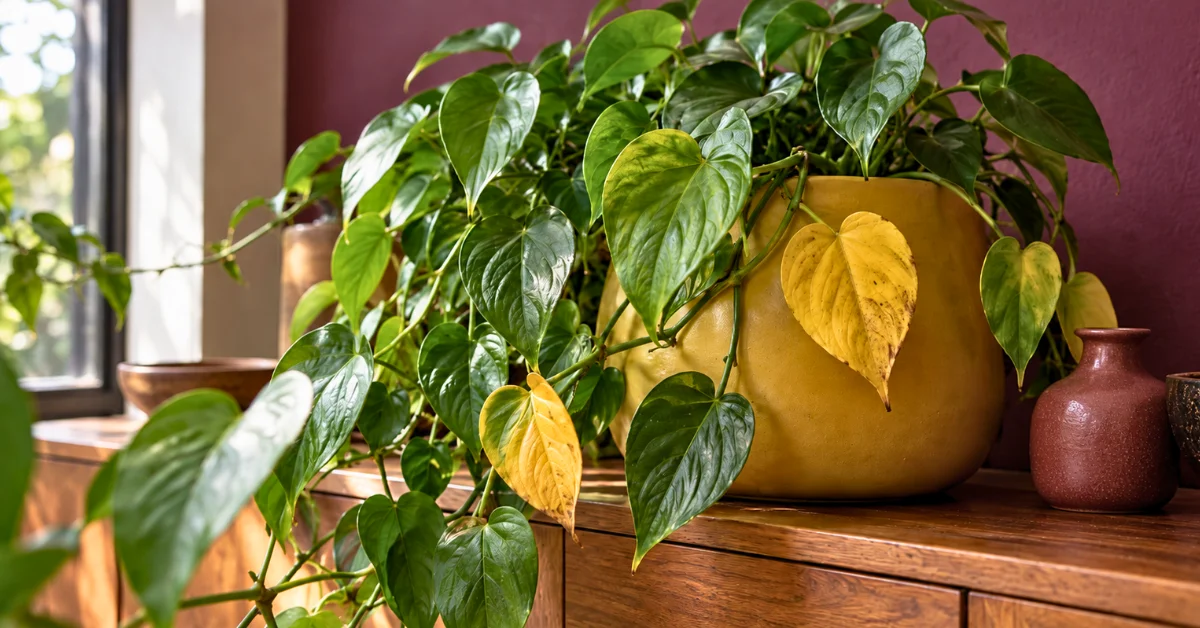
Philodendron yellow leaves can make a lush plant look troubled almost overnight. A vine that was pushing out glossy green growth suddenly has one pale leaf, then another — and the instinct is usually to water it, fertilize it, or move it somewhere brighter.
But yellowing is a symptom, not a diagnosis. The fastest way to figure out what your philodendron needs is to notice which leaves are changing, what they feel like, and what is happening in the pot. One older yellow leaf near the base tells a very different story from several new leaves fading at once.
Table of Contents
Why Does My Philodendron Have Yellow Leaves? Quick Answer
The most common causes of philodendron yellow leaves are watering problems, especially soil that stays too wet. Low light, prolonged dryness, root stress, nutrient problems, pests, temperature changes, and natural leaf aging can also cause yellowing.
Start with these clues:
- Yellow leaves + wet soil: suspect overwatering or poor drainage first.
- Yellow leaves + very dry soil: underwatering may be the problem.
- Older bottom leaves only: natural aging is possible.
- New leaves turning pale or yellow: check roots, light, and nutrition.
- Yellow leaves + brown tips: inconsistent watering, fertilizer salts, or dry conditions may be contributing.
- Yellowing + leaf drop: look for broader stress such as root trouble or moisture swings.
The important part is not to treat every yellow leaf the same way.
First, Look at Which Philodendron Leaves Are Turning Yellow
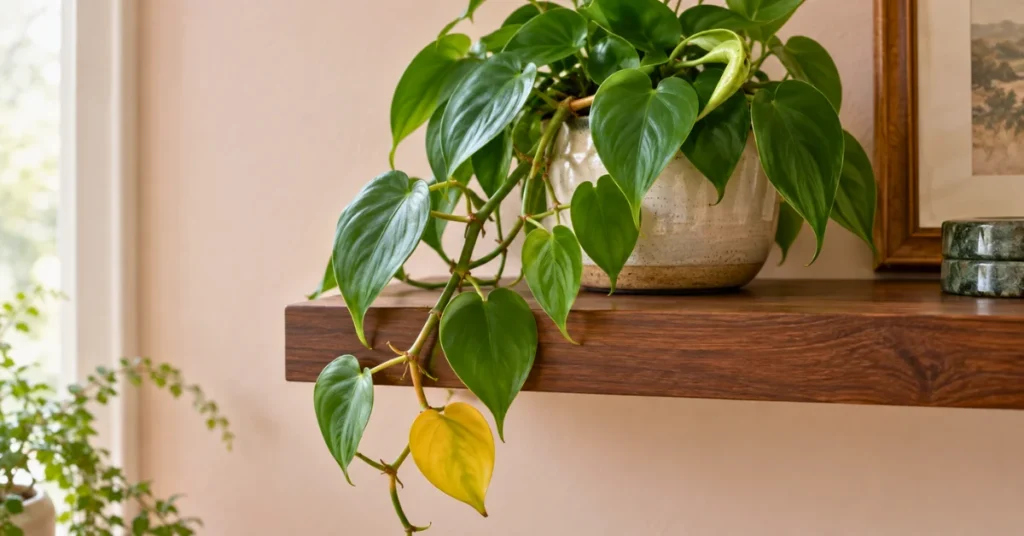
Where the yellowing begins can narrow the possibilities before you change anything.
If one of the oldest lower leaves slowly turns yellow while the plant continues producing healthy growth, it may simply be reaching the end of that leaf’s life. Wisconsin Horticulture notes that plants naturally discard older, less productive leaves as new growth develops.
Widespread yellowing is different. If several leaves are changing at once — especially newer leaves — investigate the growing conditions.
New growth that appears yellow while the veins remain greener can point toward chlorosis and possible nutrient availability issues. A soft yellow leaf on a wet plant tells a different story from a yellow leaf with dry, crispy edges.
That quick visual check can stop you from giving a stressed plant more of something it doesn’t actually need.
Overwatering Is One of the Most Common Causes
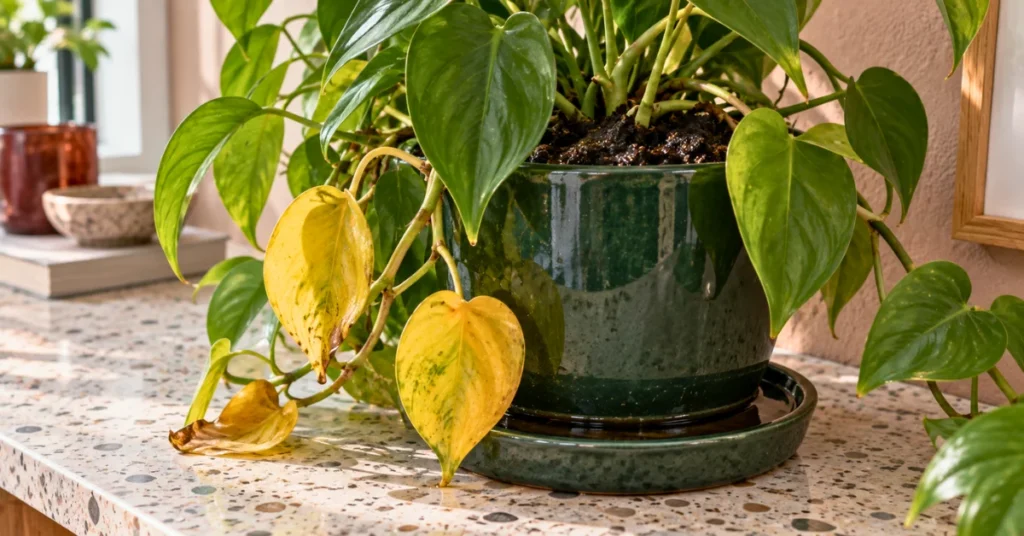
Philodendrons like consistent moisture, but they do not want their roots sitting in waterlogged potting mix.
Clemson Cooperative Extension identifies too much or too little water as major indoor philodendron problems and notes that root rot commonly develops when the potting mix drains poorly or plants are watered too frequently.
An overwatered philodendron may have yellow leaves, damp soil that stays wet for days, drooping despite moist soil, or soft, darkened roots.
Before watering, check below the surface. UF/IFAS Gardening Solutions recommends watering heartleaf philodendron when the top inch of soil has dried and using a lightweight, well-drained potting medium.
Anyone who has owned a leafy tropical plant knows the trap: it looks unhappy, so another drink feels helpful. If the roots are already too wet, that extra watering can push the problem in exactly the wrong direction.
Can Underwatering Turn Philodendron Leaves Yellow?
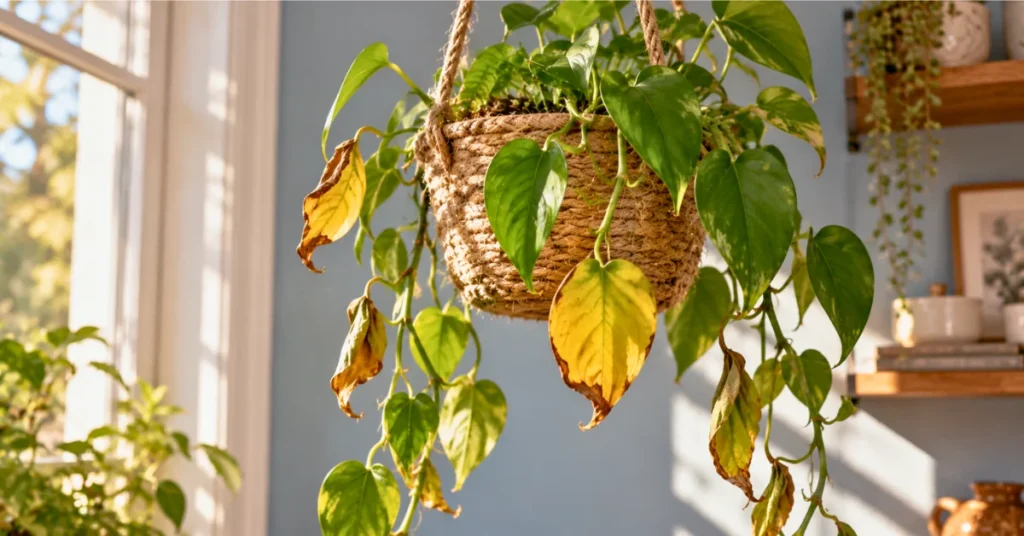
Yes. Philodendron yellow leaves can also appear when the plant stays dry for too long, particularly when repeated dry spells are followed by heavy watering.
Underwatering usually comes with very dry potting mix, wilting, curling, or brown crispy edges. The pot may also feel unusually light when you lift it.
Wisconsin Horticulture explains that watering needs change with pot size, growing conditions, and growth stage. That makes a rigid “water every seven days” rule much less useful than actually checking the soil.
If the root ball is very dry, water thoroughly and allow the excess to drain. Then avoid swinging between desert-dry soil and a soaked pot.
Is Your Philodendron Getting the Right Light?
Too little light can contribute to yellowing — and it can quietly make watering problems worse.
Philodendrons tolerate lower-light rooms, but growth slows when light is limited. A slower-growing plant also uses water more slowly, so the same watering routine may leave the potting mix wet much longer in a dim corner.
UF/IFAS Gardening Solutions notes that too little light can cause yellow leaves in heartleaf philodendron.
At the other extreme, suddenly exposing a shade-grown plant to intense direct sun can scorch foliage. If you want to increase its light, make the move gradually rather than putting it straight into harsh afternoon sun.
Do Yellow Philodendron Leaves Mean a Nutrient Deficiency?
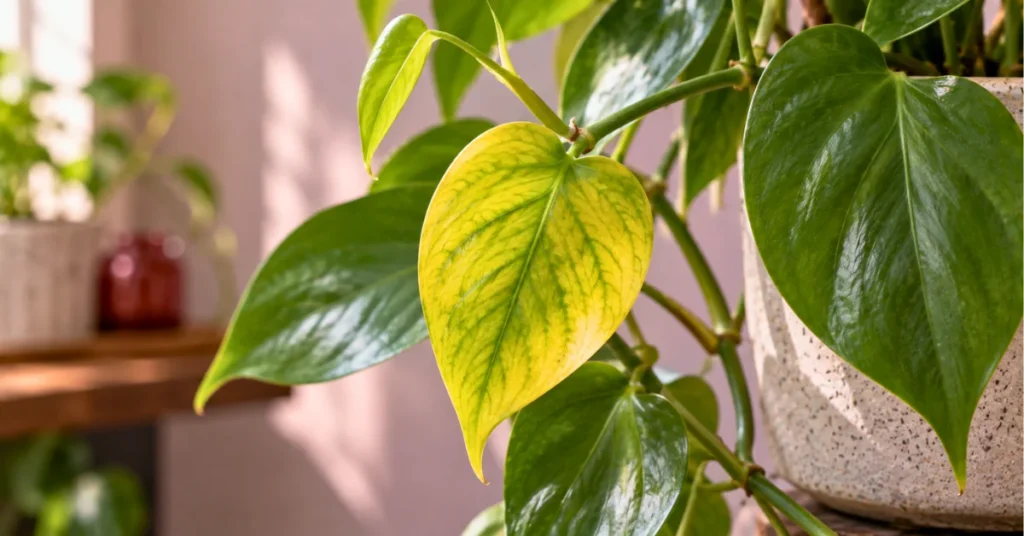
Not necessarily. Yellow leaves can be related to nutrient problems, but color alone is not enough reason to reach for fertilizer.
University of Maryland Extension lists yellow leaves and poor growth among signs of nutrient deficiency and notes that iron chlorosis often appears as yellow leaf tissue with greener veins.
But watering and root problems can interfere with nutrient uptake too. Fertilizing a plant whose roots are already struggling in soggy soil will not solve the underlying problem.
There is also such a thing as too much fertilizer. Clemson Cooperative Extension notes that excess fertilizer can cause philodendron leaf tips to curl and brown.
Check moisture, roots, and light first. If those look good and the plant still has pale growth or a recognizable chlorosis pattern, nutrition becomes a more useful suspect.
⚠️ Before You Reach for Fertilizer
A yellow philodendron leaf is not automatically asking to be fed.
If the roots are stressed by soggy soil, poor drainage, or another growing problem, adding fertilizer will not fix the reason the plant is struggling — and extra salts can create another problem on top of the first one.
I would check moisture, roots, and light before treating yellowing as a nutrient deficiency. Fertilizer makes more sense when the basics look right and the plant is still producing pale or chlorotic new growth.
Humidity and Temperature Can Add Stress
Philodendrons are tropical plants, but normal household humidity is not automatically a problem.
UF/IFAS Gardening Solutions says heartleaf philodendrons prefer higher humidity but can tolerate typical household conditions.
Very dry air can still contribute to brown edges and general stress, especially near heating vents. Cold drafts and abrupt changes in environment can also affect foliage.
Before automatically misting the plant every day, look at the whole setting. Is it beside an HVAC vent? Touching a cold window? Sitting somewhere dramatically different from where it was growing well before?
Check for Pests Before Assuming It’s a Care Problem
If the soil, roots, and light seem reasonable, inspect the leaves closely — including the undersides and stems.
Clemson Cooperative Extension lists aphids, mealybugs, scale, and spider mites among indoor philodendron pests.
Look for fine webbing, sticky residue, cottony white clusters, small bumps on stems, stippling, or distorted new growth.
Yellow or brown spots should also be considered separately from a whole leaf gradually losing its green color. A spotted leaf can indicate a different problem than the general yellowing covered in most cases of philodendron yellow leaves.
When Yellow Philodendron Leaves Are Normal
One older leaf turning yellow while the rest of the plant looks vigorous may be completely normal.
Wisconsin Horticulture points out that older leaves can naturally yellow as plants redirect resources toward new growth.
What deserves more attention is a pattern: several leaves yellowing together, new growth becoming pale, repeated leaf drop, or yellowing that continues moving through the plant.
The difference between “one old leaf” and “my whole philodendron is turning yellow” matters.
Can Yellow Philodendron Leaves Turn Green Again?
A leaf that has substantially yellowed usually should not be your measure of recovery.
Once significant damage has occurred, focus on what the plant does next. If the cause has been corrected, healthy leaves should remain stable and new growth should emerge in better condition.
The old yellow leaf may continue declining even after you fix the original problem. That does not necessarily mean your correction failed.
Should You Cut Off Yellow Philodendron Leaves?
A fully yellow or badly damaged leaf can be removed with clean pruning scissors.
Cut where the leaf stalk meets the main stem without damaging healthy tissue. If a leaf is only partially yellow and still mostly healthy, there is usually no urgency to remove it.
Pruning improves appearance, but it does not cure the cause. If you cut off three yellow leaves while leaving the roots sitting in wet soil, you have only made the symptom less visible.
Philodendron Yellow Leaves: What to Do Next
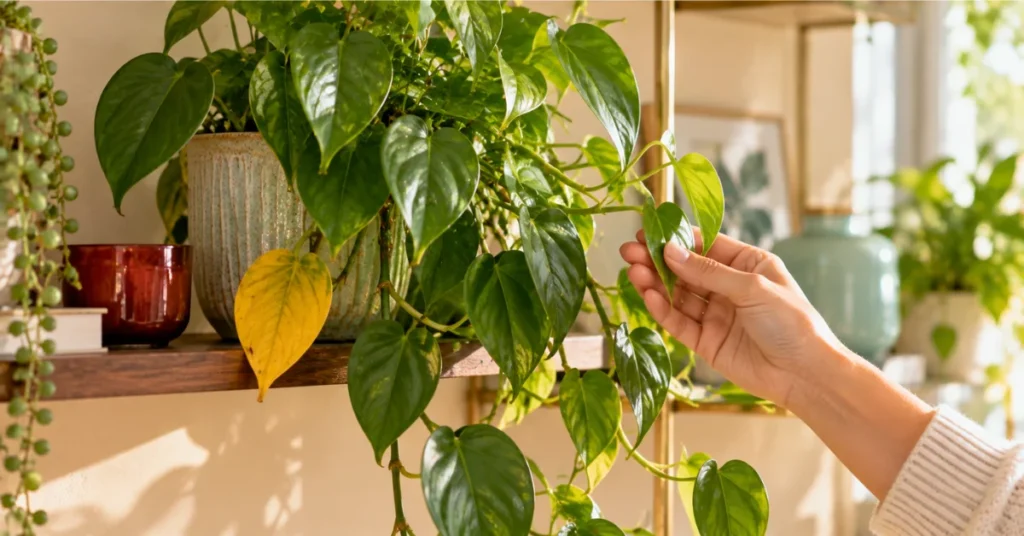
If you have philodendron yellow leaves, start with the simplest evidence instead of trying five remedies at once.
First, check the potting mix below the surface. If it is still wet, pause watering and make sure the container drains freely. If the soil is extremely dry and the leaves are limp or crispy, water thoroughly and let the excess escape.
If the moisture pattern doesn’t make sense, inspect the roots. Wisconsin Horticulture notes that plants with root rot may wilt even though the soil is wet and can develop soft, brown roots, sometimes with an unpleasant odor.
Next, reassess light and location, then check for pests before fertilizing.
If the potting mix is dense, drainage is poor, or damaged roots are present, a fresh, well-draining houseplant mix and a container with drainage holes may be more useful than any “plant rescue” additive. If the plant is simply root-bound, move up only one pot size rather than placing a small root ball inside a huge volume of wet soil.
Then give the plant time.
The goal is not to force an old yellow leaf back to green. It is to stop the yellowing from spreading and see healthy new growth take over.
Philodendron Yellow Leaves FAQ
What does an overwatered philodendron look like?
An overwatered philodendron often has yellow or drooping leaves while the soil remains wet, and advanced cases may develop soft brown roots or an unpleasant smell. Because underwatering can also cause wilting and yellowing, check moisture deeper in the pot rather than diagnosing from the leaves alone.
How often should you water a philodendron?
There is no reliable universal weekly schedule because light, temperature, pot size, season, and potting mix all affect how quickly a philodendron uses water. For heartleaf philodendron, UF/IFAS recommends watering when roughly the top inch of soil has dried, then watering thoroughly and allowing excess water to drain.
Why are my philodendron leaves turning yellow and brown?
Yellow leaves with brown areas can result from inconsistent watering, prolonged dryness, excess fertilizer, root stress, strong sun, or other environmental damage. Dry crispy margins point in a different direction from soft yellow-brown tissue on a plant sitting in wet soil.
Should I cut off yellow philodendron leaves?
You can remove a leaf once it is fully yellow, badly damaged, or declining, using clean tools and cutting near the base of the leaf stalk. Removing it can tidy the plant, but it will not correct watering, root, light, pest, or nutrient problems.
Why are only the bottom leaves of my philodendron turning yellow?
An occasional older bottom leaf can simply be natural aging, especially when the rest of the plant is healthy and new growth looks normal. If multiple lower leaves begin yellowing together or the pattern continues upward, check moisture, root health, light, and whether the plant has become severely root-bound.
Can yellow philodendron leaves turn green again?
A substantially yellowed philodendron leaf usually will not return to its original healthy appearance. After correcting the cause, judge recovery by whether the yellowing stops spreading, existing green leaves remain stable, and healthy new leaves emerge.

Carol researches common houseplant problems using guidance from university extension services, horticultural institutions, and other reputable sources. At The Evergreen Spot, she turns that research into practical troubleshooting guides designed to help readers understand what their plants may be telling them, narrow down the most likely causes, and know what to check next.
Leave a Reply