

A money tree dropping leaves can go from looking perfectly lush to leaving a surprising pile of foliage on the floor in just a few days. And because Pachira aquatica reacts to several kinds of stress by shedding leaves, the obvious question—“Am I watering it wrong?”—doesn’t always have the obvious answer.
The useful clue is what happens before the leaf falls. Did it turn yellow first? Brown and crispy? Did healthy-looking green leaves suddenly drop after you moved the plant? Is the tree losing old foliage while still producing fresh new growth?
Those patterns can tell you much more than the fallen leaves themselves. Before changing everything about your care routine, look at the color, texture, soil moisture, and what recently changed around the plant.
Table of Contents
Why Is My Money Tree Dropping Leaves? Quick Answer
A money tree dropping leaves is usually responding to one or more of these conditions:
- Too much or too little water
- Poor drainage or root stress
- A sudden change in location
- Repotting or disturbed roots
- Too little light
- Hot or cold drafts
- Seasonal changes, especially lower winter light
- Pests
- Normal loss of older foliage
Start by looking at the leaves before they fall. Yellow, soft leaves point in a different direction from dry brown leaves, while sudden green leaf drop often follows environmental stress.
If the trunk remains firm and healthy new growth is appearing, leaf loss does not automatically mean your money tree is dying.
What Does the Leaf Drop Look Like?
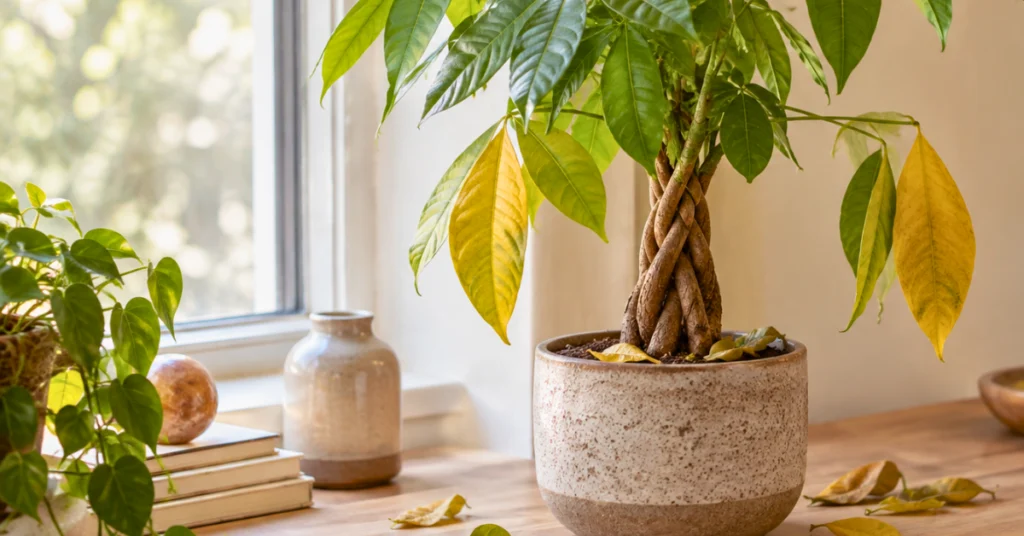
The appearance of the leaves can help narrow down what to investigate first.
| What you notice | Check first |
|---|---|
| Yellow leaves falling | Excess moisture, root stress, low light |
| Brown, crispy leaves falling | Dryness, inconsistent watering, heat or light stress |
| Green leaves suddenly dropping | Moving, repotting, drafts or environmental shock |
| Drooping leaves that later fall | Soil moisture and root condition |
| Old leaves falling while new ones grow | Normal turnover or mild stress |
| Most or all leaves falling | Significant environmental or root stress |
| Sticky leaves, webbing or visible insects | Pests |
The New York Botanical Garden specifically notes that money trees may shed leaves after being moved, after root disturbance, or when exposed to hot or cold drafts. It also notes that yellow leaf drop can occur as autumn light levels decrease.
That makes context especially important with this plant. A money tree that started dropping leaves the week after being relocated deserves a different diagnosis from one sitting in continuously wet soil with a softening trunk.
⚠️ What Changed Right Before the Leaves Fell?
With a money tree, I would think back before I changed anything else.
Was the plant moved to another room? Repotted? Did the weather turn colder? Did a heater or air conditioner start running nearby? Did the light suddenly become weaker?
Money trees can respond to environmental changes by dropping leaves even when the roots and trunk are still healthy. If the timing lines up with a recent change, restoring stability may be more useful than immediately changing the watering routine.
Money Tree Leaves Turning Yellow and Falling Off
Yellow leaves that fall from a money tree often point toward moisture or root stress, although light and other conditions can contribute.
Overwatering is worth checking first if the potting mix stays damp for a long time. Excess water reduces oxygen around houseplant roots and can damage the roots enough that they stop functioning normally. University of Maryland Extension notes that overwatered indoor plants may develop yellowing of lower or inner leaves, wilting, leaf drop, and eventually root problems.
Check whether:
- Water drains freely from the pot.
- The pot sits in collected water.
- The soil is still wet well after watering.
- The trunk near the soil feels firm or soft.
- There is an unpleasant smell from the potting mix.
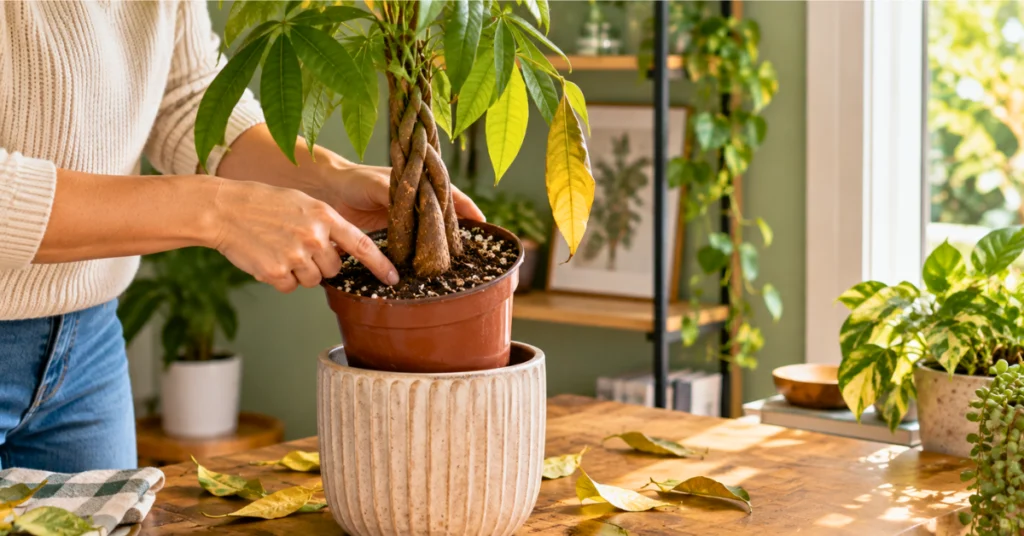
Yellow leaves are not proof of overwatering by themselves. Lower light can also contribute to yellowing and leaf loss, especially when days become shorter.
The important question is whether the yellowing is progressive and widespread or limited to an occasional older leaf.
Money Tree Leaves Turning Brown and Falling Off
Brown leaves that eventually fall tend to suggest a different set of problems, particularly inconsistent moisture, dry conditions, excessive sun, or environmental stress.
A crispy brown leaf with dry edges is not the same symptom as a yellow, soft leaf in wet soil.
The New York Botanical Garden notes that crispy, curling, falling money tree leaves may occur with inconsistent watering, inadequate light, or dry conditions, particularly during winter.
Direct sun can also damage Pachira aquatica. North Carolina Extension recommends indirect sun or a mixture of sun and shade and notes that direct exposure can scorch the leaves.
Anyone who has watched a money tree suddenly start shedding leaves knows how easy it is to react by watering more. If the leaves are crispy, check the soil—but also look at recent sunlight, heating vents, drafts, and whether the root ball is actually becoming evenly moist when you water.
Money Tree Drooping and Losing Leaves
A drooping money tree can be either too dry or too wet, which is why drooping alone is not enough to diagnose the problem.
University of Maryland Extension points out that both underwatering and overwatering can cause indoor plants to wilt. When roots are damaged by excess moisture, the plant may wilt even though the soil is wet because compromised roots cannot supply water efficiently to the foliage.
So before watering a drooping money tree:
- Feel the soil below the surface.
- Check whether the pot drains.
- Look for yellowing or soft leaves.
- Inspect the trunk near the soil.
- Think about when the plant was last watered.
Drooping with very dry soil suggests a different problem from drooping with persistently wet soil.
Money Tree Lost All Its Leaves: Is It Dead?
A money tree that has lost all its leaves is not necessarily dead.
This plant can respond dramatically to environmental stress. NYBG notes that money trees may lose leaves after root disturbance, relocation, drafts, or seasonal reductions in light and may produce another flush once conditions improve.
Look at the plant itself rather than the empty canopy.
Encouraging signs include:
- A firm trunk
- Healthy-colored stems
- No foul smell from the soil
- Firm roots
- Small buds or emerging shoots
More concerning signs include a soft or rotting trunk, dark mushy roots, spreading decay, or complete deterioration of the stems.
If the trunk is still firm, patience matters. A bare money tree can look much more hopeless than it actually is.
Why Is My Money Tree Dropping Leaves After Moving or Repotting?
A money tree can drop leaves after a move or repotting because Pachira aquatica is sensitive to abrupt environmental and root changes.
A recent 2026 Ask Extension response about a mature money tree losing yellow leaves while still producing new growth specifically identified repotting/root disturbance and changes in light as plausible stressors.
A move can change several variables at once:
- Light intensity
- Direction of light
- Temperature
- Airflow
- Humidity
- Water use
Repotting adds another variable because roots have been disturbed.
If the trunk and roots are healthy, resist the urge to respond by immediately repotting again, fertilizing heavily, moving the plant repeatedly, and changing the watering routine all at once. Give it stable conditions and watch what the new growth does.
Does a Money Tree Drop Leaves in Winter?
Money trees can lose more leaves during winter, particularly indoors where light levels decrease and growing conditions change.
NYBG notes that leaves may yellow and fall as days shorten in autumn and advises increasing available light when possible.
Winter also changes how quickly soil dries. A plant that needed frequent watering during brighter, warmer months may use water more slowly when growth decreases.
That means continuing exactly the same watering schedule year-round can create problems.
Do not water simply because a certain number of days have passed. Check what is happening in the pot first.
What Does an Overwatered Money Tree Look Like?
An overwatered money tree may develop yellow leaves, drooping, leaf loss, persistently wet soil, and eventually soft or deteriorating roots and stems.
Standing water is particularly concerning. North Carolina Extension notes that Pachira aquatica prefers moist but well-drained potting mix and does not tolerate standing water, which can contribute to root rot.
If you suspect root rot, inspect the roots rather than continuing to experiment with watering frequency. University of Maryland describes healthy houseplant roots as firm and light-colored, while diseased roots tend to become dark and soft.
Root rot deserves its own diagnosis; not every money tree dropping leaves has it.
Will Money Tree Leaves Grow Back?
Yes, money tree leaves can grow back if the trunk and roots remain healthy and the underlying stress is corrected.
The new leaves may not emerge from the exact same points where old foliage fell, so do not judge recovery solely by bare stems.
Instead, watch for:
- New buds
- Fresh shoots
- Healthy leaf expansion
- Stable stems
- Reduced leaf loss
A tree that is dropping some old leaves while actively producing healthy new ones may simply be adjusting or replacing foliage rather than undergoing total decline.
Money Tree Dropping Leaves: What to Do Next
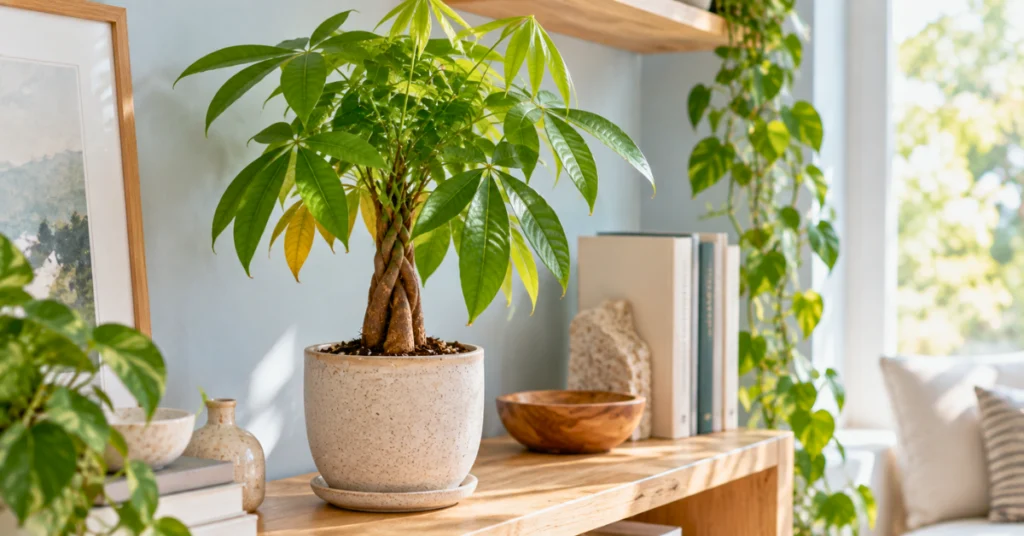
When you find a money tree dropping leaves, do not start by changing everything. Start by identifying the pattern.
Check the leaf color and texture. Feel the soil. Look at the drainage. Think about whether the plant was recently moved, repotted, exposed to a draft, or moved into stronger or weaker light. If the soil stays wet and the plant continues declining, inspect the roots.
For most indoor money trees, choose a container with a functional drainage hole and a well-draining houseplant potting mix. Clemson Extension notes more generally that both overwatering and underwatering can trigger houseplant leaf drop and that good drainage is central when excess moisture is involved.
Then give the plant some stability. A money tree often tells you that something changed by dropping leaves—but the next flush of healthy growth is what tells you the problem has been corrected.
Money Tree Dropping Leaves FAQ
Should I remove yellow or dead leaves from my money tree?
Leaves that are fully yellow, brown, dry, or detached can be removed for appearance and easier monitoring, but do not aggressively prune healthy foliage simply because the plant is stressed. Removing leaves does not correct the underlying cause of the leaf drop.
Can a money tree recover after losing all its leaves?
Yes, it can recover if the roots and trunk are still healthy. Money trees sometimes respond to relocation, root disturbance, drafts, or lower seasonal light by losing significant foliage, and new growth may return after conditions stabilize.
Why is my money tree losing leaves but growing new ones?
Losing older foliage while still producing healthy new growth can indicate normal turnover or a plant adjusting to mild stress. A 2026 Ask Extension case involving this exact pattern noted that yellow leaf drop with continuing new growth did not necessarily indicate total decline.
How often should I water a money tree?
There is no reliable universal number of days between waterings because light, temperature, pot size, season, and potting mix all affect how quickly the soil dries. Check the moisture in the pot instead of automatically watering on a calendar.

Carol researches common houseplant problems using guidance from university extension services, horticultural institutions, and other reputable sources. At The Evergreen Spot, she turns that research into practical troubleshooting guides designed to help readers understand what their plants may be telling them, narrow down the most likely causes, and know what to check next.
Leave a Reply