
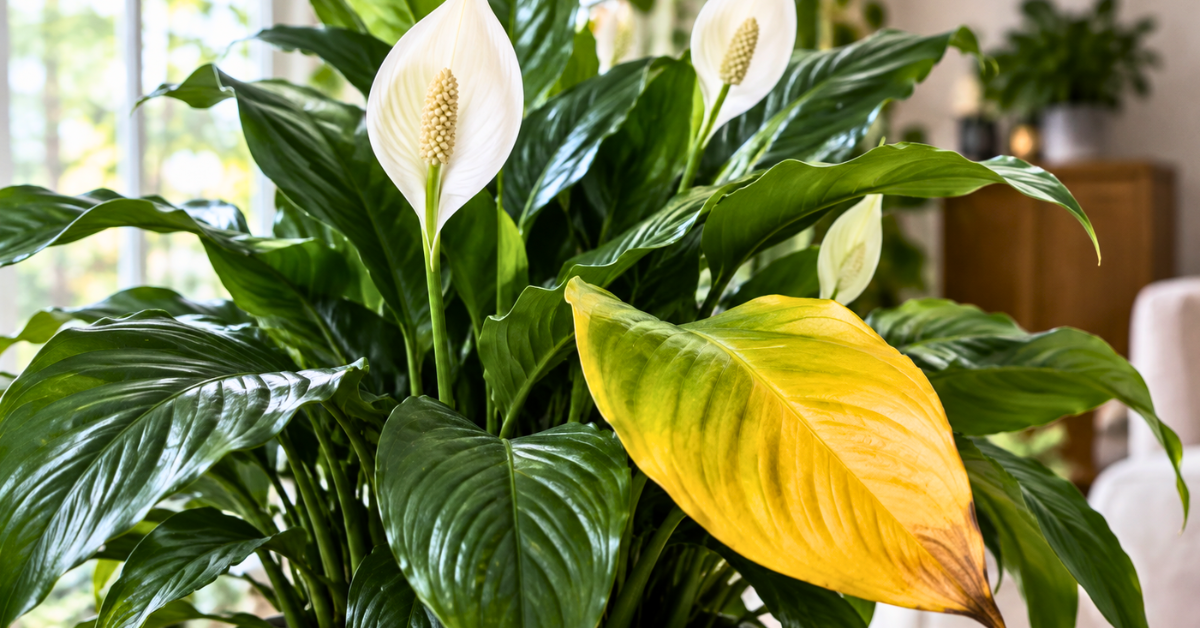
Peace lily leaves turning yellow can turn a lush, glossy plant into something that suddenly looks unhappy. And because peace lilies are famous for drooping dramatically when they are thirsty, it is tempting to assume every yellow leaf is asking for more water.
That assumption can backfire. Yellowing can come from too much water, too little water, harsh light, fertilizer salts, water quality, temperature stress, pests, or simply an older leaf reaching the end of its life. The color is only the first clue.
Before you water again, look at which leaves are yellow, whether they are also brown or drooping, and how the soil feels. That combination usually tells you much more than yellowing alone.
Table of Contents
Why Are My Peace Lily Leaves Turning Yellow? Quick Answer
Peace lily leaves turning yellow usually means the plant is experiencing stress, but the cause can range from a watering problem to completely normal leaf aging.
The most common causes are:
- Soil staying wet for too long
- Letting the plant become excessively dry
- Poor drainage or root stress
- Too much direct sunlight
- Cold drafts or temperature changes
- Mineral or fertilizer salt buildup
- Low humidity
- Pests
- Natural aging of older leaves
Peace lilies prefer soil that stays somewhat moist without becoming soggy. One yellow lower leaf on an otherwise vigorous plant may not be alarming; several leaves changing quickly deserve more investigation.
The first place to look is the pot—not the watering can.
What Does the Yellowing Pattern Tell You?
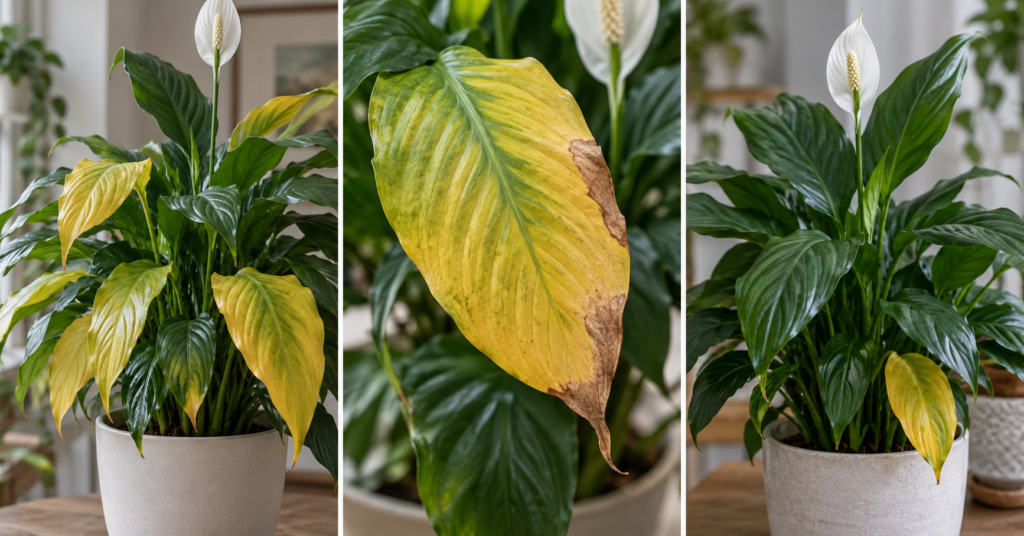
The pattern of yellowing can help narrow down the cause before you start changing the plant’s care.
| What you notice | What to check first |
|---|---|
| Several yellow leaves + wet soil | Overwatering, drainage, root stress |
| Yellow + drooping + dry soil | Underwatering |
| Yellow and brown leaves | Watering, roots, light, temperature |
| Yellow or brown tips | Water quality, salts, dryness, direct sun |
| One older lower leaf | Natural aging |
| Yellowing after repotting | Root disturbance, new soil moisture |
| Yellow leaves + visible insects | Pest damage |
⚠️ The Mistake I’d Avoid
The easiest mistake with a peace lily is letting one dramatic wilt train you into watering too often.
A thirsty peace lily can collapse quickly and then perk back up after watering, which makes it tempting to keep the soil constantly wet afterward. But yellow leaves with already-moist soil tell a different story. Before watering again, check whether the root zone is actually drying as expected.
NC State Extension recommends keeping peace lily soil moist but not soggy and allowing some drying between waterings. It also advises keeping the plant out of direct sun and notes that cold, drafty conditions can damage it.
That is why the same yellow color can require very different responses.
Why Are My Peace Lily Leaves Turning Yellow and Brown?
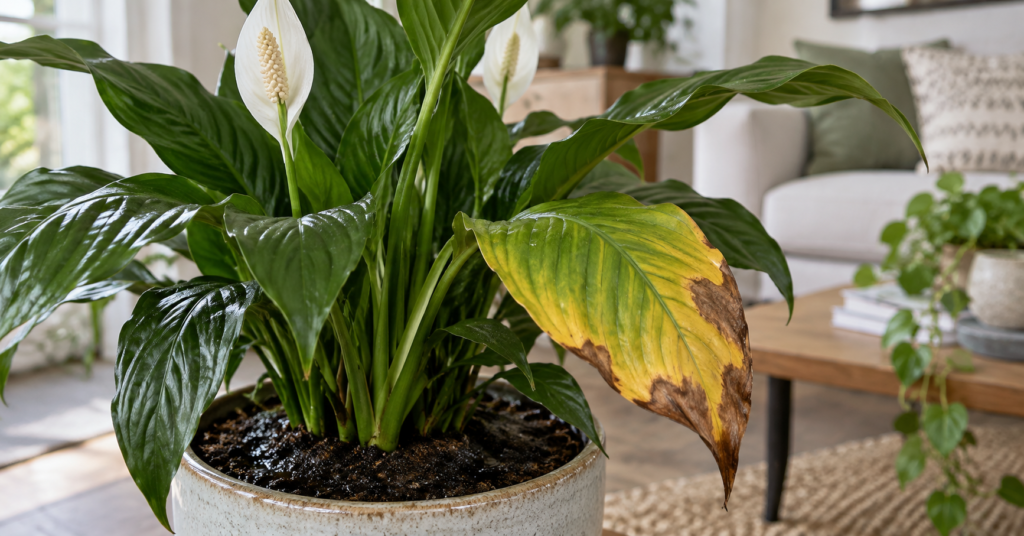
When peace lily leaves are turning yellow and brown, the texture and location of the brown areas become useful clues.
Yellow leaves with dry, crispy brown edges are more consistent with moisture loss, low humidity, direct sun, or tip burn. Yellow leaves with darker damage while the soil remains wet should make you investigate drainage and root health.
Do not use the color combination as proof of root rot. Check the soil first.
NC State specifically lists direct sunlight, underwatering, and low humidity among causes of brown peace lily leaf tips.
If browning appeared on the side facing a sunny window, light exposure becomes more suspicious. If the tips are affected across many leaves while the rest of each leaf remains relatively healthy, water quality or fertilizer salts may deserve more attention.
The Most Common Causes of Yellow Peace Lily Leaves
Overwatering and Root Stress
Constantly wet soil is one of the first things to rule out when peace lily leaves turning yellow appear across several parts of the plant.
Peace lilies like moisture, but their roots still need oxygen. Waterlogged soil can stress roots and eventually contribute to decay.
Check for:
- Soil that stays wet for many days
- A pot without adequate drainage
- Multiple yellowing leaves
- Drooping even though the soil is wet
- Brown, soft, deteriorating roots
- Standing water inside a decorative planter
General houseplant diagnostic guidance from Penn State also lists overwatering and root rot among causes of yellowing in older foliage and wilting.
If the soil is already wet, watering again is not the solution.
Underwatering
Peace lilies are expressive plants. When they become too dry, they can droop noticeably.
Repeated or severe drying can eventually damage foliage as well. NC State recommends keeping the soil moist while avoiding soggy conditions.
If the plant is drooping and the root zone is genuinely dry, water thoroughly and let excess water escape from the drainage holes.
Anyone who has dealt with a thirsty peace lily knows how dramatically it can collapse. That makes it especially easy to start watering on a schedule afterward. Resist that impulse—check the soil each time instead.
Too Much or Too Little Light
Peace lilies tolerate lower-light interiors better than many flowering houseplants, but that does not mean light is irrelevant.
Strong direct sun can scorch the foliage. NC State recommends partial to deep shade and specifically advises against direct sun.
Very low light creates a different problem: growth slows, and soil may stay wet longer because the plant is using less water.
If yellowing started after the plant changed locations, compare its current light exposure with the conditions it had before.
Water Quality and Fertilizer Salts
Peace lilies can be sensitive to what accumulates in their potting mix.
Washington State University notes that peace lilies are sensitive to fluoride, while hard water and other mineral sources can contribute salts to the growing medium over time. Missouri Extension also identifies brown leaf tips as a classic symptom of fluoride injury in Spathiphyllum. If the same brown tips keep returning despite reasonable watering, the problem may be what is in the water rather than how often you use it.
Fertilizer can create similar problems when applied too heavily. NC State warns that overfertilizing and salt buildup can burn both leaf tips and roots.
If tips repeatedly discolor despite reasonable watering, review both your fertilizer routine and water source.
Temperature and Humidity Stress
Peace lilies prefer warm, stable indoor conditions.
Cold drafts can slow growth and damage foliage, while very dry air can contribute to brown leaf tips. NC State recommends warm temperatures and specifically warns about cold, drafty conditions.
Think about what is happening around the plant: air-conditioning vents, heaters, cold windows, or a recent seasonal change can all alter its environment without you changing its care routine.
Pests
Yellowing caused by pests usually comes with other clues.
NC State identifies mealybugs as a common indoor pest of peace lilies. Check the undersides of leaves, leaf bases, and new growth for cottony material, sticky residue, small insects, or unusual spotting.
If the plant looks otherwise clean and healthy, pests move lower on the list of likely causes.
Natural Aging
Not every yellow leaf needs fixing.
Peace lilies naturally replace older foliage. A single mature leaf near the base may gradually turn yellow while the rest of the plant remains healthy.
The pattern matters: one old leaf slowly fading is very different from five leaves yellowing within a short period.
What Do Yellow or Brown Tips Mean?
Yellow or brown tips usually suggest localized leaf stress rather than an automatically fatal plant problem.
Possible contributors include:
- Underwatering or repeated wilting
- Low humidity
- Direct sunlight
- Excess fertilizer salts
- Fluoride or other water-quality issues
NC State links brown tips in peace lilies with underwatering, low humidity, and excessive direct sun, while Illinois University Extension Guidance also identifies fluoride and soluble salts as potential sources of tip damage.
If only the tips are damaged, do not immediately repot an otherwise healthy plant. First look for a recurring environmental or watering pattern.
How to Fix Yellow Leaves on a Peace Lily
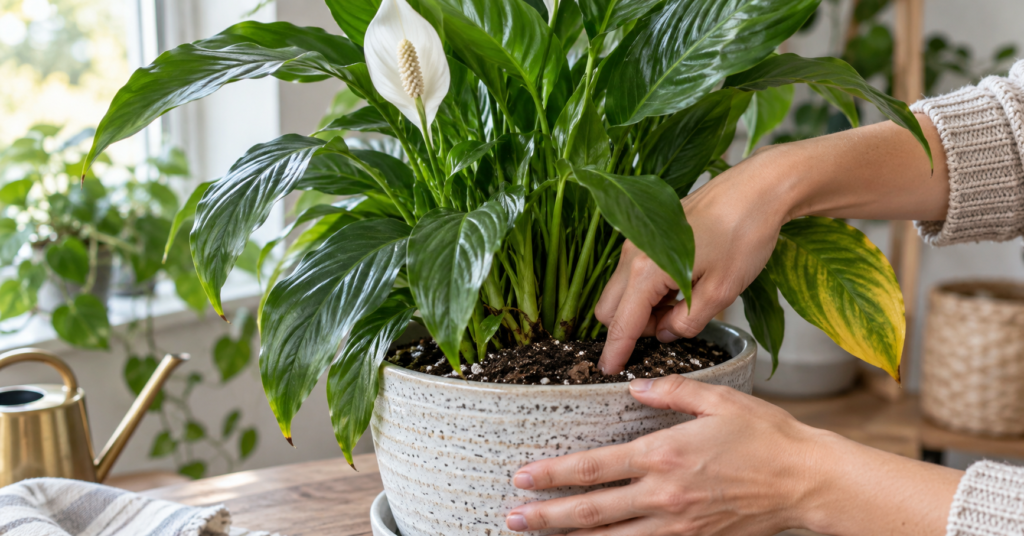
Start with diagnosis rather than trying several remedies at once.
- Feel the soil below the surface. Determine whether it is dry, evenly moist, or saturated.
- Check the drainage. Make sure water is not collecting inside a cachepot or saucer.
- Inspect the roots if wet soil and decline continue.
- Look at the yellowing pattern. One lower leaf and widespread yellowing are different situations.
- Review the light. Protect the plant from strong direct sun.
- Think about water and fertilizer. Repeated tip burn may point toward salts or water quality.
- Check for pests.
- Correct the most likely cause and give the plant time.
Changing the soil, pot, watering schedule, fertilizer, and location in one afternoon can create more stress and make it impossible to know what the original problem was.
Can Yellow Peace Lily Leaves Turn Green Again?
A leaf that has become completely yellow generally will not return to its original healthy green appearance.
That does not mean the plant cannot recover.
If you correct the cause, unaffected foliage can remain healthy and new leaves can emerge normally. A slightly stressed leaf may stabilize, but heavily yellowed or damaged tissue should not be your measure of success.
Watch the new growth and the rate of new yellowing instead.
Peace Lily Leaves Turning Yellow: What to Do Next
If you see peace lily leaves turning yellow, do not assume the plant needs another drink.
Check the soil first. Wet soil shifts attention toward drainage and roots; very dry soil makes underwatering more plausible. Then look at the pattern of damage, light exposure, temperature, fertilizer use, water quality, and pests.
If the current container holds excess water, choose a pot with effective drainage and a well-draining houseplant mix rather than relying on a rigid watering schedule. Peace lilies appreciate consistent moisture—but not constantly saturated roots.
Once you correct the most likely problem, leave the plant in stable conditions and watch the next leaves. The best sign of recovery is not an old yellow leaf turning perfect again. It is new foliage staying green.
Peace Lily Yellow Leaves FAQ
Should I remove yellow peace lily leaves?
You do not have to remove a leaf as soon as it begins yellowing. If a leaf is completely yellow or dead, it can be removed near the base with a clean cutting tool. If it still contains plenty of healthy green tissue, there is usually no urgency to cut it off.
What does an overwatered peace lily look like?
An overwatered peace lily may have yellow leaves, drooping foliage despite moist soil, and a potting mix that remains saturated for too long. If root damage develops, roots may become brown and soft rather than healthy and firm.
Why are my peace lily leaves turning yellow after repotting?
Repotting disturbs roots and can also change how quickly the soil dries. Make sure the new pot is not excessively large, the mix drains adequately, and you are not compensating for temporary drooping by keeping the soil constantly saturated.
Why are the lower leaves on my peace lily turning yellow?
One older lower leaf turning yellow can be part of normal aging. If several lower leaves yellow together or the problem begins moving upward through the plant, check moisture, drainage, roots, light, and overall growing conditions.

Carol researches common houseplant problems using guidance from university extension services, horticultural institutions, and other reputable sources. At The Evergreen Spot, she turns that research into practical troubleshooting guides designed to help readers understand what their plants may be telling them, narrow down the most likely causes, and know what to check next.
Leave a Reply