
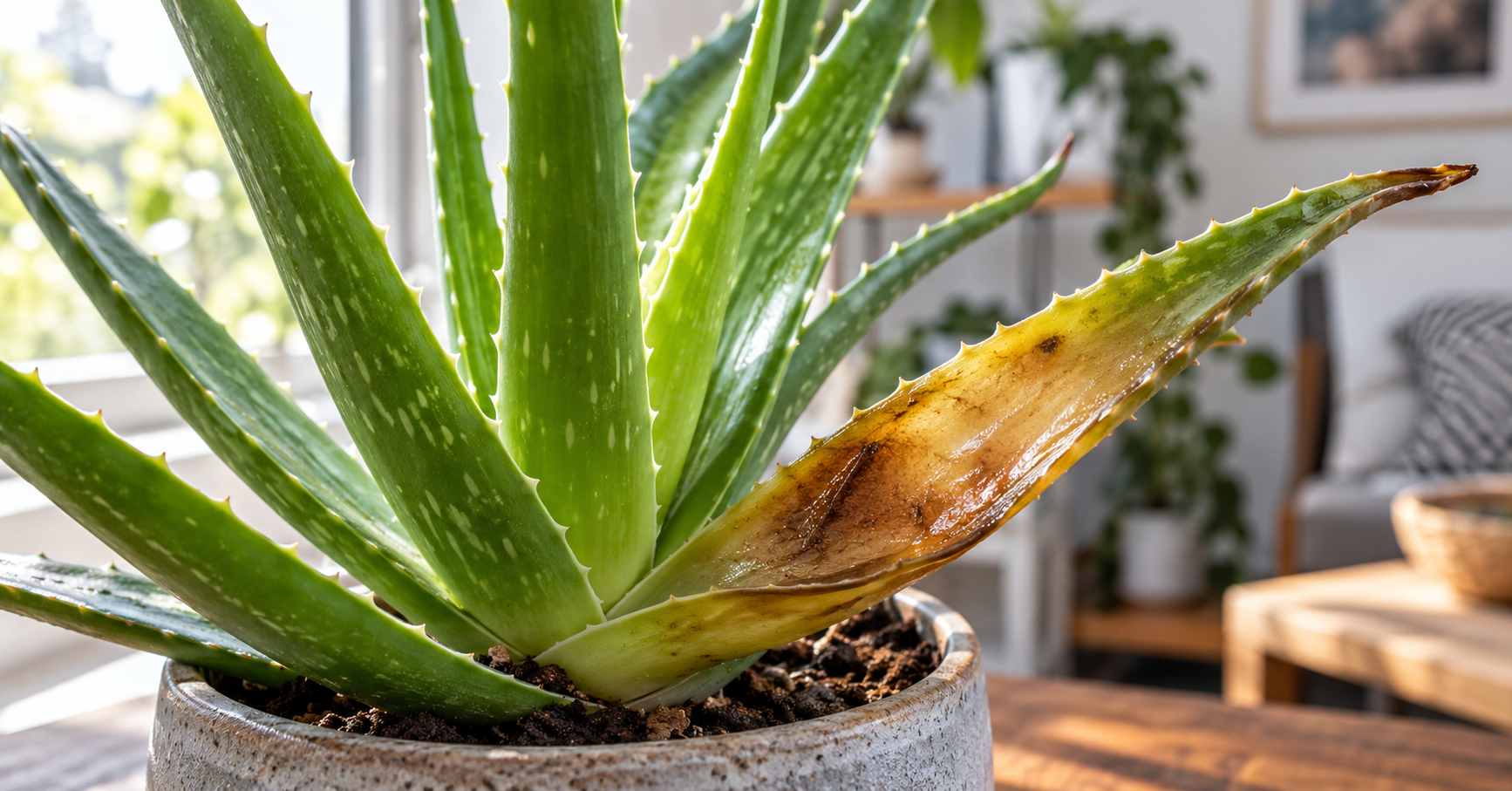
An aloe plant turning brown can be surprisingly hard to diagnose. One leaf may develop dry, crispy tips while another looks soft and discolored, and both symptoms can make you wonder whether the plant needs more water—or much less of it.
Aloe vera has a reputation for being almost indestructible, which makes brown leaves feel even more alarming. The good news is that browning usually gives you clues about what has changed. The texture, location, and pattern of the damage can help separate watering problems from sun stress, cold damage, fertilizer buildup, or pests.
Before changing the plant’s entire care routine, look closely at what the brown area actually looks and feels like. That usually tells you where to start.
Table of Contents
Why Is My Aloe Plant Turning Brown? Quick Answer
An aloe plant turning brown is usually reacting to a problem with water, drainage, light, temperature, fertilizer, or growing conditions.
The most common causes include:
- Too much water or soil that stays wet for too long
- Underwatering
- Poor drainage
- Sudden exposure to strong sunlight
- Cold temperatures or drafts
- Too much fertilizer or salt buildup
- Pests or disease
- Stress after repotting or another environmental change
The texture matters. Soft or mushy brown tissue should make you investigate excess moisture first, while dry or crispy browning is more consistent with water loss, heat, or environmental stress.
Brown tips are slightly different again. They can develop when watering is inconsistent or when salts accumulate in the potting mix.
So instead of treating the color alone, use the brown area as a clue.
Brown, Soft, Dry, or Spotted? Look at the Pattern First
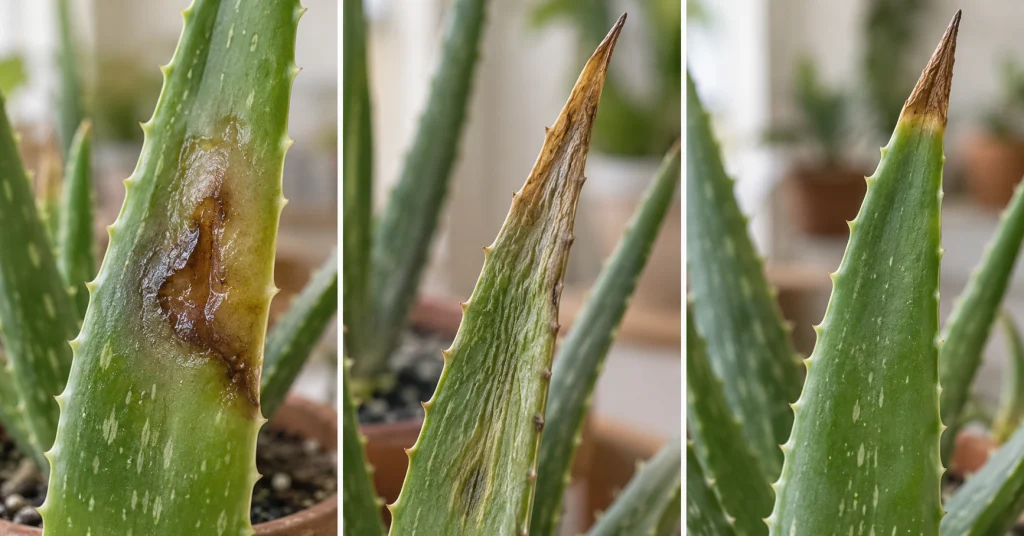
Two brown aloe leaves can be telling you two completely different things.
| What you see | What to check first |
|---|---|
| Brown and soft or mushy | Overwatering, poor drainage, root stress |
| Brown and dry or crispy | Underwatering, heat, sun stress |
| Brown tips or ends | Irregular watering, fertilizer salts, environmental stress |
| Brown patches or spots | Sunburn, physical damage, pests or disease |
| Browning from the bottom | Older leaves, watering issues, root problems |
This is not a perfect diagnosis on its own. A plant’s symptoms need to be considered together with the condition of the soil.
In practice, checking the potting mix before reaching for the watering can eliminates a lot of guesswork.
📌 One Detail That Matters
With aloe, color alone can be misleading. A brown leaf that feels dry and papery is telling a very different story from one that feels soft, translucent, or mushy.
Before changing anything, touch the damaged area and check the soil at the same time. That combination — texture plus moisture — is often much more useful than the brown color by itself.
Why Is My Aloe Vera Plant Turning Brown and Soft?
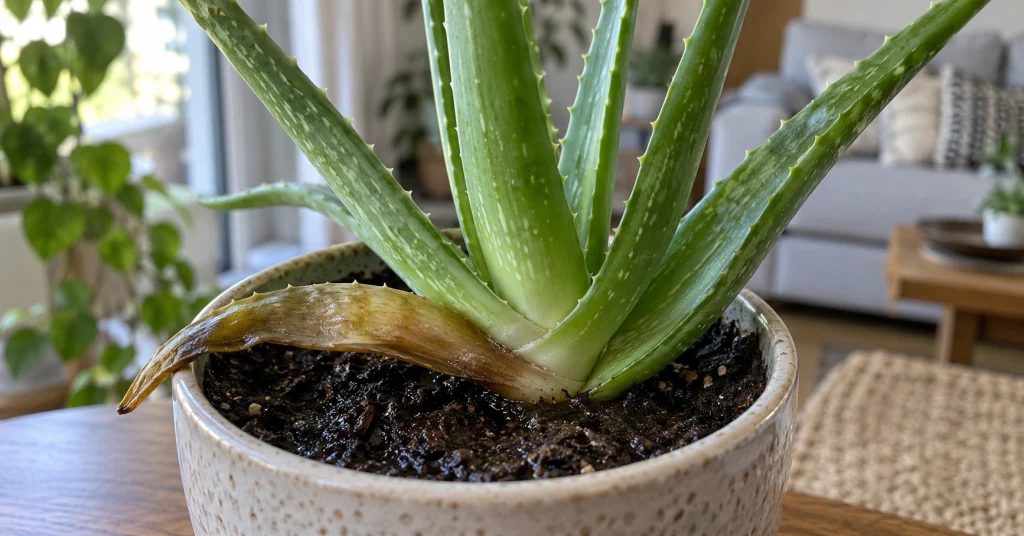
If your aloe vera is turning brown and soft, too much moisture is one of the first things to investigate.
Aloe stores water in its thick leaves and tolerates dry periods well. It does not tolerate sitting in water nearly as well. Soil that remains saturated can deprive roots of oxygen and increase the risk of root rot. Aloe therefore needs a container that allows excess water to escape.
A problem leaf may feel:
- Soft or squishy
- Limp rather than firm
- Water-soaked
- Mushy near the base
- Darker or partly translucent
If that sounds familiar, feel the soil before watering again.
When the mix is still wet several days after watering, check whether the pot has drainage holes and whether excess water is collecting inside a decorative cover pot or saucer.
If the plant continues to decline while the soil remains wet, the roots are worth inspecting. Dark, soft, deteriorating roots are much more concerning than firm, healthy ones.
And although people often search for an aloe vera plant turning “brown and mushy,” mushiness is really the important clue here. It suggests tissue damage rather than simple cosmetic browning.
Why Are the Tips of My Aloe Vera Turning Brown?
Brown aloe tips often point to stress at the edges of the leaf rather than a problem affecting the entire plant.
One possible cause is inconsistent watering. If an aloe remains dry for too long, the ends of its leaves may lose moisture and become thin or crispy.
Brown leaf tips can also be associated with cold drafts or excess fertilizer. Fertilizer salts can accumulate in the potting mix over time and damage leaf margins.
Look at the rest of the plant before deciding what to do. A brown tip is often a clue to look for a pattern, not a reason to overhaul the entire routine.
If the soil is extremely dry and the leaves look thinner or shriveled, underwatering becomes more plausible. If the soil moisture seems reasonable but you have been fertilizing frequently, excess salts deserve consideration.
A whitish crust on the pot or soil surface is another clue that minerals have accumulated.
Avoid feeding an already stressed aloe in an attempt to make it recover faster. Correct the basic growing conditions first.
Other Common Reasons Aloe Leaves Turn Brown
Too much sun or a sudden change in light
Aloe likes plenty of light, but a sudden move from indoor conditions into intense direct sun can damage foliage. This is especially easy to miss because the plant may have looked perfectly happy before the move.
Sunburn tends to appear on the most exposed parts of the leaves as pale, tan, or brown areas. Sun exposure is also a known cause of leaf spotting in houseplants.
Timing is useful here. If the browning appeared shortly after you moved the aloe to a much sunnier window or outdoors, the change in light may be responsible.
Increase intense direct-light exposure gradually rather than making another abrupt move.
Underwatering
Drought-tolerant does not mean water-free.
An underwatered aloe can lose some of its characteristic plumpness. Leaves may look thinner, shriveled, dry, or brown as moisture stress increases.
Penn State recommends watering aloe thoroughly when appropriate while allowing excess water to drain, rather than letting the plant remain in standing water. Aloe generally needs less water during its slower winter growth period.
Cold damage
Aloe vera is not frost tolerant.
Exposure to very low temperatures, a cold window, or a sudden draft can injure leaf tissue. The damaged area may then discolor and die.
If the timing matches a cold spell or recent move, keep the plant somewhere more stable and protect it from further temperature extremes.
Too much fertilizer
More plant food is not necessarily better.
Excess fertilizer can contribute to salt buildup, which in turn may show up as brown leaf edges or tips. If you suspect fertilizer stress, stop feeding the plant until its growing conditions have stabilized.
Pests and disease
Watering problems are more common, but an aloe plant turning brown should still be checked for pests if the damage looks unusual or continues to spread.
Aloe vera can be affected by pests including mealybugs and aphids, as well as problems such as leaf spot.
Inspect between the leaves, around the base of the plant, and on both sides of damaged foliage. Cottony material, sticky residue, visible insects, or spreading spots deserve closer attention.
How to Fix an Aloe Plant Turning Brown
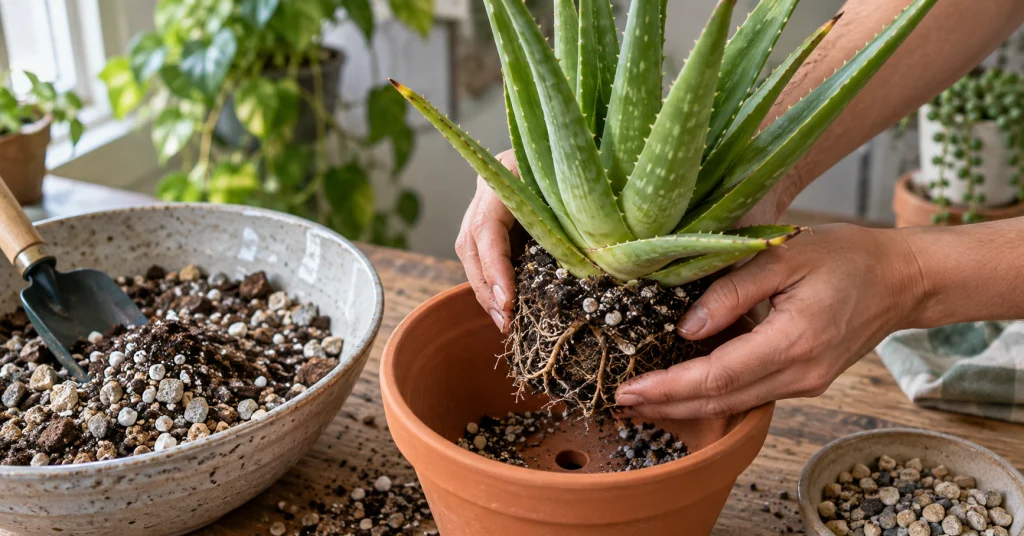
The best fix depends on the cause, so resist the temptation to change the water, soil, light, fertilizer, and pot all on the same day.
Work through the problem in order:
- Feel the soil. Is it dry, damp, or saturated?
- Check drainage. Water should be able to escape freely from the pot.
- Look at the texture of the damaged leaf. Soft and mushy is different from dry and crispy.
- Think about recent changes. Was the plant moved, repotted, fertilized, or exposed to stronger sun?
- Inspect for pests and spreading spots.
- Correct the most likely problem first.
- Give the plant time to respond.
Whoever has dealt with a struggling succulent knows how tempting it is to keep “helping” it. But repeatedly changing its conditions can make diagnosis even harder.
Stable, appropriate care is usually more useful than a string of emergency treatments.
Can Brown Aloe Turn Green Again?
Once aloe tissue has turned completely brown and died, that damaged section will not become green again.
That does not mean the whole plant cannot recover.
If you correct the cause while plenty of healthy tissue remains, the aloe can continue growing and produce healthy new leaves. An old brown tip or scar may simply remain visible.
This is an important distinction: the goal is not necessarily to make the damaged leaf look perfect again. It is to stop the problem from progressing.
Watch the plant’s new growth. Firm, healthy leaves emerging from the center tell you much more about recovery than an old brown patch does.
Aloe Plant Turning Brown? What to Do Next
If you have an aloe plant turning brown, start with the soil before buying anything or changing the entire care routine.
If the plant is soft and the soil stays wet, focus on drainage and excess moisture. If the leaves are dry, thin, and crispy, investigate underwatering, heat, or environmental stress. Brown tips call for a look at watering consistency and fertilizer use, while isolated patches may lead you toward sun damage, pests, or disease.
If drainage is part of the problem, choose a pot with proper drainage holes and a well-draining mix intended for succulents or cacti.
Then make one sensible correction and watch what happens next. Aloe is resilient. Once you’ve corrected the most likely problem, watch what happens at the center of the plant. Healthy new growth tells you far more about recovery than an old brown leaf ever will.
Aloe Plant Turning Brown FAQ
Should I cut off brown aloe vera leaves?
You do not need to remove an aloe leaf simply because the tip has turned brown. If most of the leaf is green and firm, it can usually stay. A leaf that is completely dead, badly damaged, or rotting can be removed with a clean, sharp tool.
Why is my aloe vera turning brown from the bottom?
A single older lower leaf may naturally decline over time. Several lower leaves becoming brown and soft together are more concerning and may point to excess moisture or root stress. Check the soil and the base of the plant before watering again.
Can too much sun turn aloe brown?
Yes. Strong direct sunlight can damage foliage, particularly when an indoor aloe is suddenly exposed to much stronger light.
Brown or tan patches concentrated on the most exposed side of the plant can be a clue.
How do I know if my brown aloe is still alive?
Look at the healthy parts of the plant rather than the damaged leaf alone.
Firm green tissue, healthy roots, and new growth from the center are encouraging signs. Widespread mushiness, a rotting center, or severely deteriorated roots indicate a more serious problem.

Carol researches common houseplant problems using guidance from university extension services, horticultural institutions, and other reputable sources. At The Evergreen Spot, she turns that research into practical troubleshooting guides designed to help readers understand what their plants may be telling them, narrow down the most likely causes, and know what to check next.
Leave a Reply