
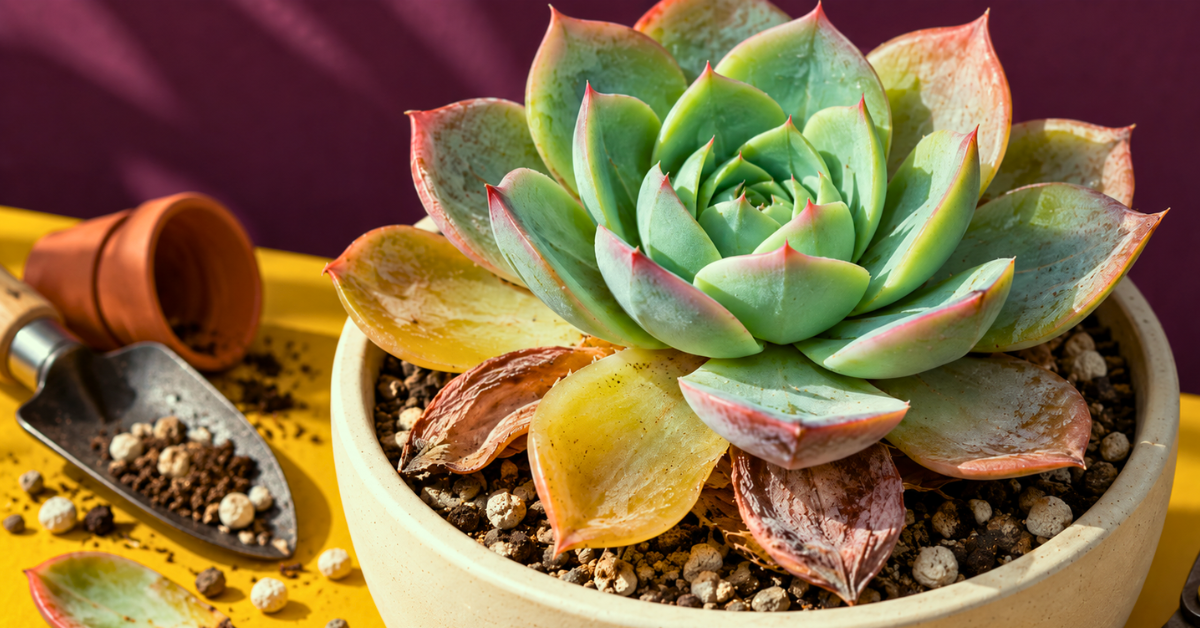
Why is my succulent dying? Sometimes the answer is sitting right in front of you—in a leaf that suddenly feels mushy, a stem turning dark near the soil, or a rosette that seems to be shrinking overnight.
Succulents tend to look sturdy right up until something changes. Then the symptoms can become confusing fast: wrinkled leaves can suggest thirst, but a plant with damaged roots may also look dehydrated. Falling leaves can mean too much water, too little water, sudden stress—or simply an older leaf reaching the end of its life.
Instead of reaching for the watering can first, look at what the leaves, stem, soil, and roots are telling you. That usually narrows the problem much faster.
Table of Contents
Why Is My Succulent Dying? Quick Answer
A succulent dying indoors is usually reacting to a problem with water, drainage, roots, light, temperature, or pests.
Start with these clues:
- Soft, translucent, or mushy leaves: check for overwatering.
- Black or soft stem: investigate root or stem rot.
- Wrinkled, shriveled leaves: check soil moisture and root health.
- Leaves falling off easily: look for water stress, rot, or a sudden environmental change.
- Tall, pale, stretched growth: the succulent may need more light.
- Dry, bleached patches: investigate sun scorch.
- Damage starting at the bottom: check whether it is normal old-leaf loss or rot moving upward.
- Sticky residue, cottony material, or insects: inspect for pests.
The useful question is not simply “Does this plant look bad?” It is which part is changing, and how does it feel?
What Does a Dying Succulent Look Like?
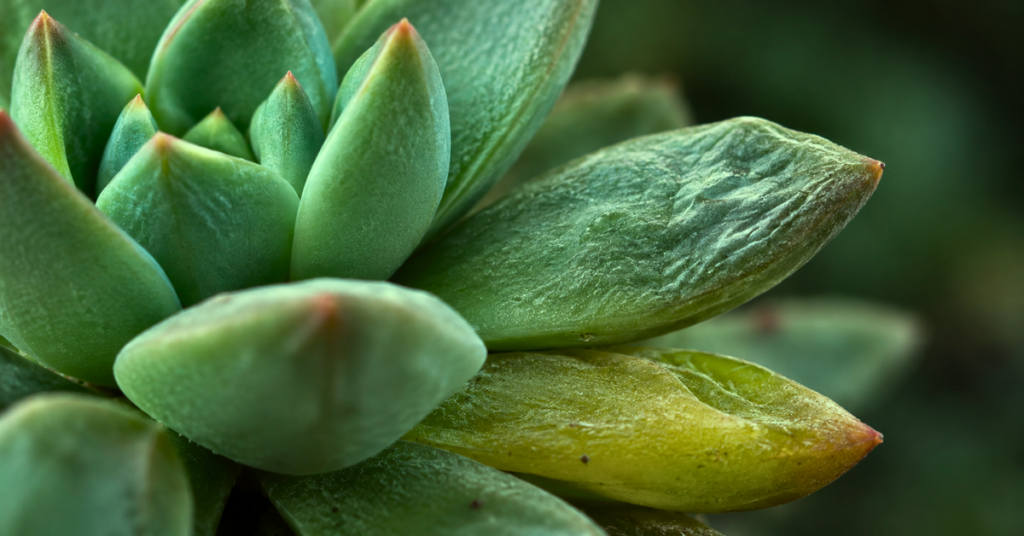
A dying succulent usually shows more than one symptom, and the combination matters more than any single yellow or wrinkled leaf.
| What you notice | What to check first |
|---|---|
| Soft, yellow, translucent leaves | Overwatering |
| Dark, mushy stem | Stem or root rot |
| Wrinkled, thin leaves | Lack of water or damaged roots |
| Leaves dropping with little contact | Water/root stress |
| Pale, stretched new growth | Too little light |
| Dry tan or bleached patches | Excessive sun exposure |
| Wet soil that stays wet | Drainage/root problems |
| Cottony clusters or bumps | Mealybugs or scale |
Iowa State University Extension notes that overwatered succulents often develop yellow, soft or mushy leaves and stems, with leaves eventually dropping. Underwatered plants, by contrast, tend to become wrinkled, shriveled and dry.
That sounds simple until root rot enters the picture. Damaged roots cannot take up water properly, so a succulent sitting in wet soil can eventually look thirsty. Iowa State specifically warns that root rot can cause shriveling and leaf drop that people mistake for underwatering—leading them to add even more water.
That is why the soil and roots matter as much as the leaves.
⚠️What the Stem Can Tell You
When a succulent looks unhealthy, I would pay especially close attention to the stem near the soil line.
Leaves can wrinkle, yellow, or drop for several different reasons, but a stem that is becoming soft, dark, or unstable is a more urgent clue. If the leaves look thirsty while the base feels mushy or the soil is still wet, adding more water may make the real problem worse.
A firm stem gives you much more room to investigate calmly. A collapsing one deserves faster attention.
Why Is My Succulent Dying at the Bottom?
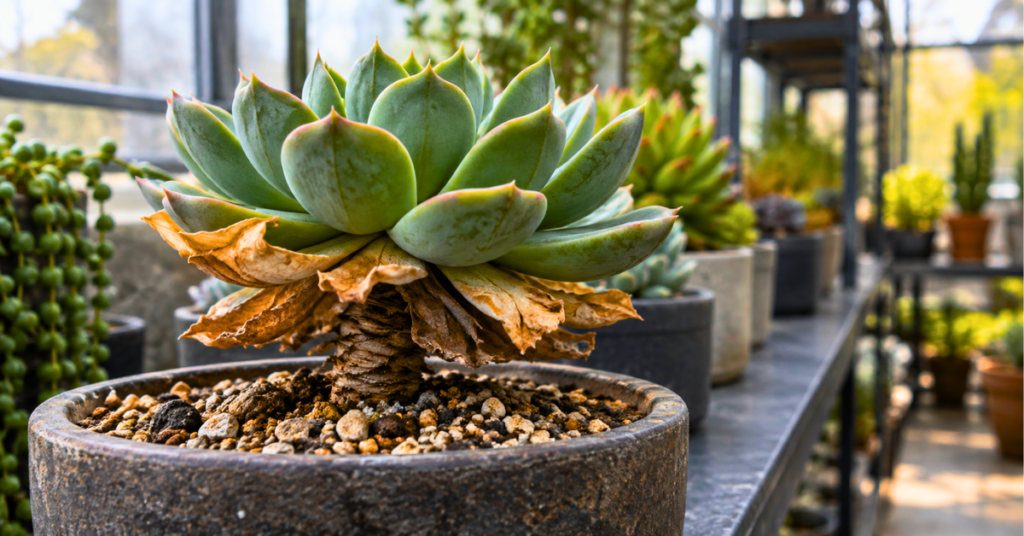
If the bottom of a succulent is dying, first determine whether old lower leaves are simply drying up or the stem itself is becoming soft and dark.
An occasional older leaf drying from the bottom is not automatically an emergency. Older houseplant leaves naturally die over time, and some succulents gradually shed lower foliage as they grow.
Rot looks different.
Be more concerned if:
- Several lower leaves become soft or translucent at once.
- The stem near the soil turns brown or black.
- The base feels mushy.
- The plant begins leaning or separating from its roots.
- The soil remains damp for a long time.
- The damaged area appears to be moving upward.
So if you’re wondering why is my succulent dying at the bottom, do not judge it by one dry leaf. Inspect the actual stem and the moisture around the root zone.
Is Your Succulent Overwatered or Underwatered?
Overwatering and underwatering can both make a succulent look unhealthy, but the texture usually gives you clues.
An overwatered succulent commonly has:
- Soft or mushy leaves
- Yellowing
- Translucent-looking tissue
- Leaf drop
- Wet soil
- Softening near the stem or roots in advanced cases
An underwatered succulent is more likely to have:
- Wrinkled or deflated leaves
- Thin-looking leaves
- Dry or browning tissue
- Very dry potting mix
The RHS notes that overwatering damages succulent roots and can eventually cause rot, while underwatering causes shriveling and poor or distorted growth.
But avoid watering on a fixed calendar. University of Minnesota Extension recommends allowing succulent potting mix to dry thoroughly between waterings and using containers with drainage holes so excess water can escape.
Anyone who has watched a plump succulent turn soft seemingly overnight knows how tempting it is to keep adjusting the water. Usually, the better move is to inspect first and water second.
Succulent Root Rot: Check the Stem and Roots
Succulent root rot often develops when roots remain wet without enough air around them.
If the soil is damp and your plant is simultaneously shriveling, dropping leaves, or becoming unstable in its pot, inspect the roots.
Iowa State explains that waterlogged soil has lower oxygen levels, which can cause roots to die. As the root system deteriorates, the plant becomes less able to absorb water even though moisture is already present.
Possible warning signs include:
- Soft brown or dark roots
- Mushy stem tissue
- A darkened base
- Sudden collapse
- Persistent wet soil
- Leaves dropping while the soil is still moist
Early problems may improve once growing conditions are corrected. When rot is advanced, saving healthy stems or leaves for propagation can sometimes be more realistic than trying to preserve the damaged base.
Do not cut healthy tissue simply because the plant looks stressed or ugly. First confirm that the area is actually soft, rotten, or dead.
Other Reasons Succulents Start Dying
Poor Drainage or the Wrong Potting Mix
A succulent can be watered infrequently and still remain too wet if the mix holds water for too long.
UC Master Gardeners recommends good drainage and aeration for succulents and notes that pumice, coarse perlite, or similar mineral materials can be used to improve poorly draining mixes. Containers should also have drainage holes.
A decorative pot without drainage can turn an otherwise reasonable watering routine into a root problem.
Too Little Light
Low light often produces weak, stretched growth rather than an immediate dramatic collapse.
Echeveria and similar rosette succulents may flatten or stretch toward available light, while new growth becomes pale and elongated. Iowa State lists this type of lanky growth as a common sign of insufficient light.
Move the plant gradually rather than suddenly putting it into intense direct sun.
Too Much Direct Sun
Succulents can tolerate bright conditions, but a plant accustomed to weaker indoor light can scorch when moved abruptly into stronger sun.
Dry pale, tan, or brown areas on the most exposed side of the plant suggest sun damage more than root rot. Sudden environmental changes matter, so increase exposure gradually.
Cold and Sudden Environmental Changes
Cold drafts, abrupt temperature changes, and major changes in light can stress succulent tissue.
The RHS notes that excessive cold can cause dieback or discolored patches, while sudden changes in growing conditions can contribute to plant decline.
Pests
Succulents can also attract mealybugs and scale.
University of Minnesota identifies both among common succulent pests. Mealybugs often appear as cottony white clusters, while scale may look like small attached bumps.
Inspect leaf joints, stems, undersides of leaves, and tightly packed rosettes.
How to Save a Dying Succulent
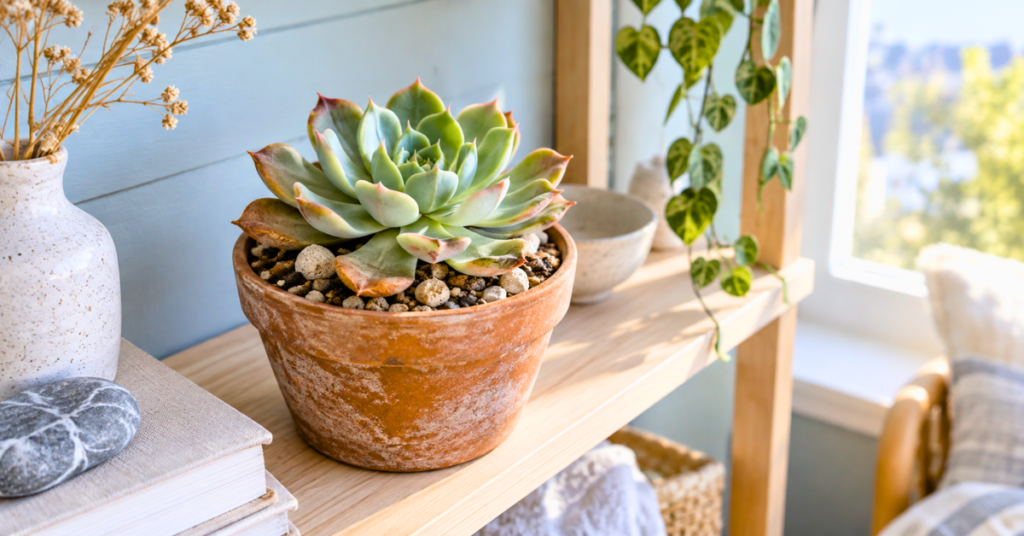
The best way to save a dying succulent depends on what is actually wrong.
If the soil is soaked, stop watering and let the root zone dry. If you suspect rot, inspect the roots and stem and remove genuinely rotten tissue with a clean tool when necessary.
If the potting mix stays wet too long, repot into a fast-draining succulent mix and use a container with an effective drainage hole.
If the plant is shriveled but the roots are healthy and the soil is completely dry, give it a thorough watering and allow excess water to drain rather than repeatedly adding tiny amounts.
If light is the problem, move it gradually toward brighter conditions.
If the base cannot be saved but healthy stems or leaves remain, propagation may give you another chance. University of Minnesota notes that many succulents can be propagated from stem cuttings or leaves, depending on the species.
Can a Dying Succulent Come Back?
Yes, a stressed succulent can recover if enough healthy tissue and functioning roots remain and the underlying problem is corrected.
A plant with wrinkled leaves, minor sun damage, or early watering stress may recover well. Advanced stem rot or complete root loss is more difficult.
And remember: old damaged leaves do not always become perfect again. Judge recovery by healthy new growth and a stable plant, not by whether every scar disappears.
Why Is My Succulent Dying? What to Do Next
If you’re still asking why is my succulent dying, work through the plant in a simple order: feel the leaves and stem, check the soil, inspect the roots if necessary, then think about recent changes in light, temperature, or location.
Do not treat every symptom at once. A thirsty-looking succulent with wet soil needs a very different response from a firm plant sitting bone-dry.
For most indoor succulents, the safest foundation is a pot with a real drainage hole and a fast-draining succulent or cactus potting mix. Then water thoroughly when appropriate and allow the mix to dry rather than keeping the roots continually damp. UC and University of Minnesota guidance both emphasize drainage and drying between waterings as central parts of successful succulent care.
The damaged leaves may tell you what happened. The new growth will tell you whether you fixed it.
Why is my succulent Dying? FAQ
Why are my succulent leaves falling off?
Succulent leaves falling off can result from excess water, root damage, severe dryness, environmental stress, or normal aging of a few lower leaves. Soft translucent leaves combined with wet soil point more strongly toward excess moisture, while dry shriveled leaves suggest dehydration or impaired water uptake.
Why are my succulent leaves shriveling?
Shriveling often happens when the plant is not getting enough usable water, but that does not always mean you should water immediately. Check the soil first because root rot can damage the plant’s ability to absorb moisture and create symptoms that resemble underwatering.
Can an overwatered succulent be saved?
Sometimes. If the plant still has firm healthy tissue and rot has not spread extensively, allowing the soil to dry and correcting the drainage problem may be enough. Advanced rot may require removing damaged tissue or propagating healthy parts.
How do I know if my succulent is actually dying?
Look for multiple progressive symptoms: spreading soft tissue, a dark or mushy stem, collapsing roots, repeated leaf loss, or continued deterioration after conditions are corrected. One old lower leaf or a permanent cosmetic scar does not necessarily mean the entire plant is dying.
Can I propagate a dying succulent?
Often, yes, if healthy material remains and the species can be propagated from leaves or stem cuttings. Take material only from firm, healthy tissue rather than from sections showing rot or disease.

Carol researches common houseplant problems using guidance from university extension services, horticultural institutions, and other reputable sources. At The Evergreen Spot, she turns that research into practical troubleshooting guides designed to help readers understand what their plants may be telling them, narrow down the most likely causes, and know what to check next.
Leave a Reply