
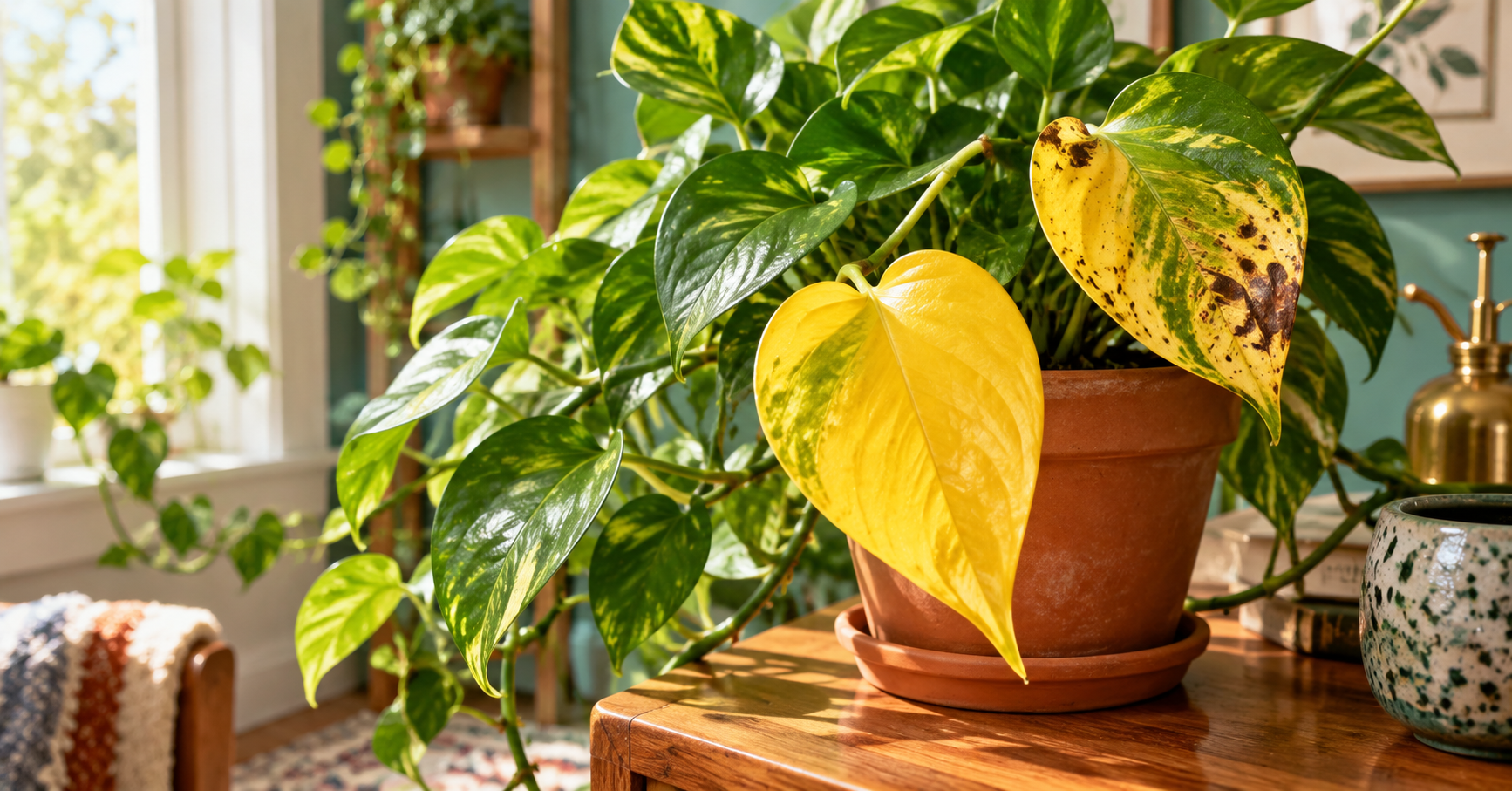
Pothos leaves turning yellow can be confusing because the same plant that looked almost impossible to kill suddenly starts sending mixed signals. One leaf turns lemon-yellow, another develops brown patches, while the rest of the vine keeps growing as though nothing happened.
The useful clue is not simply that the leaf is yellow. Where the yellowing starts, what the leaf feels like, and what happens alongside it can point you toward very different problems—from wet roots to dry soil, harsh sun, or nothing more serious than an aging leaf.
Before reaching for water or fertilizer, take a closer look at the pattern. With pothos, that usually tells you more than the color alone.
Table of Contents
Why Are My Pothos Leaves Turning Yellow? Quick Answer
Pothos leaves turning yellow are most often caused by watering or root stress, but light, drainage, temperature, fertilizer, pests, and natural aging can also be responsible.
The most common causes include:
- Overwatering and root stress
- Underwatering
- Poor drainage or compacted potting mix
- Too much direct sunlight
- Very low light
- Fertilizer or mineral buildup
- Temperature stress
- Pests or disease
- Natural aging of older leaves
One important exception: Golden Pothos naturally has yellow variegation, and cultivars such as Neon Pothos can have very bright yellow-green foliage. Healthy coloration should not be confused with a leaf that is actually losing its normal green color.
The fastest place to start is the soil. If it is wet, dry, or staying wet far longer than expected, you already have an important clue.
What Does the Yellowing Pattern Tell You?
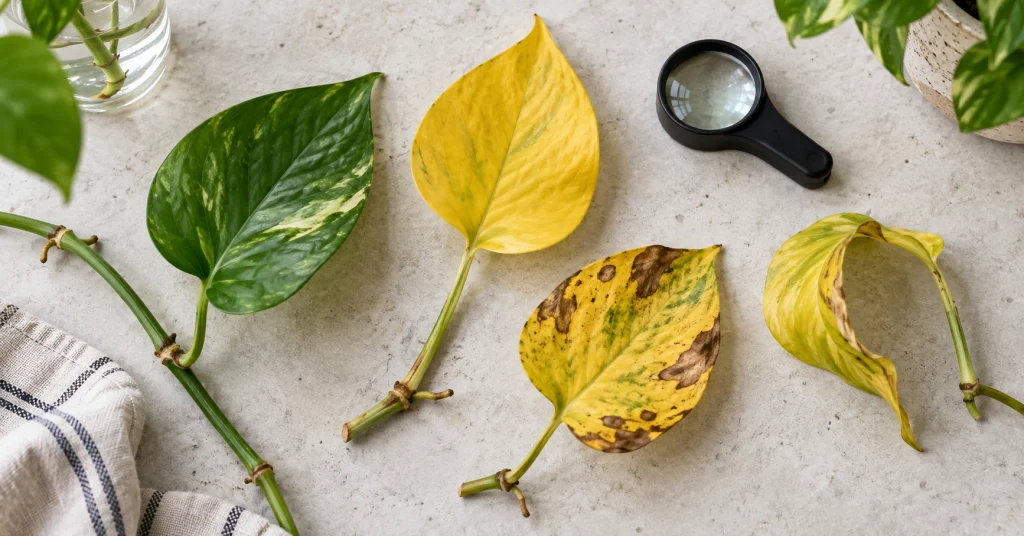
Different patterns of yellowing often point toward different things to investigate first.
| What you notice | What to check first |
|---|---|
| Yellow leaves + wet soil | Overwatering, drainage, roots |
| Yellow + very dry soil | Underwatering |
| Yellow + brown spots | Roots, moisture, light, disease |
| Yellow + dry brown edges | Dryness, heat, salts, strong light |
| Yellow + curling or drooping | Moisture stress |
| One older yellow leaf | Natural aging |
| Yellowing throughout the vine | Roots, light, nutrition, environment |
Penn State recommends letting pothos dry before watering again and notes that too much water can lead to root rot, while too little can temporarily cause drooping. It also recommends moderate to bright light while avoiding direct sun, which can yellow the foliage.
Treat the pattern as a clue rather than a diagnosis. Two plants can have equally yellow leaves for completely opposite reasons.
⚠️ One Thing I Wouldn’t Assume
Not every yellow area on a pothos is a warning sign.
Golden Pothos is supposed to have yellow variegation, and cultivars such as Neon Pothos naturally grow in bright yellow-green shades. What matters is whether the leaf is displaying its normal pattern or whether previously green tissue is actually fading.
If you are unsure, compare the questionable leaf with healthy leaves elsewhere on the same plant before changing its care.
Why Are My Pothos Leaves Turning Yellow and Brown?
When pothos leaves turning yellow and brown appear together, pay attention to the texture of the brown areas and the condition of the soil.
Darkening or blackening around leaf margins can occur when roots are stressed by excess moisture. NC State specifically notes that overwatering in Epipremnum aureum can cause root rot and blackened leaf margins.
Dry, crispy brown areas tell a different story. If the soil is very dry, the plant has been exposed to strong sun, or conditions are particularly hot, moisture loss becomes more plausible.
Brown spots spreading through several leaves deserve closer inspection, especially when accompanied by deteriorating stems or other unusual symptoms. Pothos can develop fungal and bacterial diseases, although disease should not be assumed from one brown mark alone. UF/IFAS documents several pothos diseases capable of causing dark or necrotic leaf spots.
The important point is simple: yellow plus brown does not automatically mean overwatering.
Why Are My Pothos Leaves Yellow and Curling?
Yellowing combined with curling usually makes moisture stress more suspicious.
A dry pothos can lose firmness and begin curling or drooping as its tissues lose water. If the potting mix is genuinely dry throughout the root zone, underwatering becomes a reasonable explanation.
But curling does not give you permission to water without checking.
A plant with damaged roots can also struggle to move enough water into its foliage even when the soil is wet. In that case, adding more water can make the underlying problem worse.
Look at the combination:
- Curling + very dry mix: investigate underwatering.
- Curling + wet mix: inspect roots and drainage.
- Curling + crispy areas: consider dehydration, heat, or strong light.
- Curling + spots or pests: look beyond watering.
Anyone who has dealt with a dramatic-looking houseplant knows how tempting it is to treat the leaf first and investigate later. With pothos, checking the pot first is usually the safer order.
The Most Common Causes of Yellow Pothos Leaves
Overwatering and Root Stress
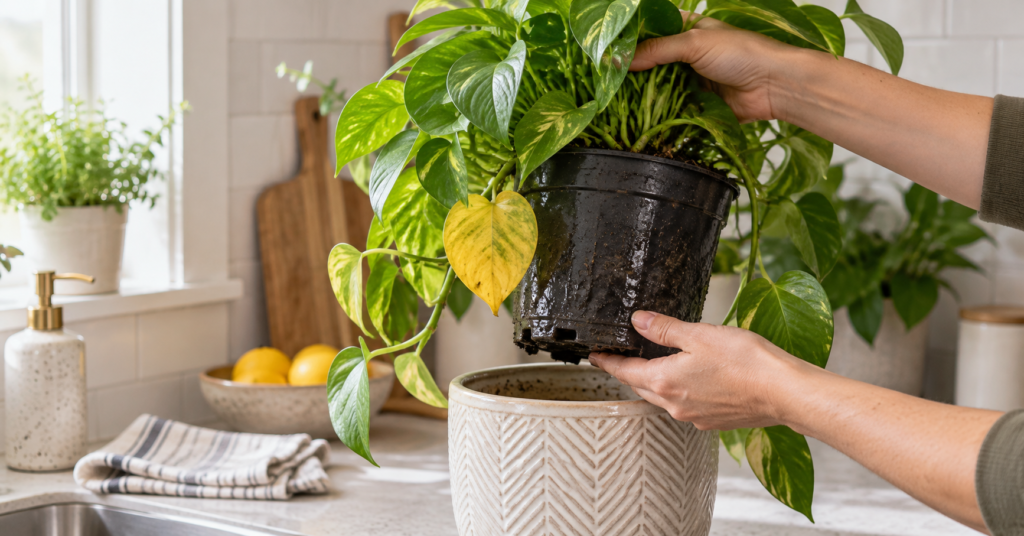
Overwatering is one of the most important causes to rule out.
Pothos should grow in a well-draining medium that is allowed to dry somewhat between waterings. Constantly wet roots have less access to oxygen and become vulnerable to rot. Both Penn State and NC State caution against keeping pothos overly wet.
Look for:
- Soil staying wet for many days
- Several leaves yellowing
- Soft or darkened roots
- Drooping despite moist soil
- A pot that cannot drain freely
If the soil is already saturated, more water is not the answer.
Underwatering
Pothos tolerates an occasional dry spell better than constant saturation, but prolonged dryness still causes stress.
Penn State notes that too little water may temporarily cause the foliage to droop. If yellowing appears with dry soil, limp foliage, curling, or crispy edges, dehydration deserves consideration.
When watering a genuinely dry plant, soak the root ball thoroughly and allow excess water to drain.
Poor Drainage and Potting Mix
Sometimes the watering frequency is not the real problem.
A dense or degraded mix can remain wet around the roots even if you are not watering frequently. Likewise, a decorative container can trap water around an inner nursery pot.
Pothos generally does best in a loose, well-draining potting mix. Penn State specifically recommends a quality soilless medium with good drainage.
Too Much or Too Little Light
Direct sun can yellow pothos foliage, according to Penn State. Moderate to bright indirect light is a safer target indoors.
Very low light may not immediately kill a pothos, but it can reduce its characteristic coloration and slow growth. NC State notes that low light can cause loss of variegation.
If the problem started after moving the plant, the timing matters.
Fertilizer and Mineral Problems
More fertilizer is not always better.
General plant diagnostic guidance lists both low fertility and overfertilization among potential causes of yellowing. UF/IFAS also documents manganese toxicity in pothos, which can cause yellow flecking or spotting on older foliage under certain production conditions.
For a typical houseplant, do not jump straight to micronutrient deficiencies. Rule out water, roots, light, and basic growing conditions first.
Temperature Stress
Pothos prefers ordinary warm indoor conditions. Penn State recommends roughly 60°F to 80°F and notes that the plant performs vigorously under stable conditions.
Cold drafts, heaters, or abrupt environmental changes can add stress, especially when another issue is already present.
Pests or Disease
NC State recommends monitoring pothos for mealybugs and scale.
Check leaf undersides, stems, nodes, and new growth for insects, cottony residue, sticky material, or unusual spotting.
Disease becomes more plausible if lesions are spreading or if stems and roots are deteriorating as well.
Natural Aging—and Natural Yellow Color
One old yellow leaf does not necessarily mean anything is wrong.
NC State notes that older pothos foliage naturally yellows and falls over time.
Also remember what plant you own. Golden Pothos naturally produces yellow variegation, while Neon and Lime cultivars can be naturally chartreuse.
Healthy patterned color looks very different from a formerly green leaf gradually fading to yellow. When in doubt, compare the leaf with the plant’s established color pattern rather than with a generic photo of a “healthy pothos.
How to Fix Yellow Leaves on a Pothos
Do not change everything at once.
Use this order instead:
- Check soil moisture below the surface.
- Make sure excess water can leave the pot.
- Inspect the roots if the soil stays wet or yellowing continues.
- Look at the pattern—brown, curled, drooping, spotted, or isolated.
- Review light exposure and recent location changes.
- Inspect for pests.
- Consider fertilizer only after the basics look right.
- Correct the most likely cause and watch the new growth.
The aim is not to make an old yellow leaf perfect again. It is to stop healthy leaves from following it.
Can Yellow Pothos Leaves Turn Green Again?
A leaf that has turned fully yellow generally will not return to its original healthy green color.
If stress is caught very early, minor color changes may stabilize, but severely yellow tissue should not be your measure of recovery.
Watch what happens afterward.
Healthy new leaves, stable existing foliage, and normal vine growth are much better signs that you solved the problem.
Pothos Leaves Turning Yellow: What to Do Next
When you notice pothos leaves turning yellow, start with the root zone instead of trying to guess from color alone.
Wet soil points you toward drainage and root health. Very dry soil combined with limp or curling foliage makes underwatering more plausible. Yellow-and-brown leaves call for a closer look at the texture of the damage, while one older yellow leaf may simply be aging.
If the container or soil holds too much moisture, use a pot with effective drainage and a loose, well-draining houseplant mix. Then keep the plant in stable, bright indirect light and avoid correcting one problem by creating another.
The old yellow leaf may never recover. What you want to see is the yellowing stop—and the next leaves emerge healthy.
Pothos Yellow Leaves FAQ
Should I cut off yellow pothos leaves?
You do not need to remove a leaf at the first hint of yellow. If it has become completely yellow or dead, you can remove it with clean scissors. Partly green foliage can usually stay while you diagnose the cause.
Why is only one pothos leaf turning yellow?
One older leaf yellowing slowly can be natural aging, especially when the rest of the vine looks vigorous. Investigate more closely if new leaves are affected or additional leaves begin yellowing quickly.
What does an overwatered pothos look like?
An overwatered pothos may have yellowing foliage, persistently wet soil, drooping despite moisture, and damaged roots. Root rot and blackening along leaf margins can also occur with excess water.
How often should I water pothos?
Do not rely on a rigid calendar. Penn State recommends watering when the soil is dry, while NC State similarly advises allowing the well-drained medium to dry between waterings. How quickly that happens depends on the pot, mix, light, temperature, season, and size of the plant.

Carol researches common houseplant problems using guidance from university extension services, horticultural institutions, and other reputable sources. At The Evergreen Spot, she turns that research into practical troubleshooting guides designed to help readers understand what their plants may be telling them, narrow down the most likely causes, and know what to check next.
Leave a Reply