
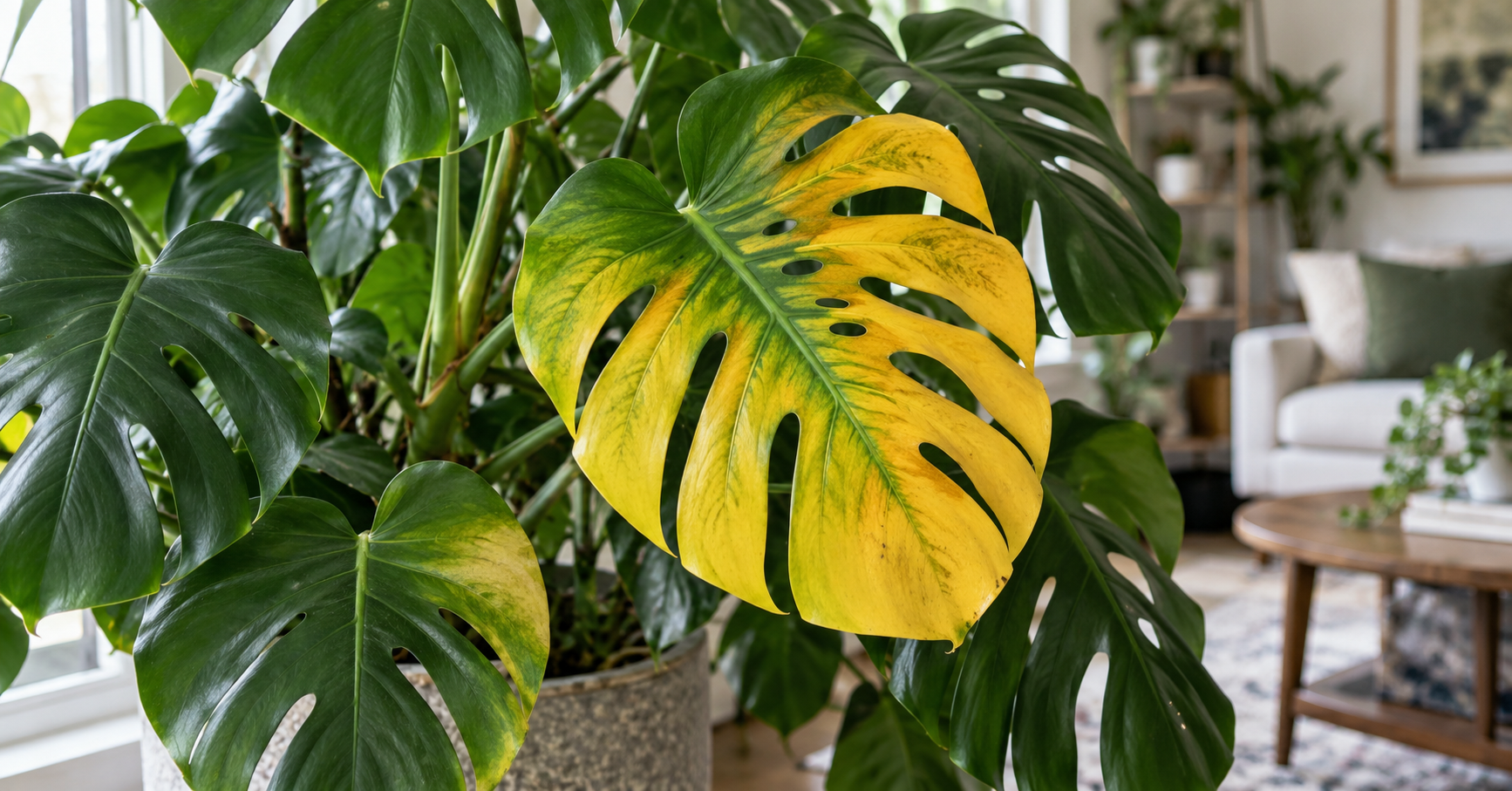
Seeing Monstera leaves turning yellow can feel like watching a healthy plant change overnight. One leaf loses its deep green color, then another starts looking pale, and suddenly every trip past the pot turns into a quick inspection.
Yellowing is not a diagnosis by itself. A Monstera can turn yellow because its roots are staying too wet, because the soil has become too dry, because conditions changed, or simply because an older leaf has reached the end of its life. What matters is which leaves are yellowing, what the soil feels like, and what other symptoms appear at the same time.
Before watering, fertilizing, or repotting, look at the pattern. It often tells you where to investigate first.
Table of Contents
Why Are My Monstera Leaves Turning Yellow? Quick Answer
Monstera leaves turning yellow usually indicate stress involving water, roots, light, nutrients, temperature, or normal leaf aging.
The most common causes are:
- Overwatering or soil that stays wet too long
- Underwatering
- Poor drainage or root problems
- Too much or too little light
- Nutrient problems
- Temperature or humidity stress
- A root-bound plant
- Pests
- Natural aging of an older leaf
One yellow leaf does not necessarily mean the whole plant is in trouble. Several leaves yellowing together—especially when combined with wet soil, drooping, browning, or root damage—deserve a closer look.
Start with the soil and roots before changing anything else.
What Does the Yellowing Pattern Tell You?
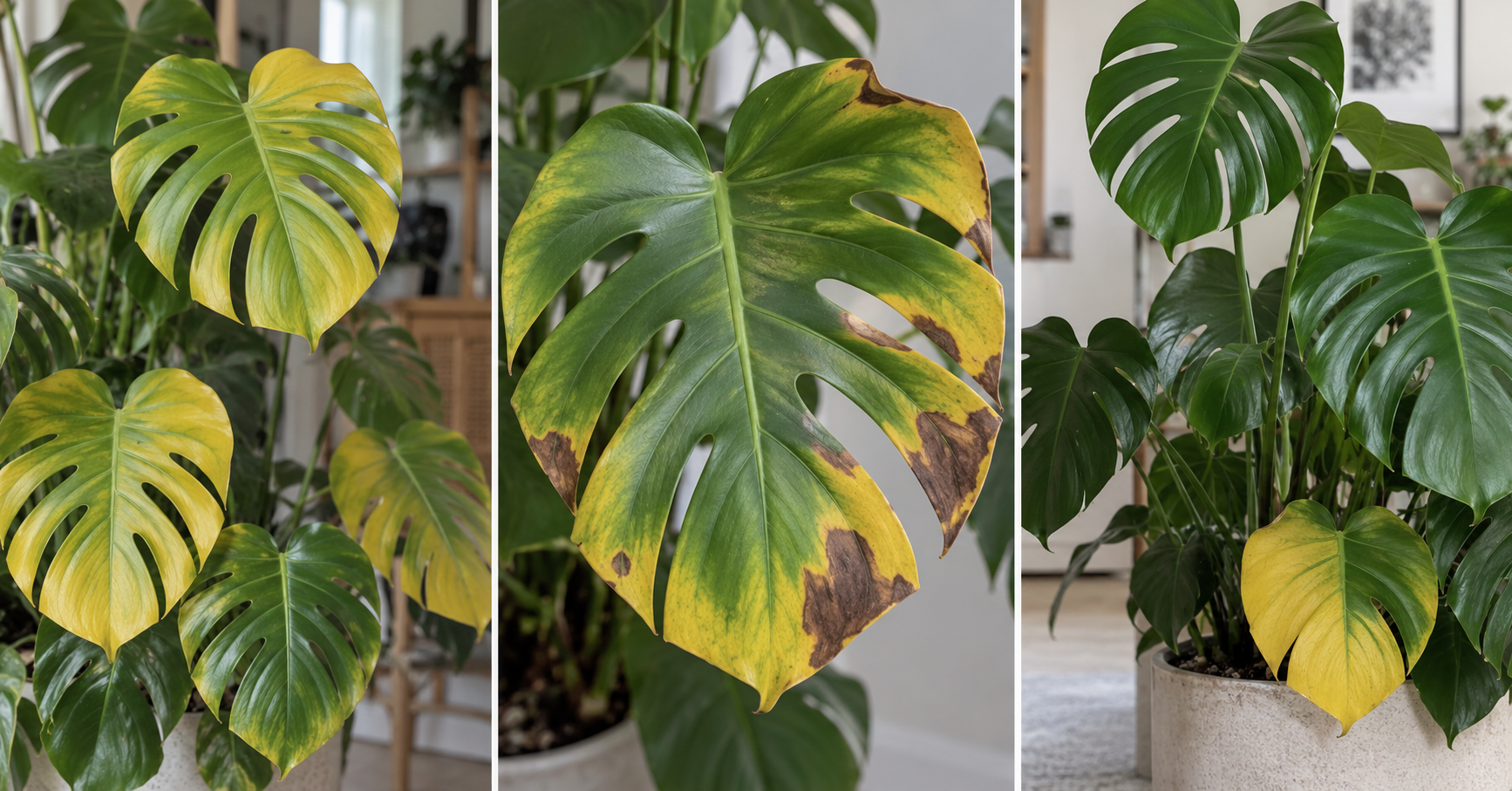
The pattern of yellowing can help narrow the possibilities faster than color alone.
| What you notice | What to check first |
|---|---|
| Several yellow leaves + wet soil | Overwatering and root stress |
| Yellow + drooping leaves + dry soil | Underwatering |
| Yellow and brown leaves | Watering, roots, light, environmental stress |
| One older lower leaf turning yellow | Natural aging or early stress |
| Yellowing after repotting | Root disturbance and moisture changes |
| Yellow leaves + visible pests | Pest damage |
| Yellowing + slow, weak growth | Light, roots, or nutrition |
✅ The Clue I’d Trust More
If I had to choose between the color of one leaf and the condition of the soil and roots, I’d trust the roots every time.
Yellow leaves get attention because they are easy to see, but they can result from opposite problems. Wet soil, dry soil, damaged roots, natural aging, and environmental stress can all end with a yellow leaf. The pattern around that leaf is what makes the symptom useful.
Penn State recommends allowing the top 1 to 2 inches of Monstera soil to dry between waterings and warns that overwatering can lead to root rot. The plant also prefers bright light without harsh direct sun and warm, relatively humid conditions.
Think of the table as a starting point rather than a set of rigid rules. The same yellow color can result from opposite problems.
Why Are My Monstera Leaves Turning Yellow and Brown?
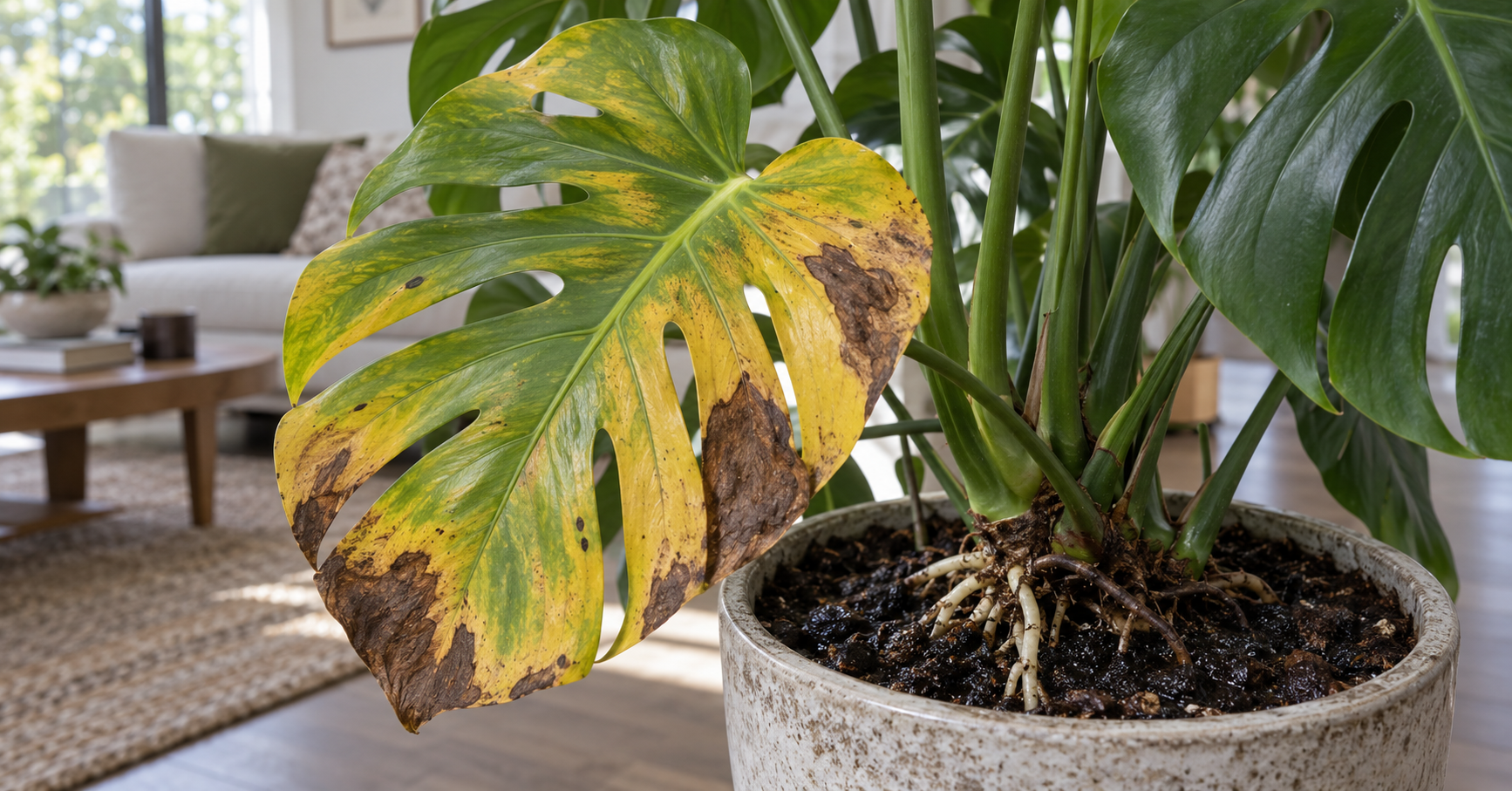
Yellow and brown together usually mean the leaf has moved beyond simple chlorosis and some tissue is becoming damaged.
The texture and location of the brown area matter.
If the leaf is yellow with dark or soft brown areas while the soil stays wet, check the roots and drainage. If the brown portions are dry and crispy, moisture loss, heat, or environmental stress become more plausible.
A yellow leaf with brown patches after a sudden move into strong sunlight may also be showing light damage. Monstera naturally grows as a tropical understory plant, and indoor plants generally perform well in bright light without prolonged harsh direct exposure.
Do not assume every yellow-and-brown leaf means root rot. Check the plant below the soil before reaching that conclusion.
The Most Common Causes of Yellow Monstera Leaves
Overwatering and Root Stress
Too much moisture is one of the first things to investigate when several leaves yellow at once.
Monstera likes moisture, but the roots also need oxygen. Soil that remains saturated can damage roots and eventually lead to root rot. Penn State recommends a well-draining potting mix and allowing the upper layer to dry before watering again.
Signs that make overwatering more likely include:
- Soil staying wet for many days
- Yellowing across multiple leaves
- Drooping despite moist soil
- Brown, soft roots
- An unpleasant smell from the potting mix
Healthy roots should generally be firm. Brown, soft roots are a much stronger clue than a yellow leaf alone.
Underwatering
Underwatering can also produce yellow leaves.
If the root ball becomes very dry, the plant may lose firmness and begin sacrificing older foliage. You may notice drooping, curled edges, dry soil, or leaves that feel less substantial.
Anyone who’s dealt with a large Monstera knows that the top inch of soil can be misleading. A big pot may be dry near the surface while still holding moisture lower down—or the opposite.
Check several inches into the pot before deciding whether the plant needs water.
When it is genuinely dry, water thoroughly and allow excess water to drain rather than giving frequent small splashes.
Too Much or Too Little Light
Light problems can contribute to yellowing in different ways.
Very low light reduces photosynthesis and slows the rate at which the plant uses water. That can leave the potting mix wet longer and indirectly increase root stress.
At the other extreme, harsh direct sun can damage foliage. Penn State recommends positioning Monstera near a bright window while avoiding strong direct sunlight.
If yellowing began after the plant was moved, consider whether its light exposure changed significantly.
Nutrient Problems
Nutrient deficiencies can cause pale or yellow foliage, but fertilizer should not be the first response to every yellow leaf. A yellow leaf is not automatically asking to be fed.
A plant with damaged roots may be unable to absorb nutrients efficiently even when fertilizer is present. Adding more can increase salt levels in already stressed soil.
First rule out watering, drainage, root damage, and light problems.
If the plant is actively growing, its roots are healthy, and it has not been fertilized for a long time, nutrition becomes a more reasonable factor to investigate.
Temperature and Humidity Stress
Monstera is a tropical plant that prefers warm conditions and does not appreciate cold drafts. Penn State lists a preferred indoor temperature range of roughly 60°F to 85°F and notes that Monstera benefits from higher humidity.
A sudden cold draft, air-conditioning vent, heater, or sharp change in environment can contribute to stress.
Temperature becomes especially worth considering when yellowing begins shortly after moving the plant to a new room or location.
Root-Bound or Soil Problems
A Monstera that has outgrown its pot may dry out unusually fast, stop growing well, or become difficult to water evenly.
University of Minnesota Extension suggests repotting when roots are growing through the drainage holes, the pot dries extremely quickly, or the root ball has become tightly pot-bound.
Do not automatically move the plant into a huge container. A modest increase in pot size makes moisture easier to manage.
Pests
Pest damage usually comes with clues beyond yellow color.
Monstera can be affected by common houseplant pests such as spider mites, mealybugs, aphids, scale, and thrips.
Inspect:
- The undersides of leaves
- New growth
- Stems and leaf joints
- Areas around yellow or damaged tissue
Look for fine webbing, sticky residue, cottony material, bumps, or visible insects.
Natural Leaf Aging
Sometimes one yellow leaf is simply an old leaf.
Plants routinely shed older foliage as they grow. If a mature lower leaf slowly turns yellow while the rest of the Monstera is healthy and producing new growth, there may be nothing to fix.
Several leaves yellowing quickly is a different situation.
Why Is Only One Monstera Leaf Turning Yellow?
One yellow Monstera leaf is often less alarming than widespread yellowing.
If it is one of the oldest leaves near the bottom of the plant and everything else looks healthy, natural aging is a reasonable explanation.
Look more closely if:
- The yellow leaf is new
- Several others begin changing color
- Growth has stopped
- The plant is drooping
- The soil remains constantly wet
- Brown areas are spreading
The trend matters more than one isolated leaf.
How to Fix Yellow Leaves on a Monstera
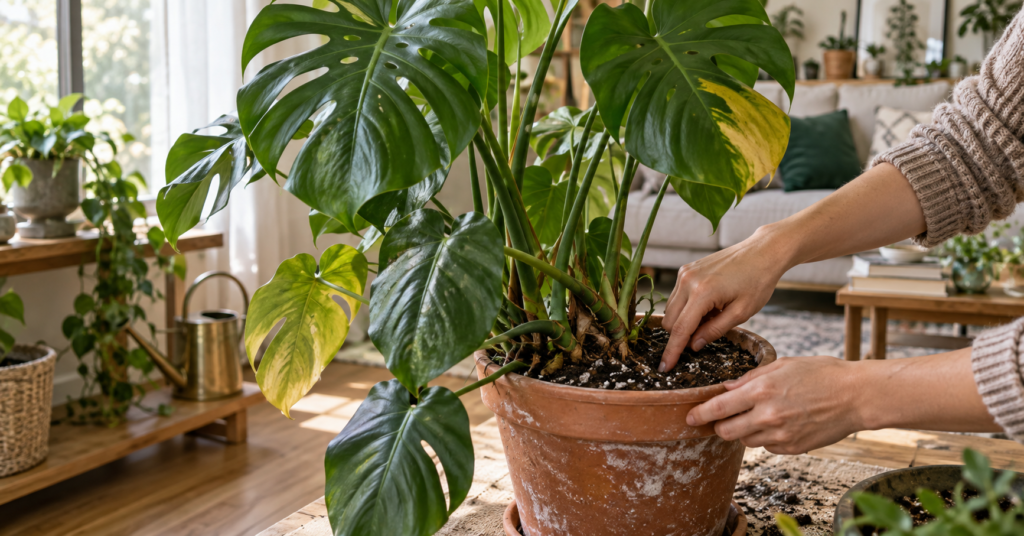
Do not try to fix yellowing by changing everything at once.
Instead:
- Check the soil moisture.
- Make sure excess water can drain freely.
- Inspect the roots if the soil stays wet or the plant continues declining.
- Review the plant’s light exposure.
- Check for drafts, heat, or recent environmental changes.
- Inspect both sides of the leaves for pests.
- Consider repotting only if the roots or soil actually justify it.
- Correct the most likely cause and watch the next growth.
The goal is not to make an old yellow leaf perfect again. It is to stop healthy leaves from following it.
Can Yellow Monstera Leaves Turn Green Again?
A leaf that has become completely yellow is unlikely to return to its original healthy green color.
If the yellowing is very mild and caused by a temporary issue, some improvement may occur, but once a leaf has lost substantial chlorophyll or the tissue is damaged, recovery is limited.
What matters more is whether the plant starts producing healthy foliage after you correct the cause.
New green leaves are a better measure of recovery than an old damaged one.
Monstera Leaves Turning Yellow: What to Do Next
When you notice Monstera leaves turning yellow, start below the foliage.
Check how wet the soil is, make sure the pot drains properly, and inspect the roots if moisture problems seem likely. Then consider light, temperature, pests, recent repotting, and whether the yellowing is limited to one naturally aging leaf.
If drainage or soil structure is part of the problem, choose a container with effective drainage and a loose, well-draining indoor potting mix rather than simply increasing or decreasing watering on a fixed schedule.
Then give the plant some stability. An old yellow leaf may never look perfect again, but healthy green new growth will tell you whether you solved the real problem.
Monstera Yellow Leaves FAQ
Should I cut off yellow Monstera leaves?
You do not need to remove a leaf at the first hint of yellow. If it still contains plenty of green tissue, leaving it temporarily is reasonable. A leaf that has become completely yellow or is badly damaged can be removed with clean pruning tools.
Why are my Monstera leaves turning yellow after repotting?
Repotting can temporarily disturb roots and change how much moisture surrounds them. Check whether the new pot is significantly larger, whether the new mix holds more water than the old one, and whether roots were damaged during repotting. Avoid repeatedly disturbing the plant while it adjusts unless there are clear signs of root trouble.
What does an overwatered Monstera look like?
An overwatered Monstera may develop yellow leaves, drooping foliage, slow growth, and soil that remains wet for too long. If root rot develops, affected roots may become brown and soft rather than firm and healthy.
Why are the lower leaves on my Monstera turning yellow?
One older lower leaf can yellow naturally as the plant ages. If several lower leaves yellow together, check watering and root conditions. Widespread yellowing is more likely to indicate stress than the gradual loss of one old leaf.

Carol researches common houseplant problems using guidance from university extension services, horticultural institutions, and other reputable sources. At The Evergreen Spot, she turns that research into practical troubleshooting guides designed to help readers understand what their plants may be telling them, narrow down the most likely causes, and know what to check next.
Leave a Reply