
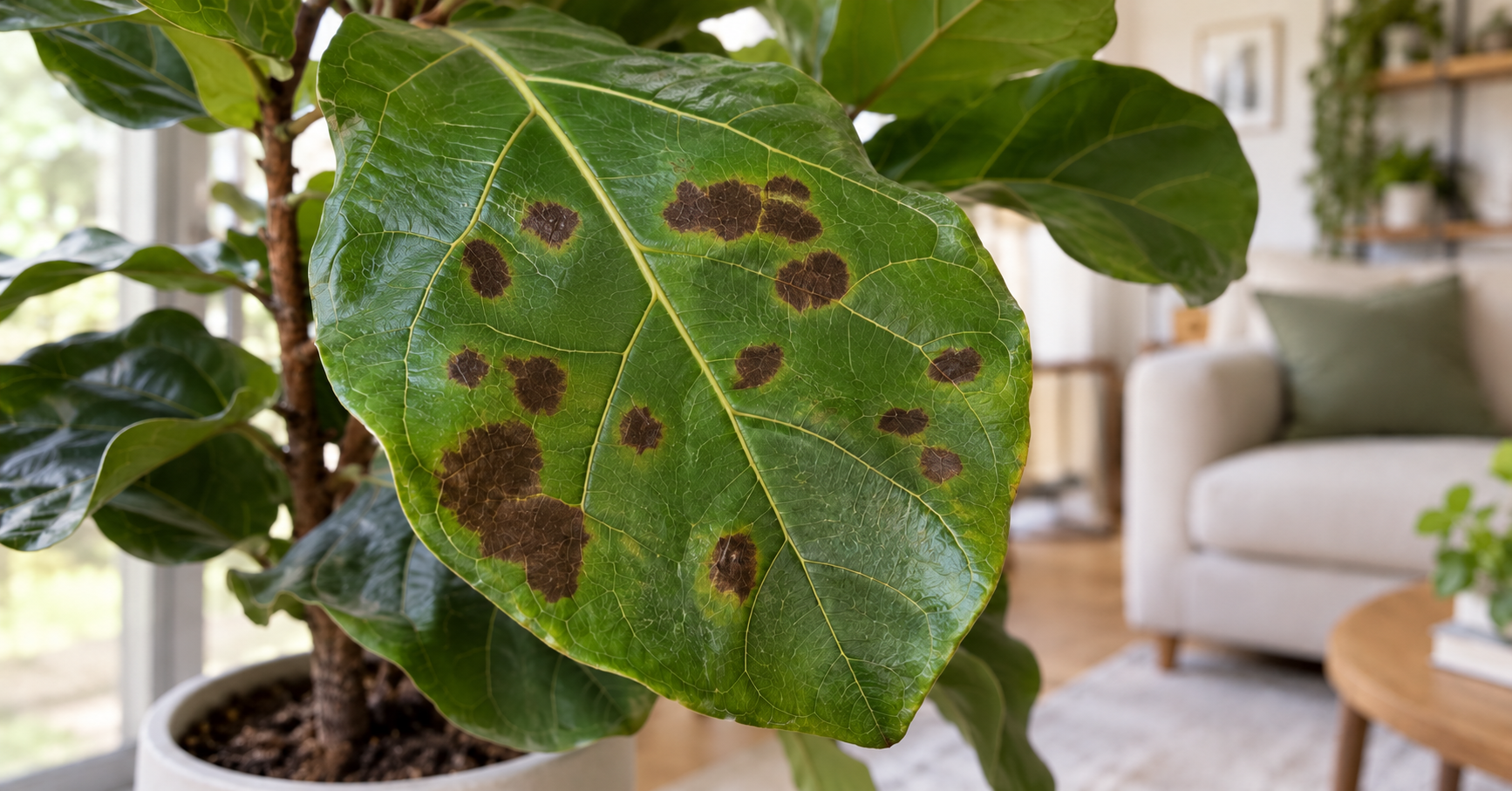
Fiddle leaf fig brown spots can be frustrating because they rarely all look the same. One leaf may develop dry brown edges, another may show dark patches in the middle, and a newer leaf can suddenly appear marked even though the rest of the plant still looks healthy.
That difference matters. A crispy edge points you in a different direction from a soft, dark spot or a pale sunburned patch. And while watering problems are common with fiddle leaf figs, brown marks can also come from sudden light changes, temperature stress, pests, physical damage, or disease.
The fastest way to make sense of the problem is to look at the pattern first, then check the soil, roots, light, and recent changes around the plant.
Table of Contents
What Causes Fiddle Leaf Fig Brown Spots? Quick Answer
Fiddle leaf fig brown spots are most often linked to moisture stress, root problems, sun damage, environmental changes, or leaf injury.
Common causes include:
- Overwatering and root stress
- Underwatering
- Poor drainage
- Sudden exposure to strong direct sunlight
- Temperature fluctuations
- Bacterial or fungal leaf problems
- Pests
- Physical damage to the leaf
The appearance of the spot can help narrow things down. Dark, soft-looking areas deserve a closer look at moisture and roots, while dry, crispy edges are more consistent with dehydration or environmental stress.
A brown spot by itself is not enough to diagnose root rot or disease.
What Do the Brown Spots Look Like?
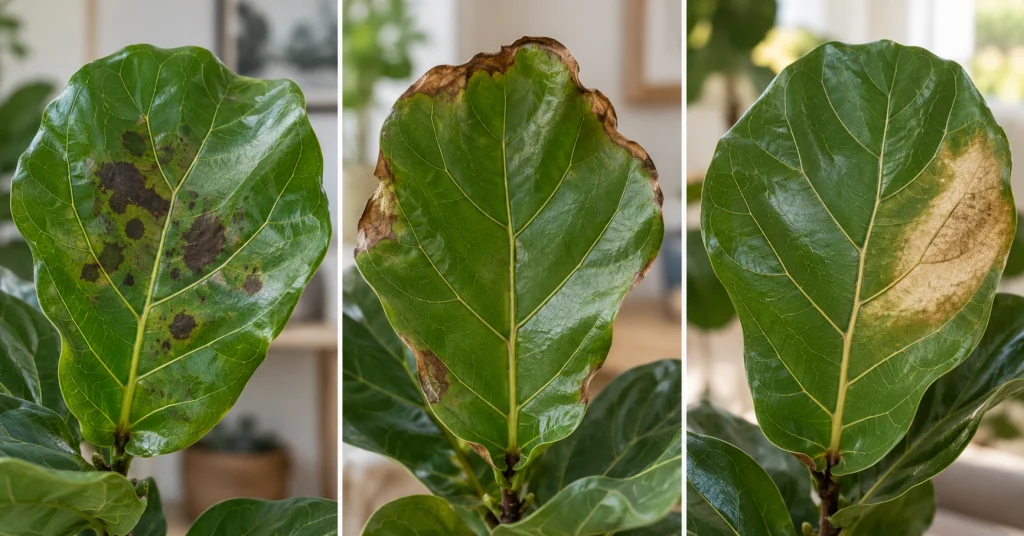
The location, texture, and color of the damage often tell you more than the word “brown” does.
| What you see | What to check first |
|---|---|
| Dark brown or nearly black spots | Soil moisture, roots, disease signs |
| Dry, crispy brown edges | Underwatering, heat, dry conditions |
| Pale tan or bleached patches | Sunburn or sudden light exposure |
| Spots in the middle of leaves | Root stress, physical damage, disease |
| Brown veins or discoloration near veins | Watering/root stress and other symptoms |
| Brown spots + falling leaves | Watering, roots, temperature changes |
⚠️ What’s Easy to Misdiagnose Here
A dark brown spot can look dramatic enough to make root rot seem like the obvious answer — but the leaf alone cannot confirm it.
A bruise, sun injury, root stress, and some leaf diseases can all leave brown or dark marks behind. Before repotting or treating the plant, check whether the soil is actually staying wet, whether the roots show damage, and whether the spots are still spreading.
That extra minute of checking can prevent a healthy plant from being “treated” for a problem it never had.
Fiddle leaf figs can also develop brown spots when room temperatures change sharply. NC State notes that Ficus lyrata is sensitive to overwatering, direct afternoon sun, and temperature fluctuations, all of which can contribute to leaf damage or drop.
The table is a starting point, not a diagnosis. Always compare the leaf with what is happening below the soil.
Root Rot and Overwatering
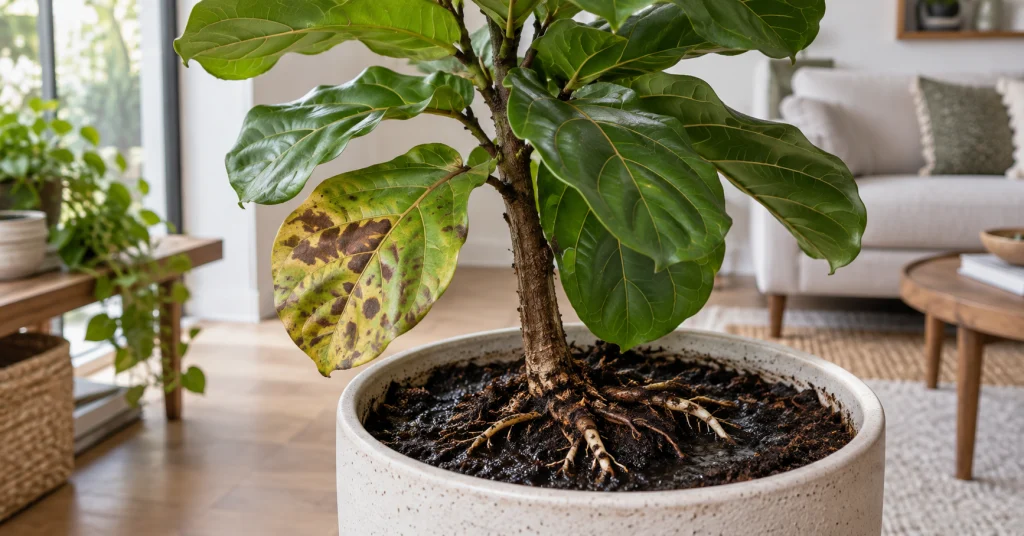
Overwatering is one of the first things to investigate when fiddle leaf fig brown spots are dark, spreading, or appearing while the soil stays wet.
Fiddle leaf figs prefer moist but well-drained soil and are sensitive to excess water around the roots. When the root zone stays saturated, roots can lose function and begin to deteriorate.
Clues that make a root problem more likely include:
- Soil that remains wet for a long time
- A container without effective drainage
- Brown or blackened roots
- Soft or deteriorating root tissue
- Leaf drop along with browning
- A sour or unpleasant smell from the potting mix
Do not diagnose root rot from leaf color alone. If the plant is in a clear nursery pot or can be removed safely, the roots provide much better evidence.
If they are firm and healthy, look beyond overwatering before making major changes.
Underwatering and Dry, Crispy Brown Edges
Dry, crispy brown edges are more consistent with moisture loss than with saturated roots.
A fiddle leaf fig that stays dry for too long may develop browning around leaf margins, especially if the plant is also exposed to heat or strong light.
Check the potting mix several inches below the surface rather than judging only the top layer. If it is very dry and pulling away from the sides of the pot, the root ball may not be getting enough moisture.
When you water, soak the soil thoroughly and allow excess water to drain away instead of giving the plant frequent small amounts.
Whoever has dealt with a fiddle leaf fig knows that trying to “correct” one dry spell with constant watering can create a completely different problem. Consistency is more useful than reacting to every leaf.
Sunburn and Light Stress
Sunburn usually creates lighter tan or brown patches on the parts of the plant receiving the strongest exposure.
Ficus lyrata does well with bright light but should be protected from harsh afternoon sun, particularly when it has not been acclimated gradually.
If the browning appeared shortly after moving the plant outdoors or closer to an intense window, consider the timing.
Sun-damaged areas often look:
- Pale or bleached at first
- Tan or light brown later
- Dry rather than mushy
- Concentrated on the most exposed side of the leaf
Move the plant away from extreme direct exposure, but avoid shifting it repeatedly from one location to another. Fiddle leaf figs generally respond better to stable conditions.
Bacterial or Fungal Leaf Problems
Some brown spots are caused by disease, but not every dark mark is an infection.
Ficus species can develop bacterial and fungal leaf spots. University of Florida Guidance describes bacterial lesions that may begin water-soaked and later become brown, sometimes with yellow-green margins. Severe infection can contribute to leaf drop.
Penn State also lists fungal and bacterial diseases among problems affecting Ficus, including lesions that yellow, brown, or die back depending on the pathogen involved.
Disease becomes more plausible when spots:
- Continue spreading
- Look water-soaked
- Develop yellow halos
- Appear on multiple leaves
- Are accompanied by rapid leaf decline
Avoid routinely wetting the foliage if disease is suspected, since splashing water can help spread some bacterial pathogens.
If the plant is deteriorating quickly or you are unsure whether the problem is infectious, isolate it from other houseplants while you investigate.
Pests, Physical Damage, and Other Causes
Sometimes a brown mark has a much simpler explanation.
Large fiddle leaf fig leaves are easy to bruise while moving, cleaning, repotting, or transporting the plant. Damaged tissue may later dry and turn brown even though the plant itself is healthy. That is easy to overlook when every new mark starts to feel like a plant emergency.
Pests can also cause discoloration. NC State recommends watching Ficus lyrata for scale, aphids, mealybugs, thrips, and spider mites.
Check:
- The undersides of leaves
- Leaf joints and stems
- New growth
- Areas around visible spotting
Look for webbing, sticky residue, cottony material, small bumps, or visible insects.
A single stable mark after a leaf was bent or bumped is usually less concerning than spots that continue appearing across the plant.
What If Brown Spots Are on New Leaves or the Leaves Are Falling Off?
Brown spots on new leaves deserve attention because new growth should normally emerge healthy.
Start by checking soil moisture and roots, then review any recent changes in watering, repotting, light, or temperature. New leaves are developing tissue, so stress during that period may become visible as the leaf expands.
If the leaves are turning brown and falling off, the problem may be affecting more than one isolated leaf.
NC State notes that leaf drop in fiddle leaf figs can occur with either too much or too little water, and temperature fluctuations can also cause brown spotting.
Do not respond to leaf drop by automatically watering more. Check the pot first.
How to Treat Brown Spots on a Fiddle Leaf Fig
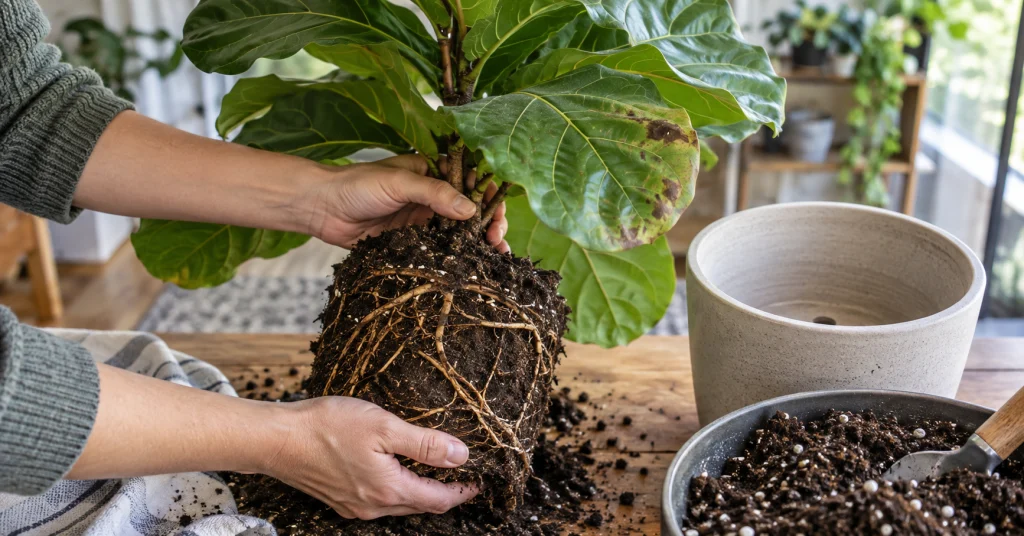
The goal is to stop new damage, not to erase old spots.
Work through the plant in this order:
- Check the soil moisture. Is the root zone dry, comfortably moist, or saturated?
- Inspect drainage. The pot should allow excess water to escape.
- Look at the roots if overwatering is suspected.
- Compare the spot pattern. Crispy edges, soft dark patches, and sunburned areas point toward different causes.
- Review recent changes. Moving, repotting, strong sun, cold drafts, or a new watering schedule can all matter.
- Inspect for pests and spreading disease symptoms.
- Correct the most likely cause first.
- Watch new growth.
Avoid making five changes at once. If you alter the pot, soil, watering, light, and fertilizer together, it becomes much harder to know what actually helped.
Will Brown Spots on a Fiddle Leaf Fig Disappear?
Existing dead brown tissue will not turn green again.
If the cause is corrected, however, the rest of the leaf may remain functional and the plant can continue producing healthy new growth.
A leaf with one dry brown edge does not necessarily need to be removed. The more important question is whether the damage is still expanding.
Judge recovery by:
- New leaves emerging without spots
- Stable existing damage
- Healthy roots
- Reduced leaf drop
- Normal growth
The old marks may remain as cosmetic scars even after the plant has recovered. A neater-looking leaf can make the plant seem “fixed,” so keep watching the new growth instead of the freshly trimmed edge.
Fiddle Leaf Fig Brown Spots: What to Do Next
If you notice fiddle leaf fig brown spots, start by matching the appearance of the damage with the condition of the plant rather than reaching immediately for water, fertilizer, or a treatment spray.
Dark spots with wet soil call for a closer look at drainage and roots. Dry crispy edges point more toward moisture loss or environmental stress. Pale exposed patches suggest sun damage, while spreading water-soaked lesions deserve closer attention for possible disease.
If the current pot or soil is contributing to excess moisture, choose a container with effective drainage and a loose, well-draining potting mix suitable for indoor foliage plants. Then keep the plant’s conditions as stable as possible and watch what happens to the next leaves.
Old brown spots may never disappear. What matters is that new ones stop appearing. A scarred old leaf can stay ugly for a long time while the plant itself is doing perfectly well.
Fiddle Leaf Fig Brown Spots FAQ
Should I cut off brown fiddle leaf fig leaves?
Not automatically. If most of the leaf is still green and the damaged area is stable, the leaf can remain on the plant. Remove a leaf if it is mostly dead, badly diseased, or continuing to deteriorate. Use a clean cutting tool and avoid removing too much healthy foliage at once.
What does an overwatered fiddle leaf fig look like?
An overwatered fiddle leaf fig may have dark brown spots, leaf drop, persistently wet soil, and stressed or deteriorating roots. The soil and root condition are more reliable clues than the color of one spot.
Why does my fiddle leaf fig have black spots?
Very dark or black-looking spots can result from severe tissue damage, excess moisture, root problems, or certain leaf diseases. Check whether the spots are soft, water-soaked, spreading, or associated with wet soil before deciding on treatment.
Why are the veins on my fiddle leaf fig turning brown?
Brown discoloration around veins can occur with several types of leaf stress and should not be treated as a diagnosis by itself. Check moisture, roots, the spread of the discoloration, and whether other symptoms such as yellowing or leaf drop are present.

Carol researches common houseplant problems using guidance from university extension services, horticultural institutions, and other reputable sources. At The Evergreen Spot, she turns that research into practical troubleshooting guides designed to help readers understand what their plants may be telling them, narrow down the most likely causes, and know what to check next.
Leave a Reply