
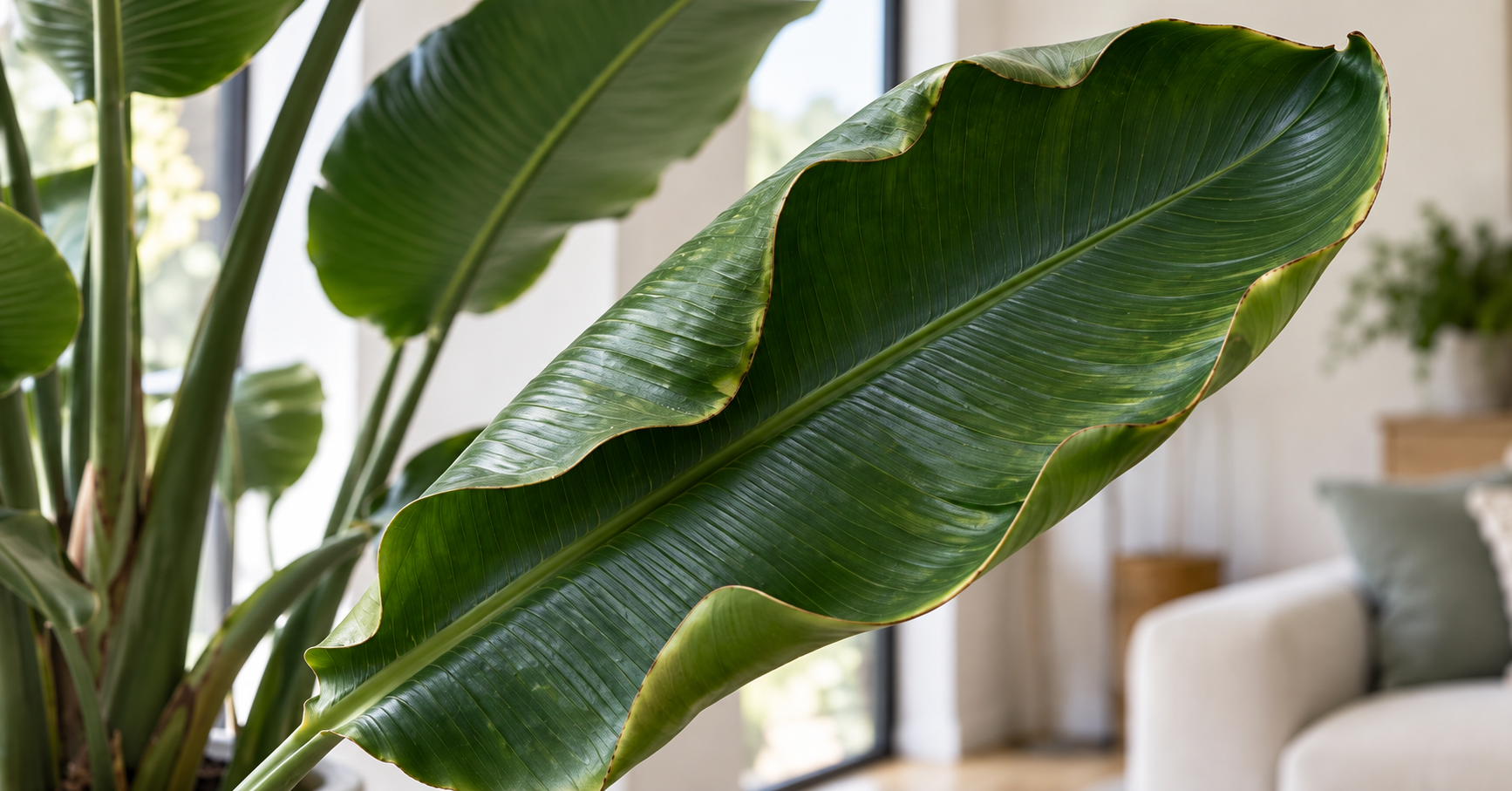
Bird of Paradise leaves curling can make an otherwise bold, healthy-looking plant seem suddenly stressed. Because the leaves are so large, even a slight inward roll can look dramatic—and it is easy to assume something is seriously wrong.
Fortunately, curling is often a response to a manageable growing-condition problem. Watering, humidity, light, temperature, root stress, water quality, and pests are the main things to investigate. The shape of the curl and the other symptoms appearing with it can help narrow down the cause.
The key is not to change everything at once. Check the plant systematically, starting with the simplest and most common causes.
Table of Contents
Why Are My Bird of Paradise Leaves Curling? Quick Answer
Bird of Paradise leaves curling usually means the plant is reacting to moisture loss, environmental stress, or a problem affecting the roots.
The most common causes include:
- Soil that has become too dry
- Low indoor humidity
- Overwatering or stressed roots
- Too much or too little light
- Sudden temperature changes
- Hard water or mineral buildup
- Compacted soil or a root-bound plant
- Pests such as spider mites
Start by checking the soil several inches below the surface rather than looking only at the top layer. Then inspect the leaves for discoloration, brown edges, webbing, or other clues.
One symptom alone rarely tells the whole story. Curling combined with dry soil means something different from curling combined with yellow leaves and constantly wet soil.
What Causes Bird of Paradise Leaves to Curl?
Watering and Humidity Problems
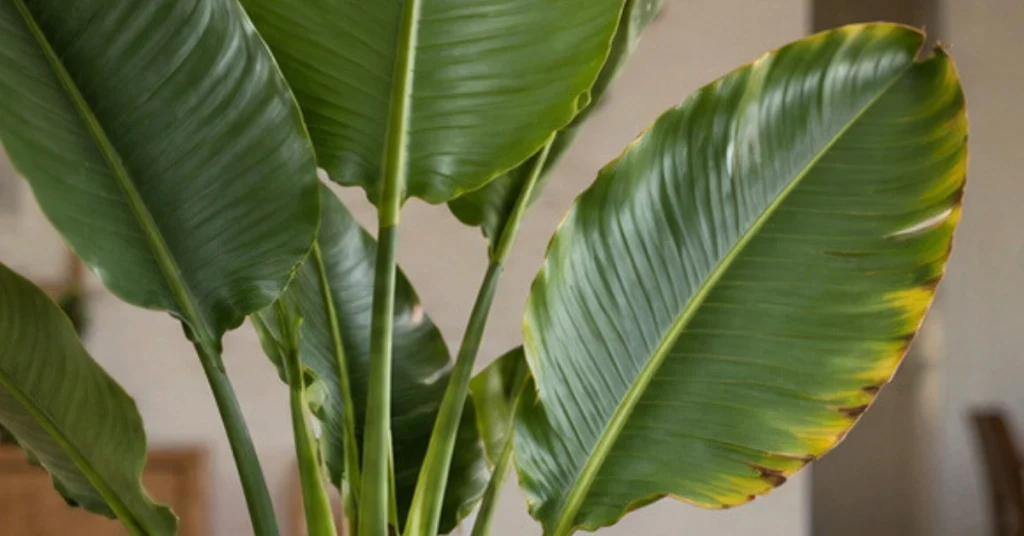
Bird of Paradise leaves can curl when the plant is getting either too little or too much water. This is one of those symptoms that can be frustratingly misleading: a thirsty plant and a plant with stressed, waterlogged roots can both look unhappy above the soil. Low humidity can add to the problem, especially in warm, bright indoor spaces where the large leaves lose moisture more quickly.
For Bird of Paradise specifically, Clemson Cooperative Extension recommends thoroughly wetting the potting mix when watering and then allowing it to dry slightly before watering again. It also notes that these plants prefer moderate humidity and that overly frequent watering or slow-draining soil can lead to root rot.
If the root zone becomes too dry, the leaves may fold or curl inward. You may also notice dry or crispy edges, brown tips, drooping, very dry potting mix, or a pot that feels unusually light.
Overwatering can create surprisingly similar stress above the soil. When the potting mix stays wet for too long, the roots may struggle to function properly. In this case, look for yellowing leaves, wilting despite wet soil, persistently damp potting mix, or soft and damaged roots.
The easiest way to tell the difference is to check the soil rather than relying on the leaf alone. If the root zone is dry, water thoroughly until excess water drains from the pot. If it is still wet, adding more water is unlikely to help.
Low humidity is more likely to contribute when the soil moisture is appropriate but leaf edges continue to look dry or crispy.
Too much or too little light
Bird of Paradise plants generally perform best with plenty of bright light, but sudden exposure to intense sun can stress leaves that were previously growing in softer conditions.
If curling began soon after moving the plant closer to a very sunny window, heat or intense sunlight may be contributing.
Too little light creates a different problem. Growth may weaken, while the soil stays wet longer because the plant uses water more slowly.
Instead of asking only whether the room feels bright, pay attention to how much light actually reaches the plant throughout the day.
Temperature stress and drafts
Sudden temperature changes can also cause leaves to fold or curl.
Cold drafts from doors or air-conditioning vents can stress tropical foliage. At the other extreme, heat from radiators, heaters, or very hot windows can increase moisture loss.
A relatively stable environment is usually better than repeatedly moving the plant between hot and cool areas.
Water quality and mineral buildup
Water quality is easy to overlook.
Minerals and salts can accumulate in potting soil over time, particularly with hard tap water or frequent fertilizing. This buildup may contribute to stressed leaf edges.
Check for:
- White residue on the soil surface
- Crust around the pot
- Repeated browning or curling despite otherwise reasonable care
Occasionally allowing plenty of water to run through the soil and drain away can help flush accumulated salts.
Compacted soil or a root-bound plant
Roots need access to both moisture and oxygen.
As potting mix ages, it can become dense and compacted. A plant that has outgrown its container may also develop a tightly packed root system that makes watering uneven.
A root-bound Bird of Paradise may become dry surprisingly quickly after watering.
That said, being somewhat pot-bound is not automatically a problem for this plant. Wisconsin Horticulture – UW–Madison Extension notes that Bird of Paradise can actually tolerate a fairly snug container and recommends repotting when it is genuinely necessary rather than simply because the roots have filled the pot. When repotting is needed, a well-draining potting mix is important. In other words, seeing roots is not automatically a repotting emergency.
So don’t repot based on one visible root alone. Look at the whole picture: unusually fast drying, severely circling roots, roots escaping heavily through drainage holes, or a container that can no longer accommodate the plant.
Signs include roots circling the inside of the pot, growing through drainage holes, or pushing the plant upward.
Pests
Spider mites and other sap-feeding pests can distort foliage and contribute to curling.
Check the undersides of leaves, along the stems, and around new growth.
Look for tiny pale dots, fine webbing, sticky residue, or small moving insects. Curling by itself does not prove a pest problem, so inspect carefully before treating the plant.
Why Are My Bird of Paradise Leaves Curling Inward?
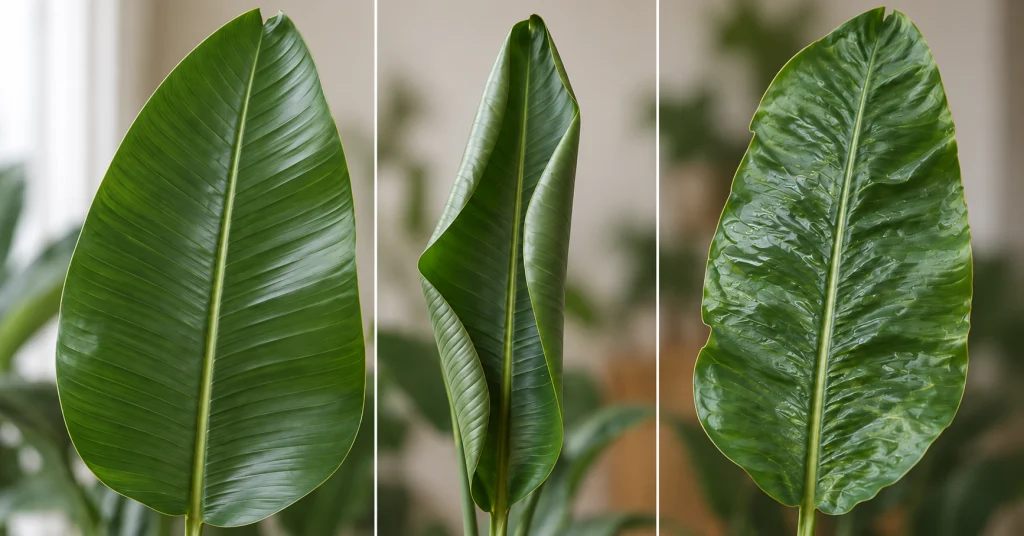
Bird of Paradise leaves curling inward most often point toward moisture stress, low humidity, heat, or root-related problems.
People may describe a similar appearance in several ways: leaves curling up, rolling up, folding, or looking partly closed. In many cases, these phrases describe the leaf folding inward on itself rather than entirely different problems.
The most useful clue is what is happening alongside the curl.
| What you notice | What to check first |
|---|---|
| Curling inward + dry soil | Underwatering |
| Curling + crispy brown edges | Low humidity, heat, inconsistent watering |
| Curling + yellow leaves + wet soil | Overwatering or root stress |
| Curling after strong sun exposure | Light or heat stress |
| Curling + pale dots or webbing | Spider mites or other pests |
In practice, this kind of symptom matching is more useful than trying to diagnose a plant from the direction of one leaf alone.
What if the leaves look wrinkled?
Wrinkled Bird of Paradise leaves may overlap visually with curled leaves, but “wrinkled” usually describes an uneven or crumpled leaf surface rather than simply a rolled edge.
A new leaf can sometimes emerge looking wrinkled if conditions were inconsistent while it was developing.
If an older leaf suddenly becomes wrinkled, check the same basic factors: soil moisture, humidity, temperature, roots, and pests.
🔍 What I’d Check First
If this were the only symptom I could see, I wouldn’t start by repotting or reaching for fertilizer. I’d put a finger into the potting mix first.
Bird of Paradise leaves are dramatic enough that a little curling can make the plant look much worse than it is. The most useful first question is usually whether the roots are sitting in soil that is too dry, staying wet for too long, or behaving normally.
Only after that would I start looking harder at humidity, heat, light, or pests.
How to Fix Curling Bird of Paradise Leaves
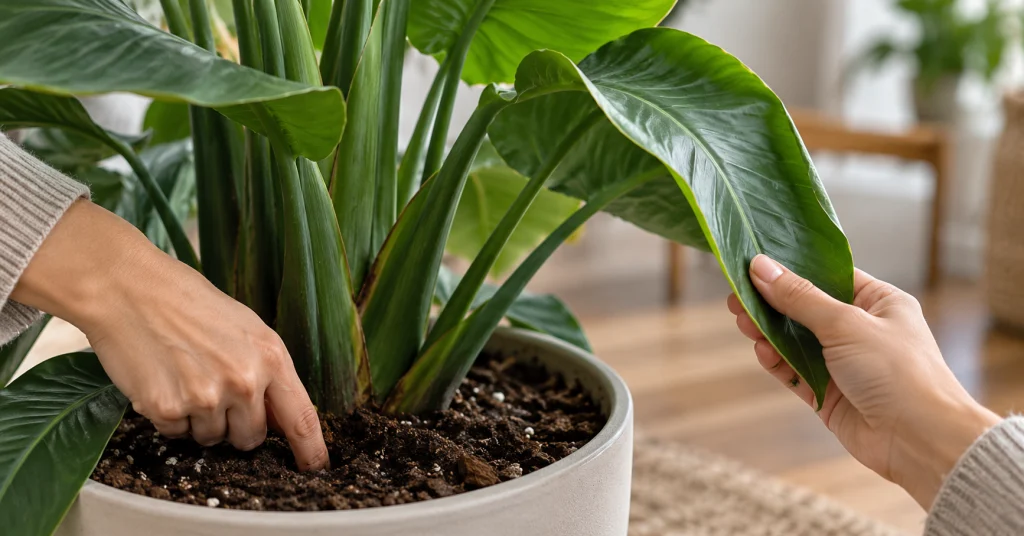
The best fix depends on the cause, so avoid changing the watering schedule, lighting, fertilizer, pot, and humidity all at once.
Instead, work through the plant in order:
- Check moisture several inches into the soil.
- If the root zone is dry, water thoroughly and let excess water drain.
- If the soil is still wet, wait before watering again.
- Check whether the plant receives enough bright light without sudden exposure to extreme heat.
- Move it away from cold drafts, heaters, or air-conditioning vents.
- Inspect both sides of the leaves for pests.
- Look for signs that the plant has become root-bound.
- Review fertilizer use and water quality if mineral buildup is visible.
After making the most likely correction, give the plant time to respond.
An existing damaged leaf may not become perfectly flat again. The condition of the next leaves is often a better indication of whether the problem has been corrected.
Why Did My Bird of Paradise Start Curling After Watering or Repotting?
Leaves curling after watering do not necessarily mean the plant was overwatered.
If the soil became extremely dry before watering, the plant may already have been under stress. The existing curl can remain visible even after the root ball has been rehydrated.
However, if the pot stays saturated for many days after watering, poor drainage or root stress becomes more likely.
Curling after repotting can also happen because the roots were disturbed.
Repotting may involve several changes at once:
- New soil
- A different pot size
- Root disturbance
- A change in moisture retention
- A new location or light level
Keep the plant’s environment as stable as possible while it adjusts rather than immediately adding fertilizer or making several more changes.
Do White Bird of Paradise Plants Curl for the Same Reasons?
Yes. White Bird of Paradise can develop curled leaves for many of the same reasons as other Bird of Paradise plants, including moisture stress, low humidity, unsuitable light, temperature changes, root problems, and pests.
UF/IFAS Extension identifies White or Giant Bird of Paradise as Strelitzia nicolai, a much larger relative of Strelitzia reginae with similarly broad, banana-like foliage.
Because Strelitzia nicolai can grow very large indoors, its root system and container can also become substantial. Moisture may not be distributed evenly throughout a large pot, so one area can still be damp while another is already drying out.
If the leaves are curling, check the soil in more than one spot and at different depths before deciding whether the plant needs water. This gives you a much better picture of what is happening around the entire root ball.
Bird of Paradise Leaves Curling: The Practical Fix
Bird of Paradise leaves curling are usually a signal to investigate, not panic.
Start with the soil moisture, then work outward: humidity, light, temperature, roots, water quality, and pests. Try to resist fixing five things at once — otherwise, it becomes almost impossible to tell what actually helped.
Once you’ve corrected the most likely problem, give the plant some time. An old curled leaf may never look perfect again, so watch the new growth instead. A fresh leaf that opens normally is a much better sign that you’re back on track.
Bird of Paradise Leaves Curling FAQ
What does an underwatered Bird of Paradise look like?
An underwatered Bird of Paradise may have curled or folded leaves, dry brown edges, drooping foliage, and potting soil that feels dry several inches below the surface.
How can you tell if a Bird of Paradise is overwatered?
Common signs include yellowing leaves, soil that remains wet for a long time, wilting despite moist soil, soft or damaged roots, and sometimes an unpleasant smell from the potting mix.
Can curled Bird of Paradise leaves go back to normal?
Mild curling may improve after the underlying problem is corrected, but heavily damaged leaves may never become completely flat again. Healthy new growth is a better sign of recovery.
Should you cut off curled or damaged Bird of Paradise leaves?
A slightly curled leaf does not need to be removed if it is still mostly green. Remove leaves that are largely dead or severely damaged, using clean pruning tools.

Carol researches common houseplant problems using guidance from university extension services, horticultural institutions, and other reputable sources. At The Evergreen Spot, she turns that research into practical troubleshooting guides designed to help readers understand what their plants may be telling them, narrow down the most likely causes, and know what to check next.
Leave a Reply