
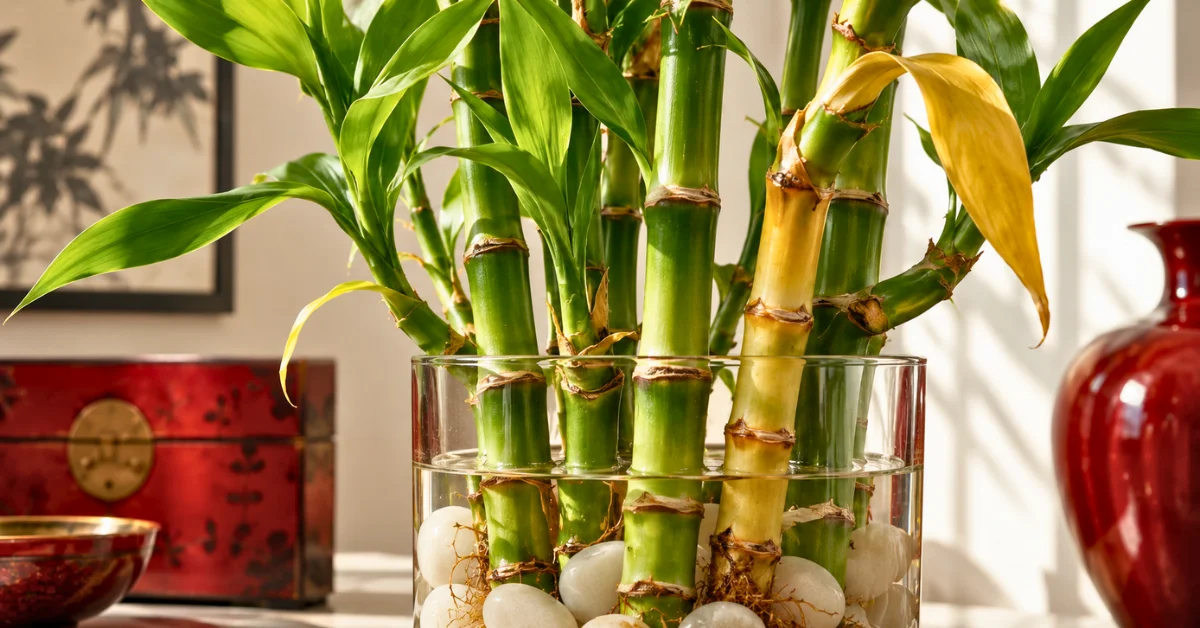
A lucky bamboo dying can look surprisingly dramatic. Leaves turn yellow, stalks lose their healthy green color, roots darken, or an arrangement that seemed almost impossible to kill suddenly starts looking worse by the day.
Before you throw it away, look at where the damage is happening. A few yellow leaves, a yellowing stalk, and mushy roots are not the same problem — and lucky bamboo grown in water needs a slightly different rescue plan from one growing in soil.
Despite its name, lucky bamboo isn’t actually bamboo. It’s Dracaena sanderiana, a tropical houseplant that can often recover if enough healthy stem and roots remain.
Table of Contents
Is Your Lucky Bamboo Dying? Quick Answer
A lucky bamboo dying is usually showing stress from its water, roots, light, temperature, or fertilizer rather than suddenly failing for no reason.
Check these first:
- Yellow leaves but a firm green stalk: the plant may still be very salvageable.
- Yellow or soft stalk: damage has reached the cane and deserves faster attention.
- Dark, mushy or foul-smelling roots: suspect root rot.
- Brown, crispy tips: look at water quality, dry conditions, fertilizer, or strong light.
- Plant growing in water: inspect the roots and the condition of the water and container.
- Plant growing in soil: check moisture and drainage before adding more water.
Don’t start by fertilizing a stressed plant. First find the damaged part and correct the growing condition behind it.
First, Check Whether Your Lucky Bamboo Is Growing in Water or Soil
Lucky bamboo can grow successfully in either water or potting mix, but the troubleshooting is different.
Costa Farms notes that lucky bamboo is commonly grown with its stems supported by stones, gravel, or marbles in water, but it can also grow in potting mix.
If yours grows in water, the roots should remain submerged while most of the stalk stays above the waterline. Stagnant water, unhealthy roots, or years of mineral buildup inside the container can become part of the problem.
If yours grows in soil, think more like you would with a traditional houseplant: moisture should be available to the roots without leaving them trapped in poorly drained, constantly saturated soil.
Knowing which setup you have immediately narrows down what to check next. The same yellow leaf can lead to a very different investigation in a glass of water than it would in a pot of soil.
Look at the Stalk, Leaves, and Roots Before You Act
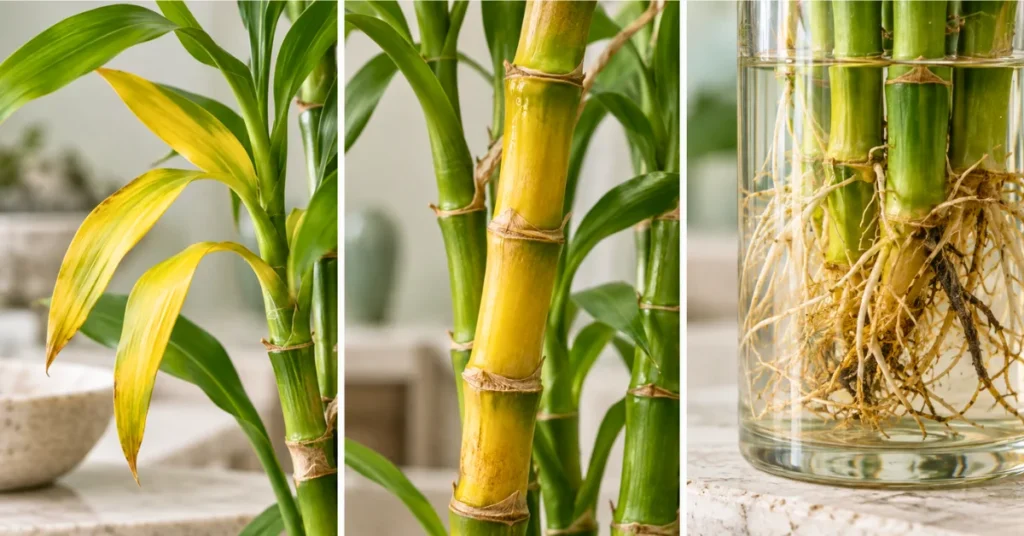
A rescue becomes much easier when you stop viewing the whole plant as simply “dying.”
Yellow leaves
A yellow leaf does not necessarily mean the entire stalk is lost. If the stalk is still green and firm and the roots look healthy, correct the growing conditions and remove leaves only when they are fully damaged.
Yellow stalk
A stalk changing from green to yellow is more concerning because the problem is no longer limited to a leaf.
If part of a cane remains healthy and green while another section is deteriorating, saving healthy material through pruning or propagation may be more realistic than trying to make damaged tissue green again.
Unhealthy roots
Healthy houseplant roots are generally firm rather than soft and decaying. University of Maryland Extension notes that roots affected by rot tend to become dark and soft and recommends removing rotten sections when healthy material remains.
Anyone who has watched a plant decline knows how tempting it is to keep changing things every day. With lucky bamboo, examining these three areas first is usually far more useful than cycling through water, fertilizer, sunlight, and pruning all at once.
⚠️ Save the Green Part, Not the Yellow One
If a lucky bamboo stalk itself is turning yellow or soft, I would stop focusing on whether the damaged section can become green again.
Instead, look for healthy, firm green cane above or below the problem. When viable stem remains, preserving that tissue may be more realistic than trying to rescue a section that is already deteriorating.
With lucky bamboo, the most useful question is often not “Can I reverse this yellow part?” but “How much healthy plant do I still have?”
How to Revive Lucky Bamboo Growing in Water
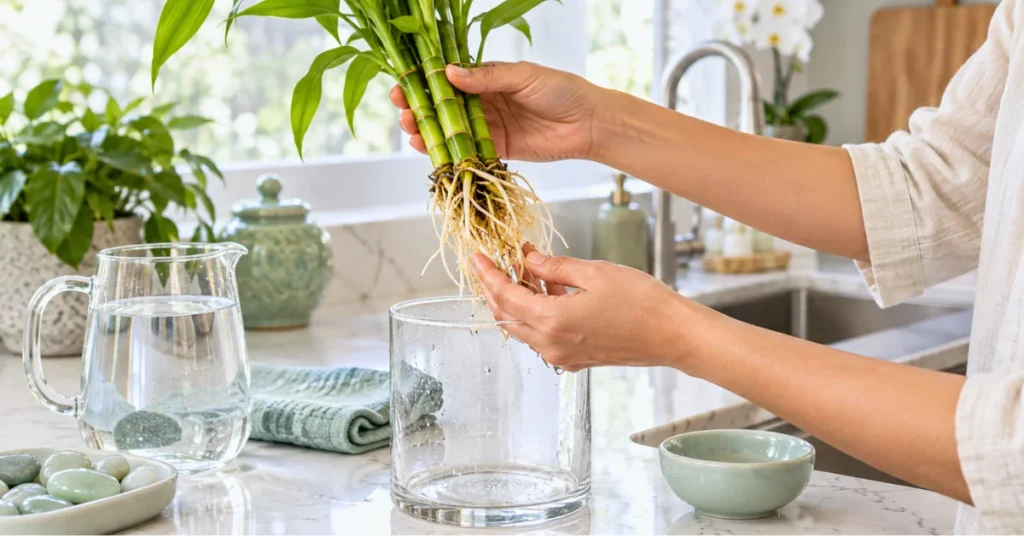
For water-grown lucky bamboo, start with the roots and water rather than the leaves.
Remove the plant carefully and rinse the roots so you can see them clearly. Healthy roots may vary in color, but they should feel firm. Trim away tissue that is clearly soft, slimy, or decaying using clean scissors.
Clean the container before returning the plant. If the water looks cloudy, smells unpleasant, or has been sitting unchanged for a long time, replace it.
Water quality can also matter for Dracaena. UF/IFAS Extension specifically notes that lucky bamboo leaf yellowing can be associated with municipal water chemistry, including chlorine or fluoride, and suggests trying filtered water when water quality appears to be contributing to the problem.
If your plant repeatedly develops yellow or brown tips despite otherwise good care, trying filtered or suitable rainwater can be a useful experiment.
Keep enough water in the container to cover the roots, rather than submerging most of the green stalk.
How to Save Lucky Bamboo Growing in Soil
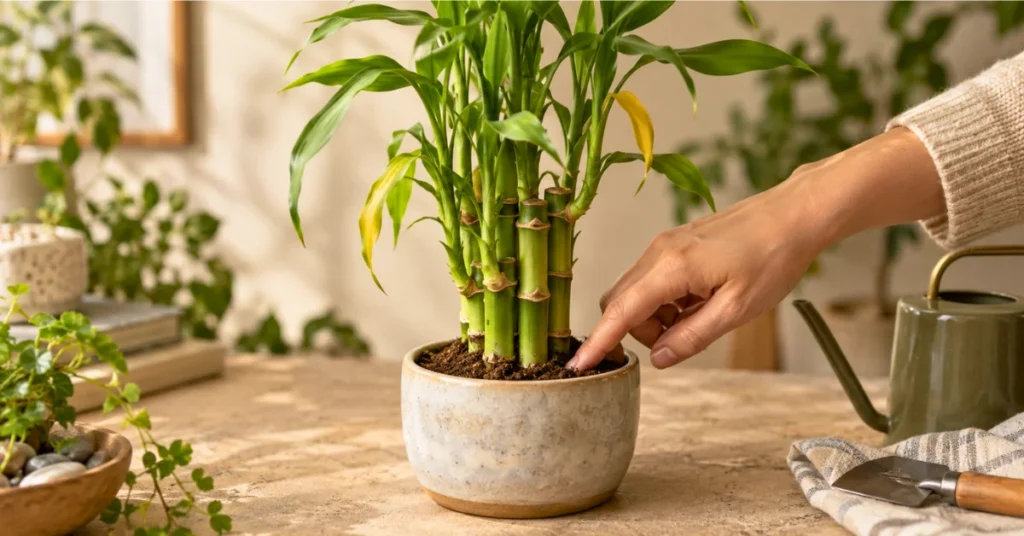
If your lucky bamboo grows in soil, check the root zone before reaching for the watering can.
Push your finger or a wooden stick down into the potting mix. The surface can look dry while the lower part of the container is still wet.
Mississippi State University Extension warns that root rot in houseplants often develops this way: the upper potting mix appears dry while the lower mix remains moist, prompting people to water again because the plant looks wilted.
Make sure excess water has somewhere to escape. If the container has no usable drainage, or the mix stays saturated for a very long time, repotting into a better-draining setup may be necessary.
On the other hand, soil that has become extremely dry can also stress the plant. The goal is consistent moisture without a permanently waterlogged root zone.
Can You Save Lucky Bamboo With Root Rot?
Lucky bamboo with some root rot can sometimes recover if healthy roots or stems remain.
Remove the plant from its container and cut away clearly rotten roots with sanitized scissors. Clean the container and remove decomposing material before resetting the plant in fresh water or clean, suitable potting mix.
The chances become poorer when rot has spread extensively into the stalk and little firm green tissue remains.
This is also where propagation becomes useful. Dracaena can produce new plants from healthy stem sections. Iowa State University Extension describes cane cuttings as a propagation method well suited to Dracaena, with new shoots and roots emerging from healthy stem tissue.
So if the bottom of a plant is failing but you still have healthy green stem above the damage, preserving that healthy material may offer another route to saving the plant.
Too Much Light Can Make a Struggling Lucky Bamboo Worse
Lucky bamboo tolerates surprisingly modest light and does not need intense sunshine to thrive indoors.
Penn State Extension describes Dracaena sanderiana as a plant adapted to partial shade and notes that direct sun can scorch its foliage.
Bright, indirect light is a safer place for a recovering plant than a hot sunny windowsill.
If you recently moved your lucky bamboo into direct sun because it looked weak, the extra light may actually be adding another source of stress.
Move it somewhere bright but protected from harsh direct rays and give it time to adjust.
Be Careful With Fertilizer While Your Lucky Bamboo Is Recovering
A weak-looking plant can make fertilizer seem like an obvious solution. It often isn’t.
Lucky bamboo is not a heavy feeder, particularly when grown in water. Excess fertilizer can create salt stress and damage already weakened roots.
If the plant is declining, solve obvious problems with roots, water, light, or temperature before feeding it.
Once the plant has stabilized and begins producing healthy growth again, fertilization can be reconsidered according to how it is being grown. For a water-grown arrangement, use a fertilizer specifically suitable for that type of culture and follow the product directions conservatively.
Rescue first. Feed later.
Can Lucky Bamboo Recover After Losing Leaves?
Yes, lucky bamboo can continue growing after losing damaged leaves if the stalk and root system remain healthy.
The old damaged foliage may not recover, so judge progress by what happens next.
A stalk that remains firm and green, roots that stay healthy, and fresh new shoots are much better signs of recovery than waiting for a yellow leaf to become green again.
This process also takes patience. Once you correct the problem, avoid moving the plant, changing its water routine, fertilizing it, and pruning it repeatedly over the next few days. Give healthy tissue a chance to respond.
When Is a Lucky Bamboo Stalk Too Damaged to Save?
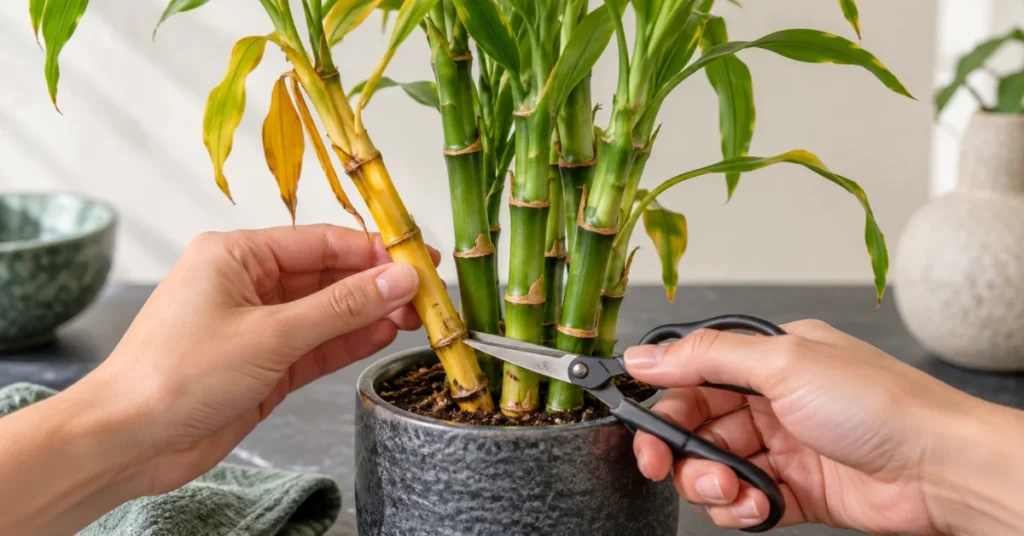
A completely yellow, soft, or rotting stalk generally has a much poorer chance of recovering than a plant with only damaged foliage.
Look carefully for a boundary between unhealthy tissue and healthy, firm green cane.
If healthy stem remains, it may be possible to remove the compromised section and preserve the good growth. If deterioration extends through the entire stalk, there may be little healthy tissue left to preserve, and removing the failing cane may be more practical than leaving it in the arrangement.
This is why catching the change while only one portion of the plant is affected matters.
Lucky Bamboo Dying? What to Do Next
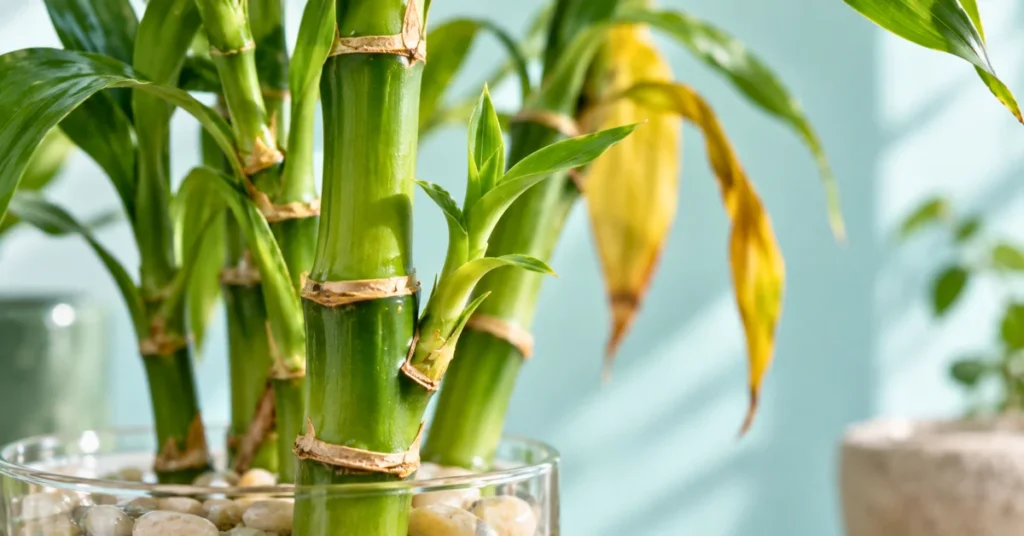
If you have a lucky bamboo dying, don’t start by buying a cabinet full of plant-rescue products. Start with a five-minute inspection.
Take the plant out of its decorative setup and look closely at its roots, stalk, and leaves. Remove obviously rotten material with clean tools.
If it grows in water, clean the container, refresh the water, keep only the roots submerged, and consider switching water sources if leaf-tip or yellowing problems keep returning.
If it grows in soil, check whether the root zone is actually wet or dry and make sure the container drains properly. If the existing mix stays soggy or smells sour, moving the healthy plant into fresh, well-draining houseplant potting mix and an appropriate container may be the practical fix.
Then put it in bright indirect light and leave fertilizer out of the rescue phase.
The best “product” for a recovering lucky bamboo is often surprisingly basic: clean pruning scissors, clean water or fresh potting mix, and a container that suits the way the plant is being grown.
After that, watch the healthy tissue. New shoots, firm stalks, and stable roots tell you much more about recovery than an old damaged leaf ever will.
Lucky Bamboo Dying FAQ
Why is my lucky bamboo dying?
A lucky bamboo can decline because of unhealthy roots, poor water quality, incorrect moisture, excessive direct sun, fertilizer stress, temperature problems, or damage spreading through a stalk. Start by examining the roots, stalk, and leaves and determine whether the plant is growing in water or soil before choosing a fix.
Can I save a lucky bamboo that is turning yellow?
If the yellowing is limited to leaves and the stalk and roots remain firm and healthy, there is often a good reason to try saving the plant. A stalk that itself has become completely yellow or soft is much more severely damaged, so healthy remaining stem tissue may need to be preserved instead.
Can yellow lucky bamboo turn green again?
A leaf or stalk that has become substantially yellow because its tissue is damaged should not be expected to return to its former healthy green color. The goal of treatment is to stop additional damage and encourage healthy new growth.
Should I cut yellow leaves off lucky bamboo?
Fully yellow or badly damaged leaves can be trimmed with clean scissors without removing healthy stem tissue. However, pruning the visible damage does not fix the underlying cause, so inspect water quality, roots, light, and moisture at the same time.
Why is my lucky bamboo dying in water?
A water-grown lucky bamboo can decline when roots begin to rot, the container or water becomes unhealthy, the water chemistry causes chronic stress, too much of the stalk is submerged, or the plant is exposed to unsuitable light or fertilizer. Remove the plant, inspect and clean the roots and container, then reset healthy roots in fresh water.
Do lucky bamboo leaves grow back?
Lucky bamboo can produce new leafy shoots if viable stalk and root tissue remain healthy, although a specific lost or badly damaged leaf will not simply repair itself. New healthy growth is the sign to watch for after the original cause has been corrected.

Carol researches common houseplant problems using guidance from university extension services, horticultural institutions, and other reputable sources. At The Evergreen Spot, she turns that research into practical troubleshooting guides designed to help readers understand what their plants may be telling them, narrow down the most likely causes, and know what to check next.
Leave a Reply