
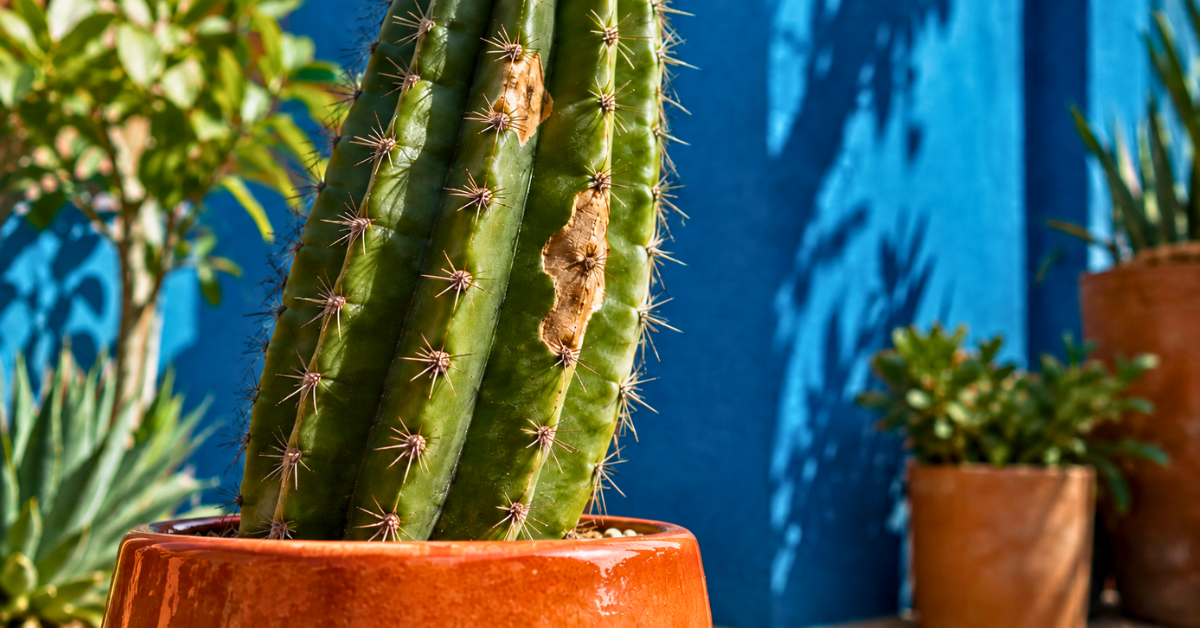
Brown spots on cactus can look much worse than they actually are. A patch that seems alarming at first glance might be harmless corky tissue, while another spot that looks almost identical in color could be the beginning of rot.
The difference is often easier to feel than to see. Is the brown area dry and hard, soft and wet, pale and sunken, or slowly spreading? Those details matter because cacti can brown after excess moisture, sudden sun exposure, cold damage, pests, disease, physical injury—or simply as some tissues age and harden.
Before cutting, spraying, or repotting anything, take a closer look at the texture and location of the spot. That can save you from treating a cactus that does not actually need treatment.
Table of Contents
What Causes Brown Spots on Cactus? Quick Answer
Brown spots on cactus can be caused by natural corking, excess moisture and rot, sunburn, pests, fungal or bacterial problems, cold injury, or physical damage.
The first things to check are:
- Whether the spot feels hard or soft
- Whether it is dry or wet
- Whether it is staying the same size or spreading
- Whether the soil is still wet long after watering
- Whether the cactus was recently moved into stronger sun
- Whether the damage begins near the soil line
- Whether insects or cottony material are visible
- Whether the rest of the cactus is firm and growing normally
A single dry scar on an otherwise healthy cactus is very different from a soft brown area that expands over several days.
What Do the Brown Spots Feel and Look Like?
The texture of the damaged tissue can help you decide what to investigate first.
| What you see or feel | What to investigate first |
|---|---|
| Dry, hard, cork-like tissue | Corking, old damage, physiological scab |
| Soft, wet or mushy brown area | Rot and excess moisture |
| Pale tan or bleached patch | Sunburn |
| Small dark spots that multiply | Disease or pests |
| Stable dry scar | Physical damage |
| Darkening near the soil line | Root or stem rot |
| Brown base that remains firm | Corking versus normal aging |
This is a diagnostic shortcut, not a guarantee. Cacti are an extremely diverse group, and different species can respond differently to the same stress.
Iowa State Extension notes that brown or tan patches on succulents and cacti can result from sudden exposure to bright direct sunlight, particularly after the plant has spent time under lower light.
Meanwhile, Texas A&M describes bacterial soft rot in cacti as watery, soft, dark tissue that can deteriorate quickly.
That difference—dry and stable versus soft and changing—is one of the most useful clues you have.
Cactus Corking or Rot? How to Tell the Difference
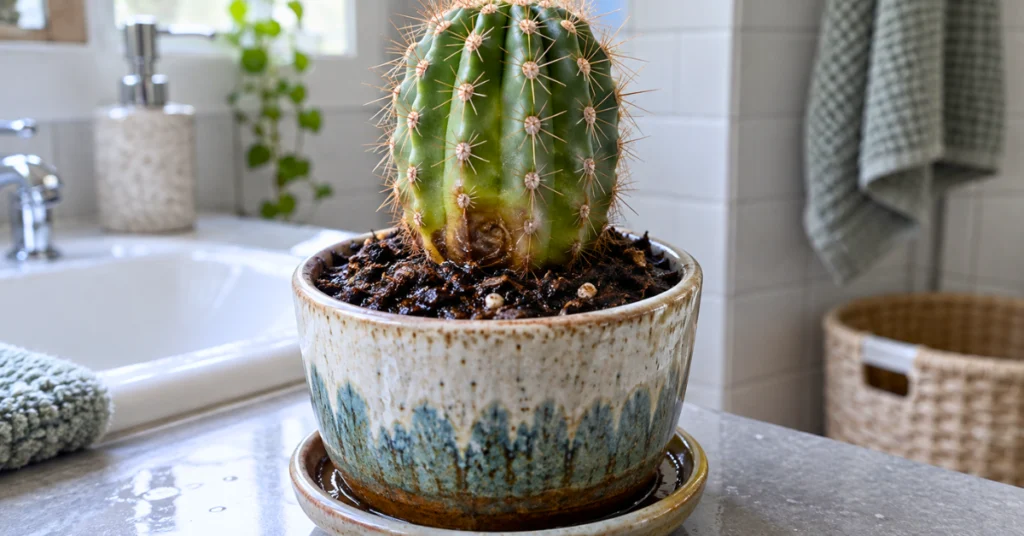
Corking is usually firm and dry, while rot is more likely to become soft, wet, dark, or progressively larger.
This distinction matters because cork-like tissue does not always mean the cactus is dying.
Some cacti develop harder brown tissue as they age, particularly near the base. University of Minnesota Extension, for example, notes that a brown, corky base on holiday cactus can be part of normal aging when scale insects have been ruled out.
But there is an important complication: not every corky area is normal aging.
Texas A&M describes a physiological scab on prickly pear cactus in which rusty, corky areas develop in association with excess moisture and poor ventilation. The RHS also describes cactus corky scab as brown or buff patches that shrink into scab-like tissue under unsuitable growing conditions.
So use the context:
More consistent with harmless or stable corking:
- Firm tissue
- Dry texture
- No unpleasant smell
- No rapid spread
- Cactus remains firm and healthy above the area
More concerning for rot:
- Tissue feels soft or collapses when pressed
- Surface looks wet or translucent
- Brown area becomes black
- Damage spreads noticeably
- Soil stays wet
- Base or roots are affected
If you are unsure, take a photo and compare the spot again after several days rather than immediately cutting into the cactus.
⚠️ When I’d Watch Instead of Treat
If the brown area is dry, firm, and not changing, I would be much more inclined to monitor it than to cut into the cactus.
Take a clear photo, note where the spot ends, and compare it again in a few days. A stable scar or corked area can look alarming without actually threatening the plant. What would make me act faster is a change in texture — especially tissue becoming soft, wet, darker, or noticeably larger.
The Most Common Causes of Brown Spots on Cactus
Natural Corking and Corky Tissue
Cork-like browning can develop as some cactus tissues mature, heal after injury, or respond to environmental stress.
The important word here is firm.
A hard, stable brown area is generally less alarming than tissue that is becoming softer or darker.
Do not scrape corky tissue away just to see what is underneath. Damaging an intact surface can create a wound that was not there before.
Overwatering and Rot
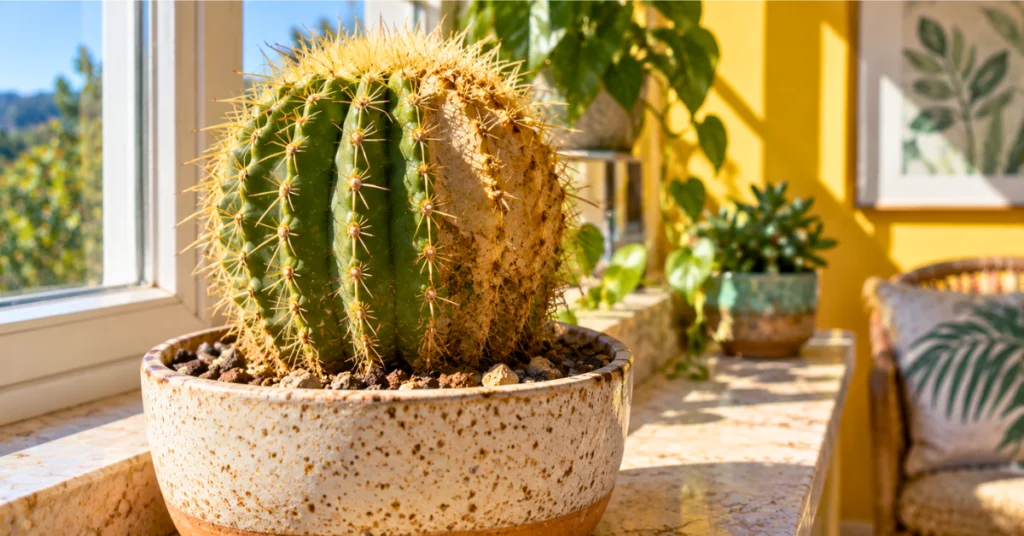
Too much moisture is one of the most serious possibilities when brown spots on cactus feel soft.
Most cacti are adapted to drying between waterings. University of Minnesota Extension warns that retained moisture around cactus roots can keep them wet for too long and increase rot problems.
Iowa State describes healthy roots as firm, while rotted roots become brown or reddish and mushy.
If you suspect rot, check:
- Is the potting mix still wet?
- Does the pot have drainage?
- Does the brown area begin at the base?
- Are the roots soft or dark?
- Is the cactus beginning to lean or collapse?
Whoever has dealt with a rotting succulent knows that waiting for the entire plant to become obviously mushy can mean waiting too long. Soft tissue that is actively spreading deserves prompt attention.
Sunburn
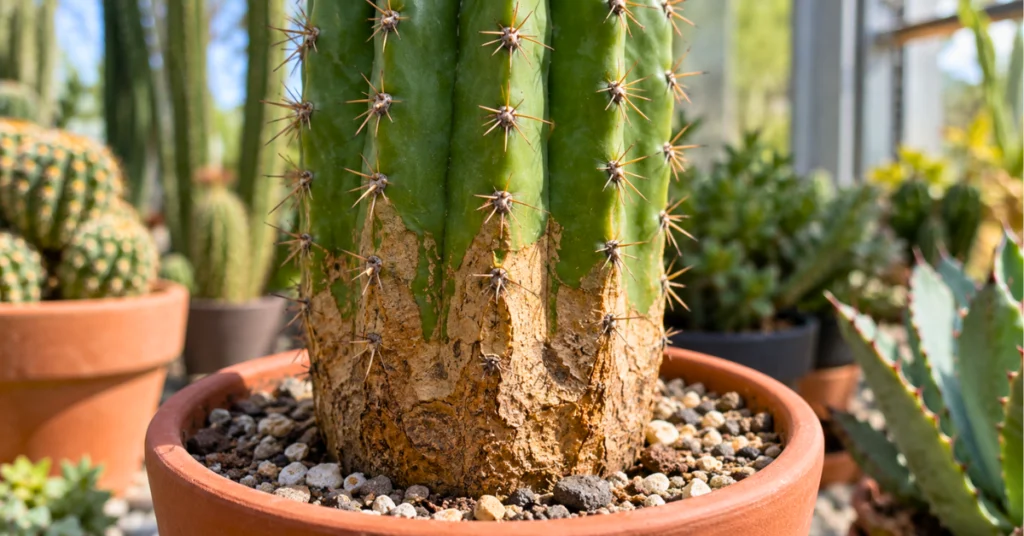
Sunburn often appears as pale, tan, or brown patches on the side receiving the strongest light.
The classic situation is a cactus that has been indoors or in shade and is suddenly moved into intense direct sun.
Iowa State specifically notes that sudden transitions from lower light to bright direct sunlight can produce brown or tan sun-scald patches on succulent stems or leaves.
Sunburned tissue does not usually become green again. The goal is to prevent more damage by increasing strong-light exposure gradually.
Pests
Pests can create discoloration, scarring, or weakened tissue that may eventually look brown.
Common cactus pests include mealybugs and scale. University of Minnesota recommends checking cacti for both, while UC IPM notes that mealybugs commonly infest cactus and often leave visible white cottony material.
If a brown patch is surrounded by white fuzz, sticky residue, small bumps, or visible insects, inspect the plant closely before assuming the issue is fungal.
Fungal or Bacterial Problems
Some diseases really do create brown or black spots, but color alone cannot identify the pathogen.
Texas A&M lists several fungal and bacterial diseases of cacti and describes soft bacterial rot as watery, dark tissue that deteriorates rapidly.
For holiday cacti specifically, University of Minnesota documents bacterial soft rot and fungal diseases that can create dark, wet, sunken, or spreading lesions.
Disease becomes more plausible when spots:
- Keep multiplying
- Spread quickly
- Become wet or sunken
- Develop fuzzy growth
- Occur with collapsing tissue
Severely rotted or rapidly deteriorating plants may not be salvageable.
Physical Damage and Cold Injury
A cactus can scar after being bumped, scraped, transported, or injured by a spine from a neighboring plant.
Once the wound heals, it may remain permanently brown or corky.
Cold injury can also leave discolored patches. The RHS notes that cold damage can produce damaged areas on cactus surfaces, while prolonged excessive moisture can eventually result in rot.
A stable scar that appeared after a known accident is generally less concerning than unexplained damage that keeps expanding.
How to Get Rid of Brown Spots on a Cactus
You often cannot remove an existing brown spot and make the tissue green again.
Instead, the goal is to stop whatever caused the damage.
Work through the problem in this order:
- Touch the area gently. Is it firm or soft?
- Check the soil. Is the root zone still wet?
- Inspect the base and roots if rot seems possible.
- Think about recent sun exposure.
- Look closely for mealybugs, scale, or other pests.
- Monitor whether the spot is spreading.
- Correct the most likely cause instead of treating every possibility.
If the spot is a dry, stable scar or harmless corking, there may be nothing to remove.
If tissue is clearly rotting, intervention may involve removing infected material with a clean tool, but the correct approach depends heavily on the cactus species and how far the rot has progressed.
Is a Brown Cactus Dead?
A brown cactus is not necessarily dead.
A cactus with a few firm brown areas can still have healthy roots, active growth, and plenty of living green tissue.
More concerning signs include:
- Large areas becoming soft
- The plant collapsing
- Brown or black damage spreading rapidly
- A rotting base
- Mushy roots
- No firm healthy tissue remaining
Judge the health of the whole plant, not one blemish.
Brown Spots on Cactus: What to Do Next
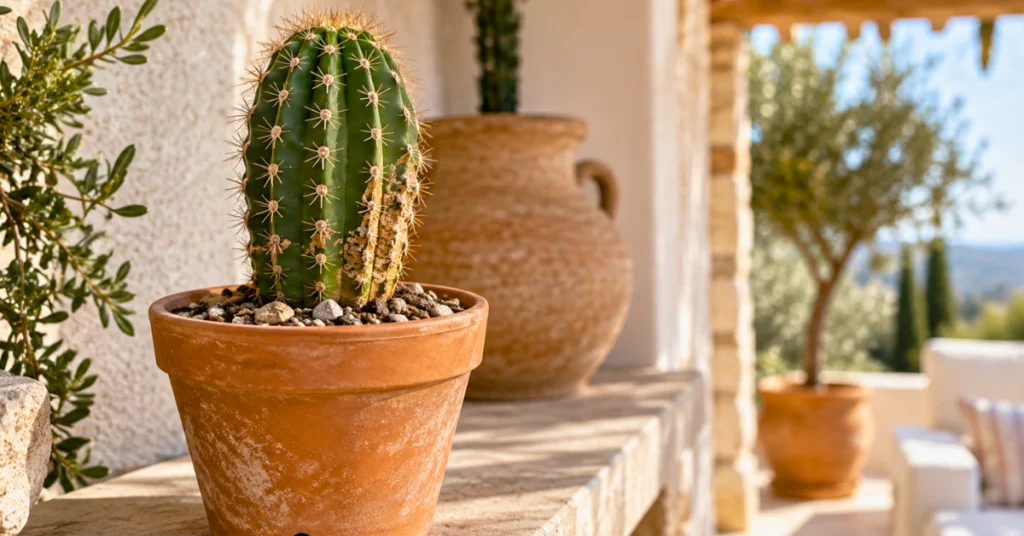
When you find brown spots on cactus, start by touching the damaged area rather than reaching immediately for a treatment.
A dry, firm, cork-like patch may be stable tissue that simply needs monitoring. A soft or wet spot is more urgent and should send your attention toward moisture, roots, and rot. Pale exposed patches suggest sun damage, while multiple new lesions deserve a closer look for pests or disease.
If moisture is the problem, use a container with effective drainage and a cactus-appropriate, fast-draining potting mix rather than trying to fix the issue with a rigid watering schedule. Let the needs of the specific cactus species guide how often you water.
The old brown mark may never disappear. What matters is whether it stays stable—or keeps growing.
Brown Spots on Cactus FAQ
Why is my cactus turning brown and soft?
Soft brown tissue is more concerning than dry corky tissue because excess moisture, bacterial soft rot, or other forms of decay can make cactus tissue watery and weak. Check the soil, drainage, base, and roots promptly, especially if the affected area is expanding.
Why is my cactus turning brown at the tips?
Brown tips can result from sun damage, cold injury, dryness, physical damage, or species-specific growing problems. Look at whether the affected tip is dry and stable or soft and spreading, then consider what changed in the plant’s environment before the browning appeared.
Can brown spots on cactus spread?
Yes, if the underlying cause is an active rot, disease, or continuing environmental problem. A healed scar or stable corked area may remain unchanged for years, so monitoring whether the spot grows is an important part of diagnosis.
Should I cut off a brown part of my cactus?
Not automatically. A dry, stable scar generally does not need to be cut away, while actively rotting tissue may require removal. University of Maine Extension advises using a clean, sharp tool when dead cactus tissue needs pruning and avoiding unnecessary wounds in healthy tissue.

Carol researches common houseplant problems using guidance from university extension services, horticultural institutions, and other reputable sources. At The Evergreen Spot, she turns that research into practical troubleshooting guides designed to help readers understand what their plants may be telling them, narrow down the most likely causes, and know what to check next.
Leave a Reply