
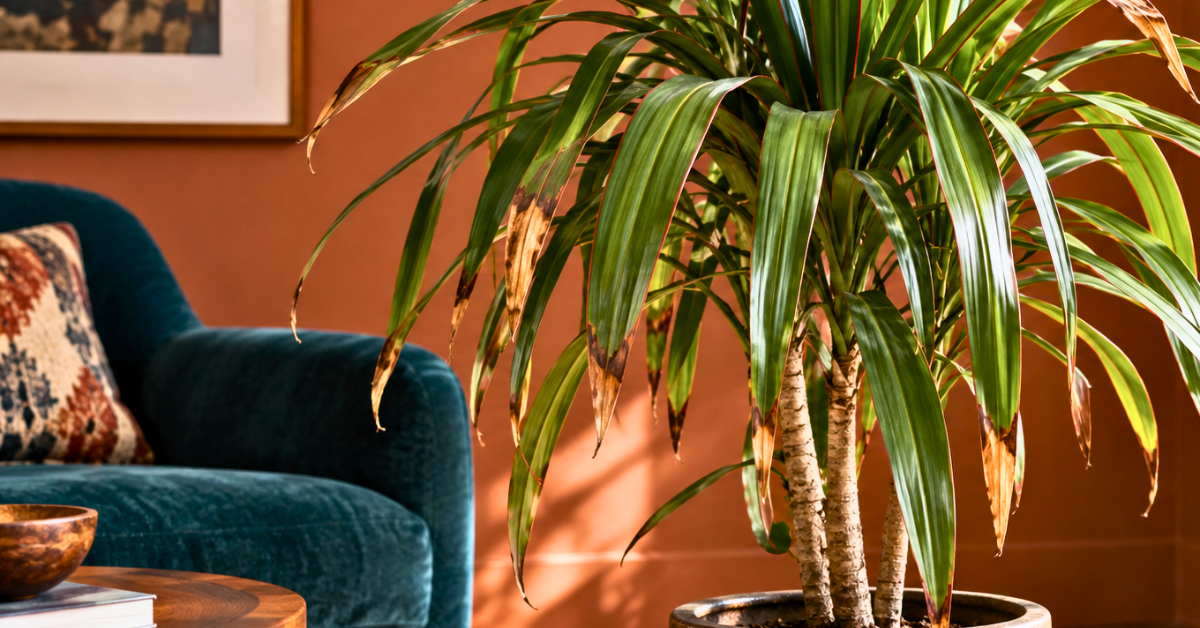
Dracaena brown tips have a way of making an otherwise healthy plant look suddenly neglected. The rest of the leaf may still be glossy and green, yet the very end turns tan, then brown, then crispy—and trimming it off does not stop the next leaf from doing the same thing.
That is because the brown tissue is the result, not the cause. Dracaenas can develop damaged tips after inconsistent watering, dry indoor air, mineral or fertilizer salts, fluoride exposure, excess moisture around the roots, temperature stress, or too much direct sun.
Before cutting anything, look at how far the browning extends, which leaves are affected, and what has been happening around the plant. Those details are far more useful than the brown color alone.
Table of Contents
Why Are My Dracaena Leaves Turning Brown at the Tips? Quick Answer
Dracaena brown tips are commonly caused by moisture stress, dry air, mineral or fertilizer salt buildup, water-quality problems, or environmental stress.
The first things to check are:
- Soil that has stayed dry for too long
- Soil that remains constantly wet
- Low indoor humidity
- Fluoride or excess minerals in the water
- Heavy or frequent fertilizing
- Strong direct sunlight
- Cold drafts or hot radiators
- Pests or leaf disease
- Normal aging on older leaves
A crispy tip on one older leaf is very different from browning that is rapidly spreading through new growth. Start with the pattern, then check the soil and environment.
What Do Brown Tips on a Dracaena Look Like?
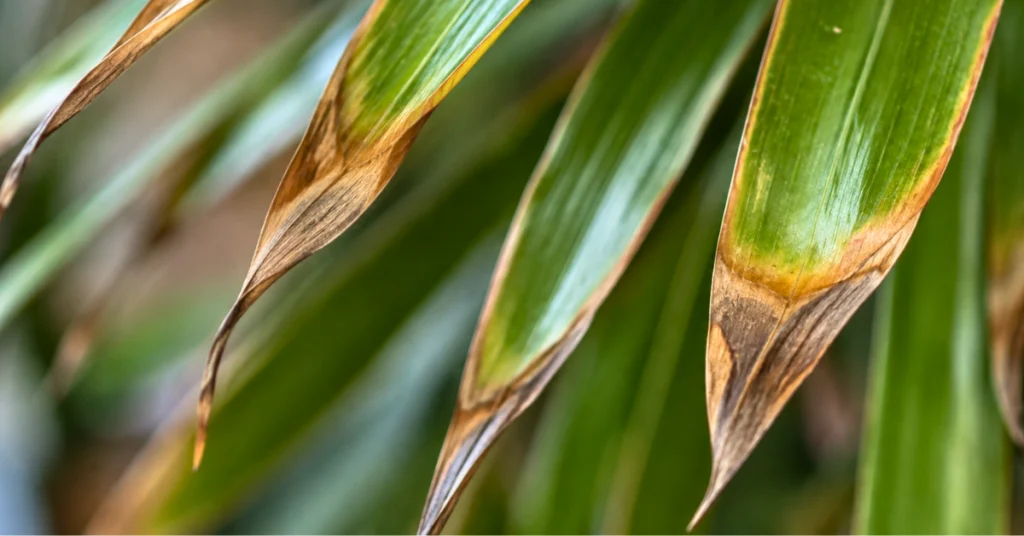
Dry or brown tips on a Dracaena can look similar, but the pattern of the damage can help narrow down the cause.
| What you see | What to check first |
|---|---|
| Dry, crispy brown tips | Inconsistent watering, dry air, salts |
| Brown tips extending along edges | Moisture stress, water quality, environment |
| Brown + yellowing leaves | Roots, watering, natural aging |
| Brown patches away from the tip | Sun damage, disease, physical injury |
| Older lower leaves browning | Natural leaf turnover |
| Dark brown or black tissue spreading | Root problems, cold injury, disease |
The Royal Horticultural Society lists both over and underwatering, fluoride in tap water, dry air, direct sun, cold drafts, and heat sources among possible reasons Dracaena foliage develops brown tips.
That is why a brown tip alone cannot tell you exactly what is wrong.
⚠️ Before You Blame Your Watering
If the soil moisture seems reasonable but every new Dracaena leaf eventually develops the same crispy brown tip, I would stop adjusting the watering schedule and look somewhere else.
Water quality, fertilizer salts, very dry indoor air, or a nearby heat source can keep producing the same symptom even when you are watering appropriately. Repeating the same “fix” usually will not help if watering was never the problem in the first place.
The Most Common Causes of Dracaena Brown Tips
Underwatering and Inconsistent Moisture
Repeatedly allowing the root ball to become extremely dry can leave leaf tips and margins brown and crispy.
Iowa State Extension identifies inconsistent watering—especially leaving houseplants dry for too long—as a common cause of brown leaf tips. Dracaena is specifically one of the plants on which this symptom is frequently seen.
Check more than the top dusting of soil. If the root zone has become very dry, water thoroughly so the entire mix is moistened, then allow excess water to drain.
Try to avoid the cycle of bone dry → emergency soaking → bone dry again.
Water Quality, Fluoride, and Salt Buildup
Dracaena is unusually sensitive to certain substances that can accumulate around its roots.
The RHS specifically warns that fluoride in tap water can damage Dracaena foliage and cause the tips to turn brown. It recommends rainwater or filtered water where this is a recurring issue.
Iowa State Extension also lists fluoride and other water chemicals among possible causes of brown tips in sensitive houseplants, including Dracaena.
Fertilizer can add another source of soluble salts. Watch for:
- White crust on the soil surface
- Mineral residue around the pot
- Repeated tip burn despite reasonable watering
- Heavy or frequent fertilizing
Whoever has dealt with stubborn Dracaena brown tips knows how frustrating it is when changing the watering schedule does nothing. In that situation, water quality and salt buildup are worth investigating instead of simply watering more often.
Low Humidity
Dry indoor air can cause leaf tips and edges to lose moisture faster than the plant can replace it.
Iowa State lists low humidity as a major cause of brown houseplant tips, while the RHS specifically includes very dry air among the triggers for browning Dracaena foliage.
This can become more noticeable during heating season or when the plant sits close to a radiator or vent.
A humidifier or grouping compatible houseplants together can raise local humidity more reliably than repeatedly misting leaves.
Overwatering and Root Stress
Brown tips do not always mean a plant is too dry.
Dracaena roots can rot when the growing medium remains wet for too long. The RHS recommends allowing the upper portion of the compost to dry before watering and warns against leaving the plant sitting in water.
Overwatering becomes more suspicious when browning comes with:
- Yellow foliage
- Wet soil that takes a long time to dry
- Drooping despite moist soil
- Soft or deteriorating roots
- General decline rather than isolated crispy tips
Check the root zone before increasing watering just because a leaf looks dry.
Too Much Sun or Temperature Stress
Dracaenas generally prefer bright indirect light.
The RHS warns that strong direct summer sun can scorch foliage. It also recommends consistently warm conditions and keeping the plant away from cold drafts and hot radiators.
Cold stress can produce darker, more severe tissue damage, while heat combined with dry air can accelerate crispy browning.
If the problem began shortly after moving the plant, the new location matters.
Too Much Fertilizer
A struggling Dracaena does not necessarily need feeding.
Excess fertilizer can leave salts in the potting mix and contribute to burned tips. Iowa State specifically identifies improper fertilization and salt accumulation as causes of brown leaf tips.
If you have been fertilizing frequently, pause feeding and deal with the basic growing conditions first.
Pests or Leaf Disease
Pests usually produce more than a neat brown tip.
UF/IFAS notes that Dracaena marginata can occasionally be attacked by mealybugs and scale. Other Dracaena references also document mites, thrips, and leaf-spot problems.
Look more closely if you see:
- Fine webbing
- Sticky residue
- Cottony material
- Small insects or raised bumps
- Brown spots spreading within the leaf rather than only at the tip
A sharply defined old brown tip is much less suggestive of disease than new lesions appearing across multiple leaves.
Natural Leaf Aging
Not every brown tip means your care routine has failed.
Older leaves naturally deteriorate as plants replace them with new growth. The RHS notes that mature houseplant leaves eventually brown and die back as part of normal aging.
If the browning is limited to older lower foliage while healthy new leaves are developing, the plant may simply be turning over old growth.
Do Brown Tips Mean the Same Thing on Corn Plant, Dragon Tree, and Janet Craig?
Corn plants, Madagascar dragon trees, and Janet Craig are all commonly grown forms within the broader Dracaena group, so the same basic categories of stress can produce brown tips across them.
The names can make this confusing. Missouri Extension identifies corn plant as Dracaena fragrans, dragon tree as Dracaena marginata, and Janet Craig as a Dracaena cultivar grown indoors.
The RHS likewise lists D. fragrans and D. marginata along with cultivars such as Lemon Lime.
So if you searched for:
- Corn plant brown tips
- Dragon tree brown tips
- Madagascar dragon tree brown tips
- Janet Craig brown tips
- Lemon Lime Dracaena brown leaves
the same first checks—watering, drainage, water quality, salts, light, temperature, and humidity—are useful.
That does not mean every Dracaena cultivar wants identical conditions, but you do not need a completely different diagnostic method for each one.
Should I Cut the Brown Tips Off My Dracaena?
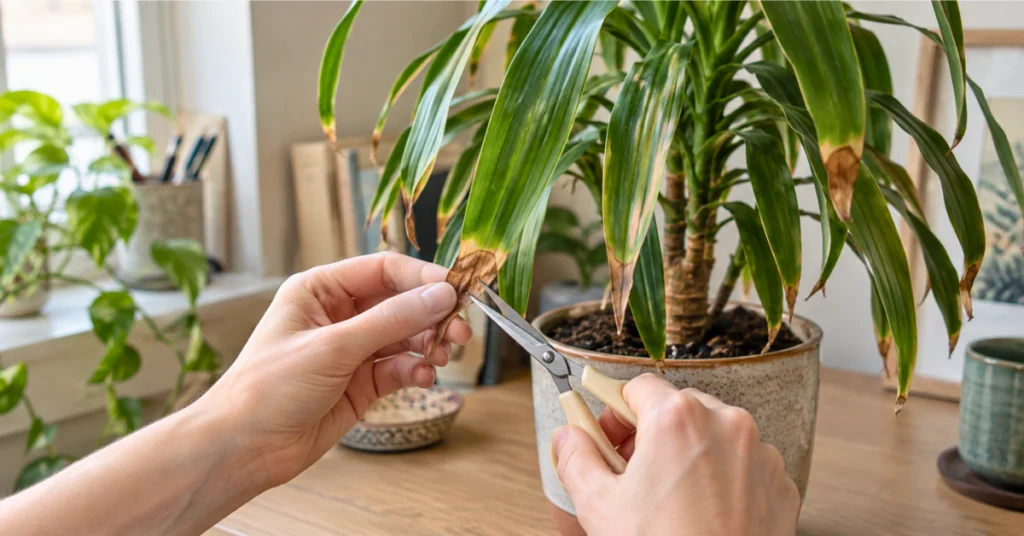
Yes, you can trim dead brown tips for appearance, but cutting them off does not solve the cause.
Iowa State Extension notes that brown portions can be trimmed with scissors, but new browning will continue if the underlying problem remains.
Use clean, sharp scissors and remove only dead tissue. Avoid cutting deeply into healthy green portions just to create a perfectly shaped leaf.
And remember: once the tissue has turned dry and brown, trimming is cosmetic. A neater-looking leaf can make the plant seem “fixed,” so keep watching the new growth instead of the freshly trimmed edge.
How to Stop Dracaena Tips From Turning Brown
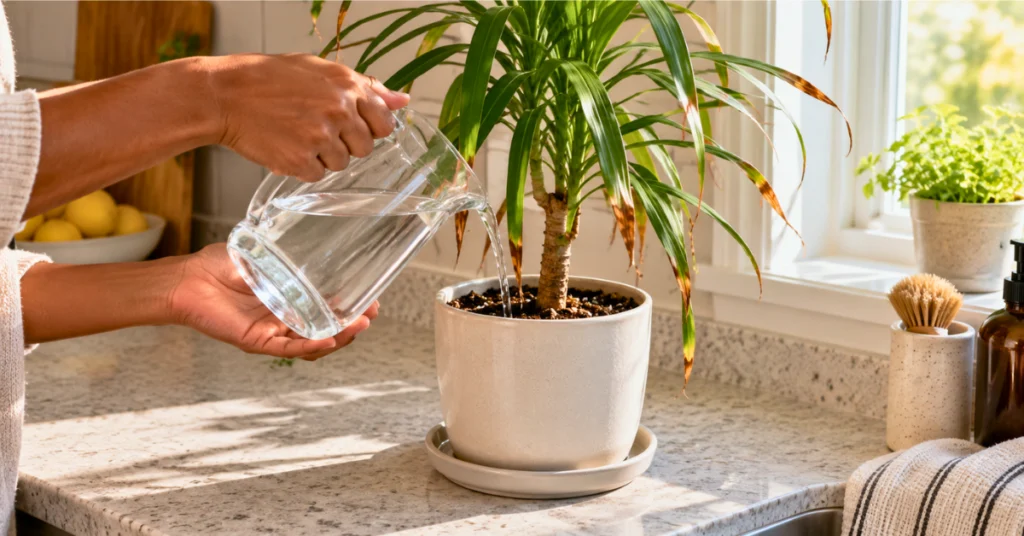
Start with the basics rather than treating every possible cause at once.
- Check soil moisture below the surface.
- Make sure the pot drains freely.
- Look for white salt deposits on the soil or container.
- Review your fertilizer routine.
- Consider your water source if browning repeatedly returns.
- Check whether heating or air-conditioning is drying the plant.
- Move it away from harsh direct sun and temperature extremes.
- Inspect the foliage for pests or unusual spreading lesions.
- Watch the new growth before making another change.
If water quality seems suspicious, trying rainwater or an appropriate filtered source for future watering is more useful than assuming every brown tip means the plant needs additional moisture.
Will Brown Dracaena Tips Turn Green Again?
No. Once the tip itself has died and become brown and crispy, that tissue will not return to healthy green.
The goal is to prevent the damage from progressing.
A plant can be recovering even while its older leaves still show brown ends. Pay more attention to whether new leaves emerge healthy and whether existing browning stops spreading.
That is a much better measure of success than trying to restore an already damaged tip.
Dracaena Brown Tips: What to Do Next
If Dracaena brown tips keep appearing, do not start by cutting them off and hoping the problem is gone.
Check the soil first, then drainage. If those look reasonable, move on to water quality, fertilizer salts, indoor humidity, temperature, and light. A Dracaena repeatedly producing brown tips despite sensible watering deserves a closer look at the water and root environment rather than simply another drink.
If the current pot traps moisture, choose a container with effective drainage. If the air is consistently dry, a humidifier may be more useful than misting. And if water quality appears to be the recurring trigger, rainwater or an appropriate filtered source may be worth trying.
The old tips will stay brown. The real win is seeing the next leaves grow without them.
Dracaena Brown Tips FAQ
Why are my Dracaena leaves turning brown and yellow?
Brown and yellow together can result from watering or root stress, environmental problems, salt damage, or natural aging. Check whether the soil is unusually wet or dry and whether the damage affects old or new leaves before choosing a treatment.
Why are my Dracaena leaves turning brown and falling off?
Brown leaves that fall may be associated with severe dryness, excessive heat, root stress, environmental changes, or normal aging when only older lower foliage is affected. Widespread or rapid leaf loss deserves a closer look at the roots and growing conditions.
Can tap water cause brown tips on Dracaena?
Yes. Dracaena is sensitive to fluoride and other dissolved substances that may be present in tap water, and both the RHS and Iowa State Extension identify water quality as a possible cause of brown leaf tips.
Is one brown tip something to worry about?
Usually not. One older leaf with a small brown tip can be normal wear or aging. It becomes more useful diagnostically when new brown tips keep appearing, the damage spreads, or other symptoms such as yellowing, root problems, or leaf drop develop.

Carol researches common houseplant problems using guidance from university extension services, horticultural institutions, and other reputable sources. At The Evergreen Spot, she turns that research into practical troubleshooting guides designed to help readers understand what their plants may be telling them, narrow down the most likely causes, and know what to check next.
Leave a Reply